Love this? Save it for later!
Share the inspiration with your friends
“You’ve got to try this,” my neighbor said, sliding a tiny jar across the counter with a grin that was half proud, half conspiratorial. I eyed the jar, skeptical—it was filled with these tiny golden beads swimming in a bright, tangy liquid. Tangy pickled mustard seeds? Honestly, I’d never thought much about mustard seeds beyond the usual dry sprinkle or that jar of prepared mustard in the fridge. But that afternoon, curiosity won over. The moment I tasted those zesty little bursts, I was hooked. It was like a secret weapon had been hiding in plain sight all along.
That jar became a staple in my kitchen, turning up unexpectedly in everything from sandwiches to salads, even a quick marinade. What’s wild is how simple the ingredients are, yet how much punch they pack. The tangy pickled mustard seeds add this lively pop of flavor that you just don’t get from regular condiments. It’s funny how sometimes the tiniest things make the biggest difference in your cooking, right?
Since then, I’ve made the recipe my own, tweaking the brine and spices until it hits just the right balance of tang, heat, and sweetness. And now, it’s one of those things I keep on hand to brighten up just about any dish. If you’ve ever been curious about making your own zesty homemade condiments but thought it might be complicated, this recipe is going to surprise you. It’s straightforward, fun, and—trust me—it changes the game.
There’s something quietly satisfying about turning humble mustard seeds into a lively condiment that wakes up your taste buds. I’m glad this recipe stuck with me, not just for the flavor but for the little spark of joy it brings to my everyday meals.
Why You’ll Love This Recipe
Having made tangy pickled mustard seeds dozens of times, I can confidently say this recipe has a place in any kitchen. It’s one of those recipes that feels like a secret weapon for adding instant zest without fuss. Here’s a quick rundown of why it’s so worth trying:
- Quick & Easy: The entire process takes under 30 minutes to prepare, and then you just let it sit. Perfect for busy days when you want a flavor upgrade without the hassle.
- Simple Ingredients: Nothing fancy or hard to find—mustard seeds, vinegar, a few spices, and sugar. You probably have most of these sitting in your pantry right now.
- Perfect for Homemade Condiments: Whether you’re making a zesty sandwich spread, tangy salad dressing, or a flavorful marinade, these pickled seeds add that extra punch.
- Crowd-Pleaser: Guests often ask what’s “the secret” when they taste these zesty bursts in dishes. It’s subtle but unforgettable.
- Unbelievably Delicious: The texture is a playful pop, and the tangy, slightly sweet brine balances the natural heat of the mustard seeds. It’s comfort food with a twist.
What sets this recipe apart is the attention to the brine’s balance—using just the right vinegar blend and a touch of sweetness to round out the sharpness. Plus, the slow soaking lets the seeds soften but keeps that satisfying bite. It’s not just another pickled condiment; it’s the kind that makes you pause and really savor that little spark of flavor.
Honestly, this recipe is the kind that turns simple meals into memorable ones—like adding a dash of personality to your everyday. If you’ve enjoyed flavorful dishes like the high-protein Asian pasta salad, you’ll find these pickled mustard seeds add a similar zing to brighten up your plates.
What Ingredients You Will Need
This recipe uses simple, wholesome ingredients to deliver bold flavor and a satisfying texture without the fuss. Most are pantry staples, but a couple of fresh elements bring everything together.
- Yellow mustard seeds: about 1/2 cup (100g) – these provide the mild heat and signature pop. I prefer small, firm seeds for the best texture.
- White or apple cider vinegar: 1 cup (240 ml) – the tangy base of the pickling brine. Apple cider vinegar adds a subtle fruity vibe; white vinegar is sharper.
- Water: 1/2 cup (120 ml) – to mellow out the acidity.
- Sugar: 2 tablespoons – balances the vinegar’s sharpness, but not too sweet.
- Salt: 1 teaspoon – to enhance overall flavor.
- Garlic cloves: 2, smashed – adds depth and a hint of warmth.
- Black peppercorns: 1 teaspoon – for subtle heat.
- Bay leaf: 1 – adds aromatic complexity.
- Optional spices: a pinch of crushed red pepper flakes or a cinnamon stick for a unique twist.
You can swap apple cider vinegar for white wine vinegar if you want a gentler tang. Also, if you want a gluten-free version, double-check your vinegar choice as some brands add malt.
For a slight variation, I once added a few mustard seeds from the crispy feta rolls recipe that had a hint of heat, which gave the pickled seeds a fun extra kick.
Equipment Needed
- Small saucepan: to heat the pickling liquid.
- Glass jar with airtight lid: a 1-cup (250 ml) jar works well—glass keeps flavors pure and is easy to sterilize.
- Measuring cups and spoons: for accuracy.
- Wooden spoon or spatula: to stir the brine.
- Fine mesh strainer: optional, for rinsing seeds if needed.
I’ve tried this in a metal container, but glass is best for preserving the bright flavors and preventing any metallic taste. If you’re on a budget, a recycled jam jar cleaned well will do just fine.
Keeping your jar and utensils spotless helps the pickled seeds last longer and keeps flavors fresh. I usually sterilize my jars by boiling them briefly or running through a hot dishwasher cycle.
Preparation Method
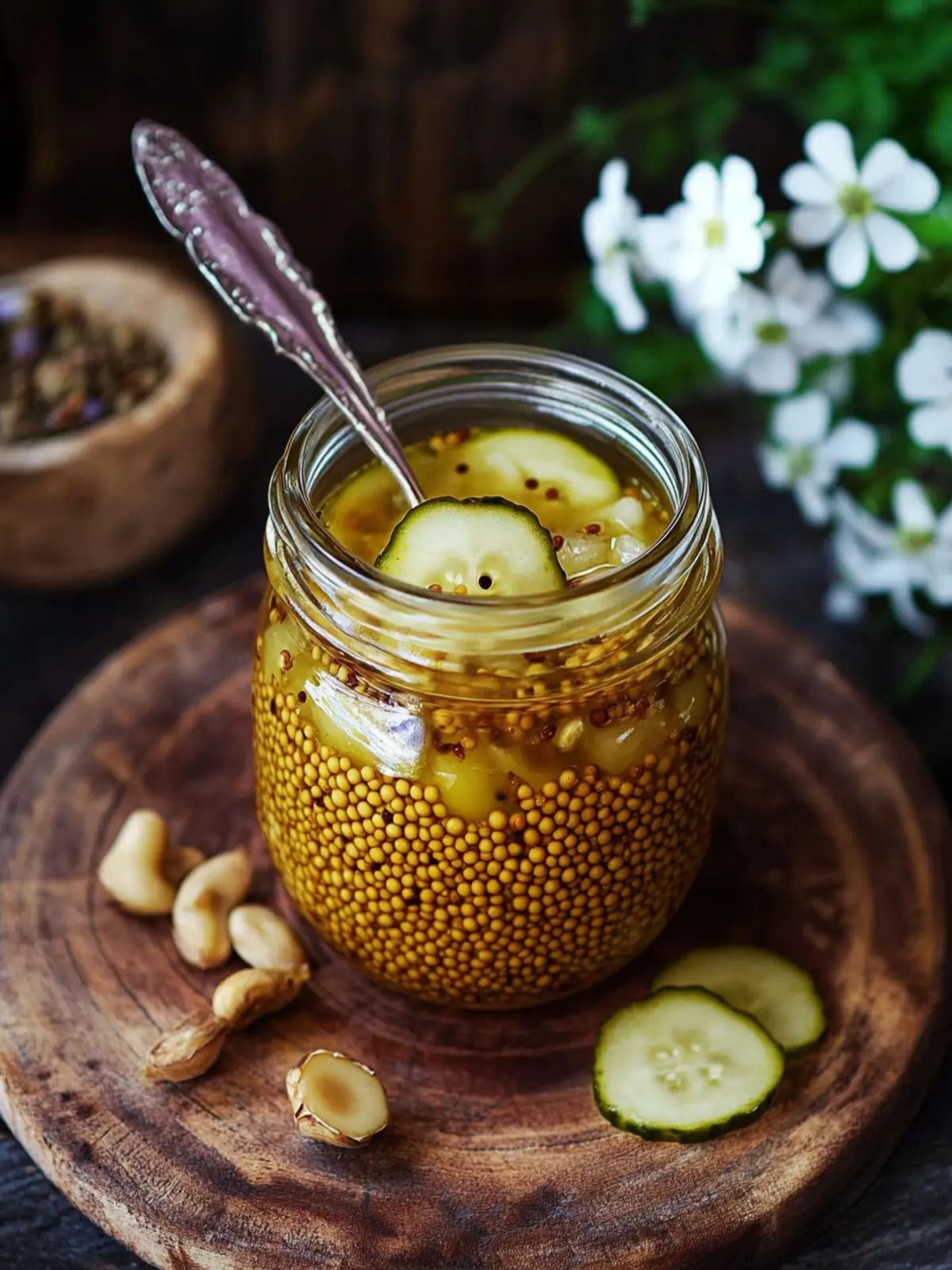
- Toast the mustard seeds: Place 1/2 cup (100g) of yellow mustard seeds in a dry skillet over medium heat. Toast gently for 2-3 minutes, stirring often until they become aromatic. You’ll notice a nutty scent but be careful not to burn them. This step wakes up the flavor and softens the seeds for pickling.
- Prepare the pickling brine: In a small saucepan, combine 1 cup (240 ml) vinegar, 1/2 cup (120 ml) water, 2 tablespoons sugar, and 1 teaspoon salt. Add 2 smashed garlic cloves, 1 teaspoon black peppercorns, and 1 bay leaf. Bring to a gentle boil, stirring until the sugar and salt dissolve. Let it simmer for 2 minutes to infuse flavors.
- Pack the seeds into your jar: Transfer the toasted mustard seeds carefully into the sterilized glass jar. You want the seeds loosely packed to allow the brine to coat them evenly.
- Pour the hot brine over the seeds: Immediately pour the boiling brine into the jar, covering the seeds completely. Use a spoon to nudge seeds down if they float. The seeds will start to soften and absorb the liquid.
- Cool and seal: Let the jar cool to room temperature, then seal tightly with the lid. Place in the fridge for at least 24 hours before using. The flavor improves over several days as the seeds soak up the tangy goodness.
- Check texture and flavor: After a day or two, taste a few seeds. They should have a pleasant pop but be tender enough to bite through easily. If too sharp, let them mellow longer. The seeds keep well refrigerated for up to a month.
Quick tip: If the seeds seem too hard after pickling, try gently pressing them with a spoon to release their flavor or let them sit longer. Also, if you want a stronger flavor, add more garlic or a pinch of chili flakes next time.
One time, I forgot about the jar for a week—surprisingly, the flavor was even better with that extra time to meld! Just remember to keep it refrigerated.
Cooking Tips & Techniques
Mastering tangy pickled mustard seeds is mostly about balance and patience. Here are some tips I’ve picked up:
- Don’t skip toasting: It’s tempting to toss raw seeds into the brine, but toasting unlocks their essential oils and mellows bitterness.
- Use a sharp vinegar: Apple cider or white vinegar gives the best tang. Avoid flavored vinegars that can overpower.
- Watch your simmer time: Just a couple of minutes is enough to infuse the brine. Overcooking can dull the brightness.
- Seal and refrigerate: Always keep the jar cold after cooling. Room temperature for long periods leads to off flavors.
- Experiment with spices: Bay leaf and peppercorns are classics, but a cinnamon stick or star anise can add a unique warmth.
- Patience pays off: The seeds need at least 24 hours but improve after 3-4 days. Rushing the process means missing out on full flavor.
Early on, I made the mistake of using too much sugar, which dulled the tang. Since then, I weigh sugar carefully and stick to the recipe’s balance. Also, using a proper jar that seals tightly keeps the seeds fresh and flavorful, so don’t skimp there.
When I prepare dishes like the one-pot jailhouse rice, adding a spoonful of these pickled mustard seeds lifts the whole dish with minimal effort. It’s like a tiny flavor bomb.
Variations & Adaptations
One of the best things about this recipe is how easy it is to make your own spin on it. Here are some ideas I’ve tried or recommend:
- Spicy kick: Add 1/2 teaspoon crushed red pepper flakes or a small sliced chili to the brine for a fiery twist.
- Sweet and smoky: Swap regular sugar for maple syrup and add a small smoked paprika pinch. It pairs beautifully with grilled veggies.
- Herbal infusion: Add fresh thyme or rosemary sprigs for an earthy aroma. This is great for sandwich spreads.
- Low-sodium version: Reduce salt to 1/2 teaspoon and add a splash of lemon juice for brightness.
- Vinegar swap: Use rice vinegar for a milder, sweeter tang, perfect if you’re pairing with Asian-inspired dishes.
Once, I replaced the yellow mustard seeds with black mustard seeds to see how the flavor changed. The result was bolder and earthier but still delicious—just a bit sharper. It shows how adaptable this simple recipe can be.
Serving & Storage Suggestions
Tangy pickled mustard seeds are incredibly versatile. Serve them chilled or at room temperature, depending on your dish. Here are some ways I like to enjoy them:
- Spoon a little on top of creamy salads or potato dishes for a zesty pop.
- Mix into homemade mayonnaise or dressings to add texture and tang.
- Use as a garnish on grilled meats or roasted vegetables to add brightness.
- Stir into grain bowls or wraps for a surprising flavor burst.
Store the jar tightly sealed in the refrigerator. They’ll keep fresh for up to a month, getting more flavorful over time. When reheating dishes with pickled seeds, add them after warming to keep their texture intact.
For long-term storage, you can freeze small portions in ice cube trays, then pop them out as needed. Just be aware that freezing may soften the seeds a bit.
These pickled mustard seeds complement dishes like the chili lime chickpea cauliflower wrap beautifully, adding a zing that balances creamy and spicy flavors.
Nutritional Information & Benefits
Per 1 tablespoon (15g) serving, tangy pickled mustard seeds roughly contain:
| Calories | 20 |
|---|---|
| Carbohydrates | 3g |
| Sugar | 1g |
| Fat | 0g |
| Protein | 1g |
| Fiber | 1g |
Mustard seeds are a good source of antioxidants, minerals like selenium and magnesium, and have anti-inflammatory properties. Vinegar adds digestive benefits and helps preserve the seeds naturally.
This condiment is naturally gluten-free, vegan, and low in calories. Just watch the sugar level if you’re managing blood sugar, but the amount used is minimal.
From my health-conscious but realistic perspective, this recipe is a fantastic way to punch up flavor without adding excess fat or salt. It’s a small change that makes meals more enjoyable and satisfying.
Conclusion
Tangy pickled mustard seeds are one of those small kitchen treasures that sneak up on you. What started as a curious taste test turned into a regular habit because the flavor is genuinely that good and versatile. It’s a recipe that invites you to play with your food and add a little zing to everyday dishes without fuss.
If you’re someone who loves quick, flavorful homemade condiments but thinks pickling is intimidating, this recipe proves it doesn’t have to be. You can customize it to your taste, spice level, or dietary needs and keep it ready for whenever you want a bright pop of flavor.
Personally, this recipe reminds me that sometimes the simplest ideas bring the most joy—and that cooking is as much about discovery as it is about nourishment. If you give this a try, I’d love to hear how you make it your own or what dishes you enjoy it with. It’s always exciting to see how a humble condiment can inspire creativity in the kitchen.
Keep experimenting and savor the little bursts of flavor that make meals memorable.
FAQs
How long do tangy pickled mustard seeds last in the fridge?
They typically stay fresh and flavorful for up to one month when stored in a sealed glass jar in the refrigerator.
Can I use other types of mustard seeds, like brown or black?
Yes! Brown and black mustard seeds are bolder and spicier. They work well but will change the flavor profile to a stronger, sharper tang.
Is it necessary to toast the mustard seeds before pickling?
Toasting is recommended as it enhances the seeds’ aroma and softens their texture, but you can skip it if pressed for time.
Can I make this recipe without sugar?
You can omit sugar, but the brine will be more sharply acidic. Consider adding a little honey or maple syrup if you want a natural sweetener instead.
What dishes pair best with tangy pickled mustard seeds?
They’re fantastic in sandwiches, grain bowls, salads, roasted veggies, and even mixed into dips or dressings for added texture and zing.
Pin This Recipe!
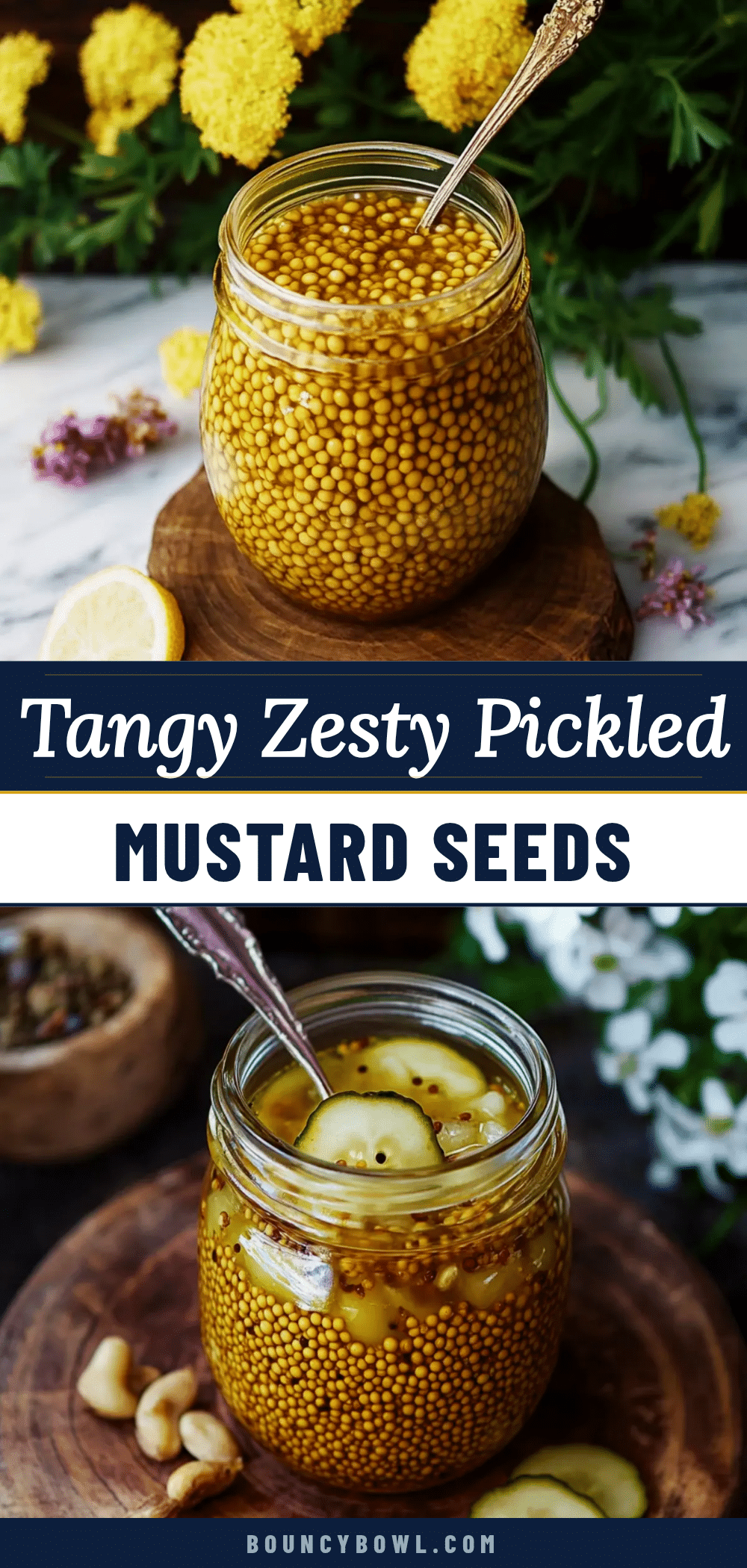
Tangy Pickled Mustard Seeds
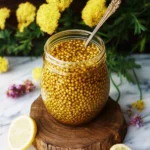
A quick and easy recipe for zesty homemade pickled mustard seeds that add a lively pop of flavor to sandwiches, salads, and marinades.
- Prep Time: 10 minutes
- Cook Time: 10 minutes
- Total Time: 24 hours (including soaking time)
- Yield: About 1 cup (250 ml) pickled mustard seeds 1x
- Category: Condiment
- Cuisine: American
Ingredients
- 1/2 cup (100g) yellow mustard seeds
- 1 cup (240 ml) white or apple cider vinegar
- 1/2 cup (120 ml) water
- 2 tablespoons sugar
- 1 teaspoon salt
- 2 garlic cloves, smashed
- 1 teaspoon black peppercorns
- 1 bay leaf
- Optional: pinch of crushed red pepper flakes or a cinnamon stick
Instructions
- Toast the mustard seeds: Place 1/2 cup (100g) of yellow mustard seeds in a dry skillet over medium heat. Toast gently for 2-3 minutes, stirring often until aromatic. Be careful not to burn them.
- Prepare the pickling brine: In a small saucepan, combine 1 cup (240 ml) vinegar, 1/2 cup (120 ml) water, 2 tablespoons sugar, and 1 teaspoon salt. Add 2 smashed garlic cloves, 1 teaspoon black peppercorns, and 1 bay leaf. Bring to a gentle boil, stirring until sugar and salt dissolve. Simmer for 2 minutes.
- Pack the seeds into your jar: Transfer the toasted mustard seeds into a sterilized glass jar, loosely packed.
- Pour the hot brine over the seeds: Immediately pour the boiling brine into the jar, covering the seeds completely. Use a spoon to nudge seeds down if they float.
- Cool and seal: Let the jar cool to room temperature, then seal tightly with the lid. Refrigerate for at least 24 hours before using.
- Check texture and flavor: After 1-2 days, taste a few seeds. They should have a pleasant pop but be tender. If too sharp, let them mellow longer. Keep refrigerated up to one month.
Notes
Toast mustard seeds before pickling to enhance flavor and soften texture. Use sharp vinegar like apple cider or white vinegar. Let seeds soak at least 24 hours for best flavor, longer for more mellow taste. Store refrigerated up to one month. Optional spices like red pepper flakes or cinnamon stick can add unique twists.
Nutrition
- Serving Size: 1 tablespoon (15g)
- Calories: 20
- Sugar: 1
- Carbohydrates: 3
- Fiber: 1
- Protein: 1
Keywords: pickled mustard seeds, homemade condiments, tangy mustard seeds, easy pickling, zesty condiment