Love this? Save it for later!
Share the inspiration with your friends
“Are you sure that duck is going to turn out alright?” my sister asked skeptically as I fumbled with the kitchen timer, the duck slowly browning in the oven. Honestly, I wasn’t convinced myself at first. Roasted duck had always seemed like this fancy, complicated holiday thing—one that required precision and nerves of steel. But that night, all I wanted was a hearty, comforting centerpiece for our somewhat chaotic family dinner. The duck, packed with herbs and a savory glaze, came together almost by accident after a last-minute run to the grocery store and a quick text exchange with a neighbor who swore by roasting it low and slow.
The smell wafting through the house was intoxicating—rich, earthy, and just a bit smoky. When I finally sliced into that crisp, golden skin, the juices ran clear, and the meat was tender enough to melt in your mouth. The best part? It wasn’t as intimidating as I’d feared. That perfect savory roasted duck turned out to be a quiet victory, turning a hectic day into something memorable and surprisingly easy.
Since then, this recipe has become my go-to for holiday gatherings, especially when I want something special without spending hours in the kitchen. It’s the kind of dish that makes you pause, take a deep breath, and appreciate the simple joys of a home-cooked meal. If you ever doubted your ability to roast duck perfectly, this recipe might just change your mind.
Why You’ll Love This Recipe
This perfect savory roasted duck recipe has been tested through multiple holiday seasons, and honestly, it’s a keeper. Whether you’re cooking for a crowd or just a cozy family feast, this duck will bring serious smiles to the table.
- Quick & Easy: Even with duck, this recipe comes together in just about 2 to 2.5 hours, including roasting time. It’s manageable for a holiday meal prep that fits around the rest of your cooking.
- Simple Ingredients: No exotic spices or hard-to-find items here. Most of the ingredients are pantry staples or easy to snag at your local market.
- Perfect for Holiday Feasts: Whether it’s Thanksgiving, Christmas, or just a special weekend dinner, this duck shines as a centerpiece that feels festive and impressive.
- Crowd-Pleaser: The crispy skin and juicy meat consistently get rave reviews from both kids and adults. Trust me, leftovers will disappear fast.
- Unbelievably Delicious: The balance of savory herbs, garlic, and a hint of citrus creates a flavor profile that’s rich but never heavy. It’s comfort food in its finest form.
What sets this roasted duck apart is the slow roasting technique paired with a simple herb rub and a touch of honey glaze. This combination locks in moisture while delivering that irresistible crackling skin—a texture contrast that makes every bite a delight. Plus, the recipe’s forgiving nature means even if you’re not a seasoned cook, you’ll get consistently great results.
Honestly, this dish has become my quiet holiday hero. It’s the recipe that brings a little calm and confidence to what can otherwise be a stressful season. If you’re looking for a way to impress without the fuss, this savory roasted duck is worth a spot on your table.
What Ingredients You Will Need
This recipe uses simple, wholesome ingredients to deliver bold flavor and satisfying texture without the fuss. Most items are pantry staples, and if you’re prepping for the holidays, chances are many are already in your kitchen.
- Whole duck (about 5-6 pounds / 2.3-2.7 kg): Look for a fresh or thawed duck with firm skin and minimal bruising.
- Sea salt and freshly ground black pepper: Essential for seasoning and enhancing the duck’s natural flavor.
- Fresh garlic cloves (4-5, minced): Adds rich aromatic depth.
- Fresh rosemary and thyme (2-3 sprigs each): These herbs bring classic savory notes perfect for roasting.
- Orange zest and juice (1 large orange): The subtle citrus lift cuts through the richness beautifully.
- Honey (2 tablespoons): For a gentle glaze that caramelizes the skin without overpowering.
- Olive oil (2 tablespoons): To help the herbs and glaze adhere and crisp the skin.
- Onion (1 medium, quartered): For stuffing the cavity and adding moisture.
- Carrots and celery (optional, chopped for roasting tray): These create a natural roasting rack and add flavor to drippings.
If you want to switch it up, you can substitute honey with maple syrup for a slightly different sweetness or swap the fresh herbs for dried (use about 1 teaspoon each). For a gluten-free option, this recipe is naturally safe, as it contains no wheat or gluten ingredients.
Personally, I like using California Olive Ranch olive oil for its clean flavor, and buying organic herbs from the farmer’s market when possible really makes a difference in aroma and taste. The orange is key—don’t skip fresh zest and juice for that hint of brightness that keeps the dish from feeling too heavy.
Equipment Needed
- Roasting pan with rack: A sturdy pan with a rack allows the duck to roast evenly without sitting in its fat. If you don’t have a rack, you can improvise with chopped vegetables like carrots and celery to elevate the bird.
- Sharp kitchen knife and carving fork: For prepping and slicing the duck once cooked. A good carving knife makes all the difference.
- Meat thermometer: To check the internal temperature for perfectly cooked duck (around 165°F / 74°C). You can skip this if you’re confident in timing, but it’s a helpful tool, especially for first-timers.
- Small mixing bowl and brush: For whisking and applying the glaze evenly over the duck skin.
- Kitchen twine (optional): To truss the duck for even cooking if you like things neat and tidy.
I once tried roasting duck without a rack and ended up with soggy skin on one side—lesson learned. Investing in a good roasting rack is worth it, but if you’re on a budget, those veggies work just fine. Also, keeping your carving knife sharp will save you from struggling through the crispy skin when it’s time to serve.
Preparation Method
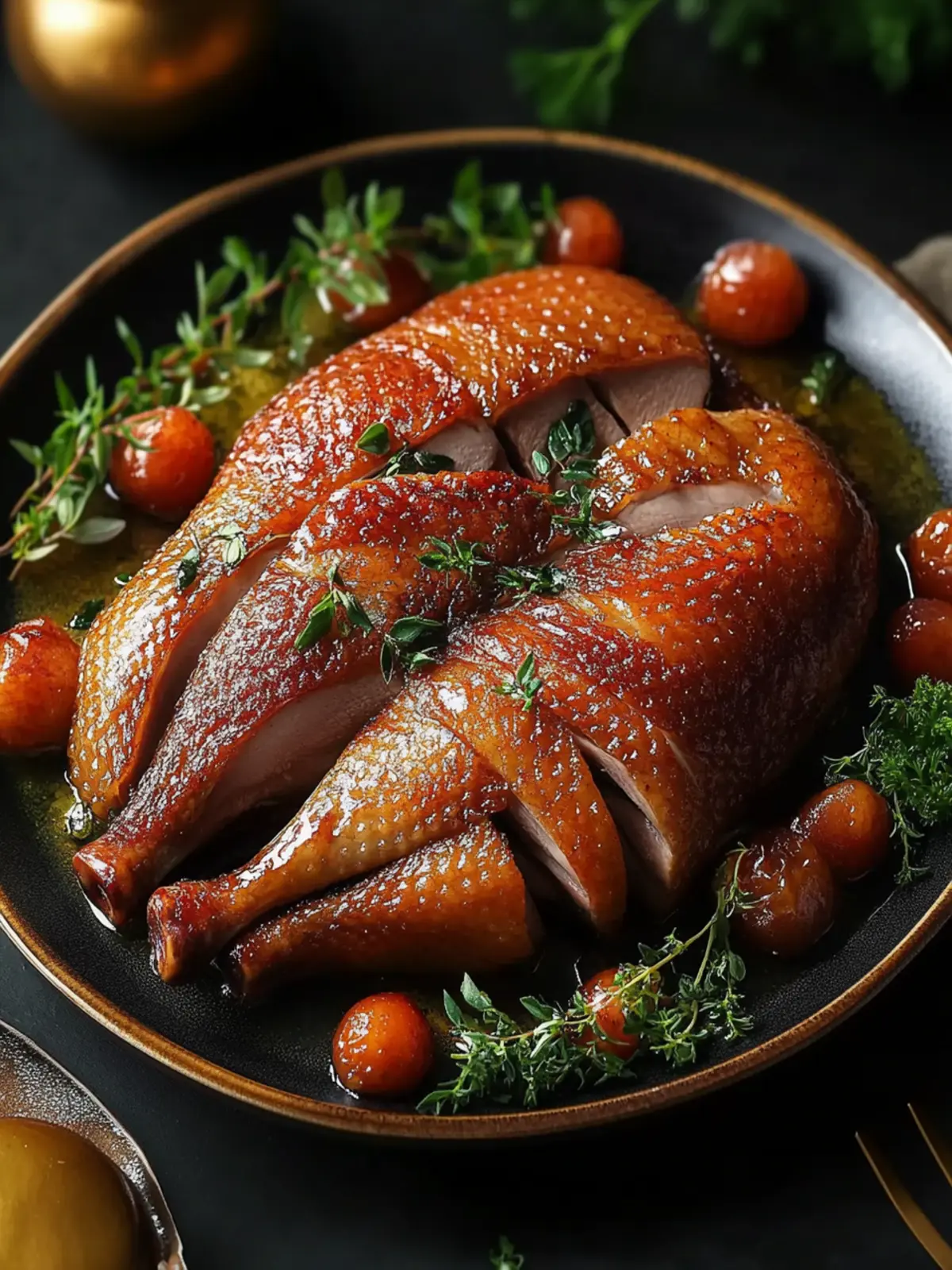
- Preheat your oven to 325°F (163°C). This low temperature helps render the fat slowly and crisps the skin without burning.
- Prepare the duck: Remove the neck and giblets from the cavity if included. Pat the duck dry thoroughly with paper towels—moisture is the enemy of crisp skin.
- Score the skin: Using a sharp knife, gently score the skin in a crisscross pattern, being careful not to cut into the meat. This helps the fat render out during roasting.
- Season the duck: Generously season the inside and outside with sea salt and black pepper. Rub the minced garlic, chopped rosemary, and thyme all over the bird, including inside the cavity.
- Stuff the cavity: Place the quartered onion and orange halves inside the cavity. The aromatics add moisture and flavor as the duck roasts.
- Prepare the glaze: In a small bowl, mix the honey, orange juice, orange zest, and olive oil. Set aside.
- Set up the roasting pan: Arrange chopped carrots and celery on the bottom of the pan to create a natural roasting rack (optional but recommended). Place the duck breast side up on the rack or vegetables.
- Roast the duck: Place the pan in the oven and roast for about 1 hour 45 minutes to 2 hours, or until the internal temperature reaches 165°F (74°C). Every 30 minutes, baste the duck with its own rendered fat and brush on some of the honey glaze to build layers of flavor and crispness.
- Final glaze and crisping: For the last 15 minutes, increase the oven temperature to 400°F (204°C) and brush the duck generously with the glaze to caramelize the skin.
- Rest the duck: Remove from the oven and tent loosely with foil. Let it rest for 15-20 minutes before carving. This helps the juices redistribute.
- Carve and serve: Slice the duck breast thinly, serving alongside your favorite sides.
Tip: If you notice the skin isn’t crisping as much as you’d like, you can briefly broil it at the end, but watch it closely—it burns fast! Also, saving the duck fat for roasting potatoes later is a little secret that always gets compliments.
Cooking Tips & Techniques
One thing I learned the hard way is that drying the duck well before cooking is crucial. Any leftover moisture on the skin will steam the bird instead of crisping it. Pat it dry with paper towels, then let it sit uncovered in the fridge for an hour if you have time—this dries out the skin beautifully.
Scoring the skin is another non-negotiable. It allows fat to escape, preventing greasy skin and helping it crisp up. But don’t cut too deep—you want to avoid puncturing the meat, which can dry it out.
Roasting at a lower temperature first renders the fat slowly, so the skin crisps without burning. Then a quick blast of higher heat at the end gets that golden crackle everyone loves. Basting with the duck fat and glaze throughout keeps the skin flavorful and moist.
Multitasking tip: While the duck roasts, you can prepare easy sides like the quick savory salmon with lemon orzo or a comforting soup like the classic apple carrot ginger soup. Both complement the rich duck nicely without adding too much extra work.
Finally, don’t skip resting the duck after roasting. It’s tempting to dig in right away, but letting it rest means juicy meat that’s easier to carve and more flavorful.
Variations & Adaptations
- Asian-Inspired: Swap the herb rub for a mix of five-spice powder, ginger, and soy sauce. Glaze with hoisin sauce and honey for a sticky sweet finish.
- Fruit Stuffing: Add apples, cranberries, or dried cherries inside the cavity with the onions and orange. This adds a seasonal touch and subtle sweetness to balance the richness.
- Spicy Kick: Mix crushed red pepper flakes or smoked paprika into the glaze for a smoky heat that warms up your palate.
- Different Cooking Methods: Instead of oven roasting, try slow-cooking the duck breast in a covered skillet with the glaze for a faster, but still flavorful, weeknight dinner.
- Allergen Adjustments: This recipe is naturally gluten-free, and honey can be swapped for maple syrup if you prefer a vegan sweetener option.
Once, I tried adding a splash of bourbon to the glaze for a subtle boozy note—surprisingly well-received at a small gathering! Feel free to tweak the seasonings to your taste and make this recipe your own holiday tradition.
Serving & Storage Suggestions
Serve your perfect savory roasted duck warm, sliced thinly against the grain to maximize tenderness. It pairs wonderfully with roasted root vegetables, a bright citrus salad, or even a creamy risotto for a luxurious holiday plate.
If you’re planning ahead, leftover duck keeps beautifully in the fridge for up to 3 days. Store it in an airtight container and reheat gently in the oven or a covered skillet to keep the skin from going rubbery. Avoid the microwave if you want to preserve texture.
For longer storage, duck freezes well for up to 2 months. Wrap tightly in foil and place in a freezer bag. Thaw overnight in the fridge before reheating.
Interestingly, the flavors of this roasted duck deepen after a day or two, making leftovers even tastier. Sometimes I’ll roast the duck a day ahead to ease holiday stress and serve it perfectly fresh the next evening.
Nutritional Information & Benefits
A 3-ounce (85g) serving of roasted duck meat (without skin) provides approximately 190 calories, 20 grams of protein, and healthy fats. The skin adds richness and calories, so enjoy it in moderation.
Duck is a great source of iron, zinc, and B vitamins, which support energy and immune function—especially welcome during the busy holiday season. The fresh herbs add antioxidants, while the citrus provides vitamin C and a refreshing balance.
This recipe fits nicely into gluten-free and low-carb diets naturally. Just keep in mind the fat content if you’re watching calories, but honestly, a holiday feast is the time to enjoy a little indulgence.
Conclusion
This perfect savory roasted duck has become a quiet staple in my holiday kitchen, proving that you don’t need to be a professional chef to create something impressive and delicious. It’s approachable, forgiving, and packed with flavor that makes everyone pause (in a good way) around the dinner table.
Feel free to customize the herbs, glazing options, and side dishes to suit your family’s tastes. Cooking should be fun, and with this duck recipe, you get the chance to shine without stress.
After all, there’s nothing quite like the satisfaction of carving into a beautifully roasted duck that you made yourself—and hearing the compliments that follow.
FAQs
- Q: How do I know when the duck is fully cooked?
A: Use a meat thermometer to check that the internal temperature reaches 165°F (74°C) at the thickest part of the thigh. - Q: Can I prepare the duck a day ahead?
A: Yes, you can season and stuff the duck the day before, keeping it refrigerated. Roast it just before serving for best results. - Q: What can I do with leftover duck fat?
A: Save it! Duck fat is excellent for roasting potatoes or sautéing vegetables for extra flavor. - Q: Can I use duck breasts instead of a whole duck?
A: Absolutely! Adjust cooking time to about 25-30 minutes at 400°F (204°C), skin side down first for crispiness. - Q: Is this recipe suitable for beginners?
A: Definitely. The instructions are straightforward with tips to guide you, even if it’s your first time roasting duck.
Pin This Recipe!
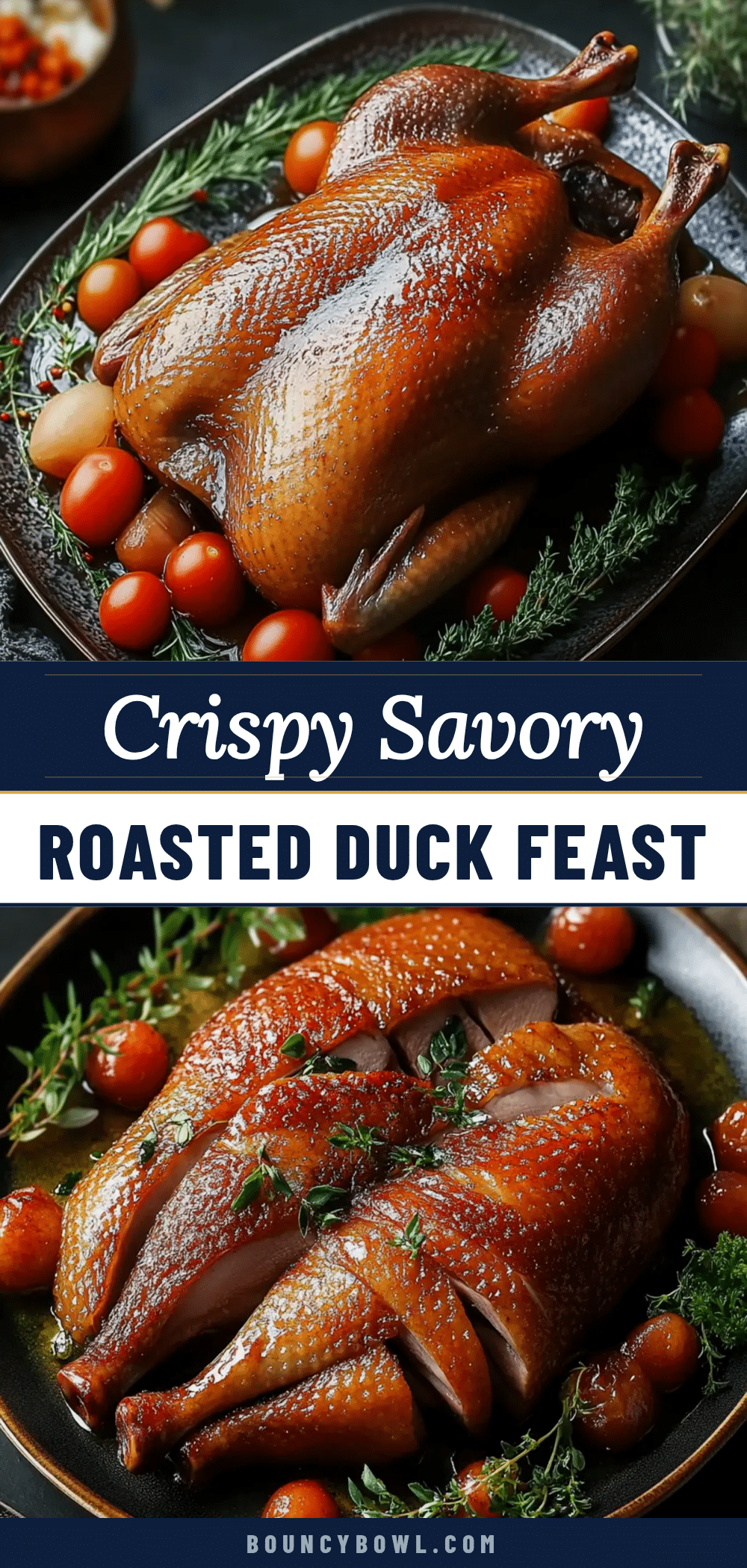
Perfect Savory Roasted Duck Recipe Easy Holiday Feast Ideas
A simple and approachable roasted duck recipe featuring a slow roasting technique with a savory herb rub and honey glaze, perfect for holiday gatherings and special dinners.
- Prep Time: 20 minutes
- Cook Time: 2 hours
- Total Time: 2 hours 20 minutes
- Yield: 6 servings 1x
- Category: Main Course
- Cuisine: American
Ingredients
- 1 whole duck (about 5–6 pounds / 2.3–2.7 kg)
- Sea salt and freshly ground black pepper, to taste
- 4–5 fresh garlic cloves, minced
- 2–3 sprigs fresh rosemary
- 2–3 sprigs fresh thyme
- Zest and juice of 1 large orange
- 2 tablespoons honey
- 2 tablespoons olive oil
- 1 medium onion, quartered
- Chopped carrots and celery (optional, for roasting tray)
Instructions
- Preheat your oven to 325°F (163°C).
- Remove the neck and giblets from the duck cavity if included. Pat the duck dry thoroughly with paper towels.
- Score the skin in a crisscross pattern, being careful not to cut into the meat.
- Season the inside and outside of the duck generously with sea salt and black pepper. Rub minced garlic, chopped rosemary, and thyme all over the bird, including inside the cavity.
- Stuff the cavity with the quartered onion and orange halves.
- In a small bowl, mix honey, orange juice, orange zest, and olive oil to prepare the glaze. Set aside.
- Arrange chopped carrots and celery on the bottom of a roasting pan to create a natural roasting rack (optional). Place the duck breast side up on the rack or vegetables.
- Roast the duck for about 1 hour 45 minutes to 2 hours, or until the internal temperature reaches 165°F (74°C). Every 30 minutes, baste the duck with its own rendered fat and brush on some of the honey glaze.
- For the last 15 minutes, increase oven temperature to 400°F (204°C) and brush the duck generously with the glaze to caramelize the skin.
- Remove the duck from the oven and tent loosely with foil. Let it rest for 15-20 minutes before carving.
- Slice the duck breast thinly and serve.
Notes
Pat the duck dry thoroughly and let it sit uncovered in the fridge for an hour if possible to dry the skin for crispiness. Score the skin carefully to allow fat to render without cutting into the meat. Baste every 30 minutes with rendered fat and honey glaze. For extra crispiness, broil briefly at the end but watch closely to avoid burning. Save duck fat for roasting potatoes or sautéing vegetables.
Nutrition
- Serving Size: 3 ounces (85g) roast
- Calories: 190
- Sugar: 2
- Sodium: 70
- Fat: 12
- Saturated Fat: 3.5
- Carbohydrates: 2
- Protein: 20
Keywords: roasted duck, holiday recipe, savory duck, easy duck recipe, holiday feast, herb roasted duck, honey glaze duck, crispy duck skin, gluten-free duck