Love this? Save it for later!
Share the inspiration with your friends
The onions hit the hot oil and I knew I was in trouble. Not the bad kind — the kind where your whole kitchen suddenly smells like someone else’s abuela is cooking in there. It was a Tuesday, barely 7 AM, and I had a chuck roast thawing on the counter that I’d completely forgotten about.
I’d been craving something deep and savory for days. You know that feeling when salads just aren’t cutting it anymore? When you need something that sticks to your ribs and warms you from the inside out? That was me, staring at that hunk of beef like it held all the answers.
Carne guisada wasn’t something I grew up making. Honestly, I’d only had it a handful of times at tiny taquerias that looked like they’d been there since before I was born. But I remembered how the meat fell apart with just a fork, how the gravy was dark and rich and made you want to sop up every last drop with a flour tortilla. So I figured — why not try?
That first batch? Let’s just say it was edible. The second batch? My neighbor knocked on my door asking what smelled so good. By the third time I made this hearty carne guisada, I’d stopped measuring things and started cooking by feel. That’s when it really came together.
This isn’t one of those fussy recipes that requires a million steps or ingredients you’ll never use again. It’s the kind of meal you make when you want to feel like you’ve accomplished something by lunchtime. The kind that fills your house with that slow-cooked aroma that says someone here really cares about dinner. And honestly? It’s easier than you think.
Why You’ll Love This Recipe
- Rich, Deep Flavor Without the All-Day Cook : Thanks to a few smart shortcuts (hello, browned meat and proper seasoning), you get that slow-simmered taste in about 90 minutes instead of 6 hours.
- Simple Pantry Ingredients : No weird spice blends or hard-to-find cuts of meat. Chuck roast, onions, garlic, tomatoes, and a few pantry staples are all you need.
- Perfect for Meal Prep : This stew actually gets better overnight. Make it on Sunday and enjoy it all week long.
- Crowd-Pleasing Comfort : I’ve served this at family dinners, casual get-togethers, and even a small dinner party. Empty bowls every single time.
- Freezer-Friendly : Double the batch and stash half for those days when you just can’t.
What makes this version different? It’s the balance. Some carne guisada recipes are too tomato-forward or too watery. Others rely on store-bought seasoning packets that taste, well, like a packet. This one uses fresh aromatics, a careful hand with the spices, and a technique that builds layers of flavor without making you work for it. The meat gets seared until deeply browned, the vegetables soften and caramelize, and the broth thickens into something you’d swear simmered all day.
This is the kind of meal that makes you close your eyes after the first bite. It’s comfort food reimagined — quicker than the traditional version, but with the same soul-soothing satisfaction. Perfect for impressing guests without stress, or turning a simple Tuesday into something memorable.
Ingredients You Will Need
This recipe uses simple, wholesome ingredients to deliver bold flavor and satisfying texture without the fuss. Most of these are probably in your kitchen right now.
For the Beef
- 2 ½ pounds beef chuck roast, cut into 1-inch cubes (look for good marbling — it keeps the meat tender)
- 2 tablespoons vegetable oil (or avocado oil for higher smoke point)
- 1 ½ teaspoons kosher salt
- 1 teaspoon black pepper
For the Sofrito Base
- 1 large yellow onion, diced (about 2 cups)
- 1 medium green bell pepper, diced
- 4 cloves garlic, minced (don’t skimp here)
- 2 Roma tomatoes, diced (or 1 can diced tomatoes, drained)
- 1 jalapeño, seeded and minced (optional, for heat)
For the Gravy
- 3 tablespoons all-purpose flour (for thickening)
- 2 cups beef broth, low-sodium preferred
- 1 tablespoon tomato paste
- 1 teaspoon ground cumin
- 1 teaspoon dried oregano (Mexican oregano if you have it)
- ½ teaspoon smoked paprika
- 2 bay leaves
For Serving
- Warm flour tortillas or steamed rice
- Fresh cilantro, chopped
- Lime wedges
- Pickled jalapeños (my personal favorite addition)
Ingredient Notes: I prefer using chuck roast over stew meat because it has more fat and connective tissue, which breaks down into that fork-tender texture. If you’re in a pinch, you can use pre-cut stew meat — just keep an eye on the cooking time as it may cook faster. For the broth, I recommend Swanson’s low-sodium or Kitchen Basics — they have a clean flavor that doesn’t overpower. And if you can find Mexican oregano, it has a slightly earthier, more floral note than Mediterranean oregano that really shines here.
Equipment Needed
Nothing fancy required. Here’s what you’ll need:
- Large heavy-bottomed pot or Dutch oven (5-6 quart) — I use my trusty Lodge enameled cast iron. It holds heat evenly and makes browning a dream.
- Sharp chef’s knife — a dull knife is dangerous when cutting raw beef. Trust me on this.
- Cutting board
- Wooden spoon or spatula for scraping up those browned bits
- Measuring cups and spoons
- Tongs for flipping the meat
No Dutch oven? No problem. A heavy-bottomed stockpot or even a large deep skillet with a lid will work. Just make sure it’s big enough to hold all the meat in a single layer when browning. If you’re using a thinner pot, watch the heat more carefully to prevent scorching. And honestly? A $20 thrift store Dutch oven works just as well as a fancy one — just make sure the lid fits snugly.
Preparation Method
Step 1: Prep and Season the Meat (5 minutes)
Pat the beef cubes dry with paper towels. This is crucial — wet meat won’t brown properly. Season generously with salt and pepper. Let it sit at room temperature for 10 minutes while you prep the vegetables.
Step 2: Brown the Beef (15-20 minutes)
Heat the oil in your Dutch oven over medium-high heat until it shimmers. Working in batches (don’t crowd the pot!), add the beef cubes in a single layer. Let them sear undisturbed for 3-4 minutes until a deep brown crust forms. Flip and repeat on all sides. Transfer browned meat to a plate. If the pot looks dry, add another tablespoon of oil between batches.
Step 3: Build the Sofrito (8-10 minutes)
Reduce heat to medium. Add the diced onion and bell pepper to the pot. Cook for 5-6 minutes, stirring occasionally, until softened and starting to brown around the edges. Add the garlic and jalapeño (if using) and cook for 1 minute until fragrant. Toss in the diced tomatoes and cook for another 2 minutes, scraping up any browned bits from the bottom of the pot — that’s pure flavor right there.
Step 4: Make the Gravy Base (3 minutes)
Sprinkle the flour over the vegetables and stir constantly for 1-2 minutes. This cooks out the raw flour taste and helps thicken the gravy. It will look like a messy paste — that’s perfect.
Step 5: Combine and Simmer (60-75 minutes)
Return the browned beef to the pot along with any accumulated juices. Add the beef broth, tomato paste, cumin, oregano, smoked paprika, and bay leaves. Stir everything together, scraping the bottom once more to release any remaining flavor bits. Bring to a gentle boil, then reduce heat to low, cover, and let it simmer.
Step 6: Check and Adjust (at the 45-minute mark)
After about 45 minutes, give it a stir and check the meat. It should be tender but not quite falling apart. Taste the broth and adjust salt and pepper if needed. If the gravy seems too thin, remove the lid and let it simmer uncovered for the last 15 minutes to thicken.
Step 7: Finish and Serve (5 minutes)
Once the meat is fork-tender and the gravy has thickened to your liking, remove the bay leaves. Let the stew rest for 5 minutes before serving — this allows the flavors to settle. Serve with warm tortillas or rice, and top with fresh cilantro, a squeeze of lime, and pickled jalapeños if you like a little kick.
Sensory Cues: At each stage, trust your senses. The meat should sizzle loudly when it hits the pan — if it’s quiet, the pan isn’t hot enough. The onions should smell sweet and slightly caramelized before you add the garlic. The broth should look dark and rich, not watery, when you add the meat back in. And when it’s done? The aroma alone will tell you — it’s deep, savory, and just a little bit smoky.
Cooking Tips & Techniques
Don’t Skip the Browning
I made this mistake the first time. I was in a hurry and figured, “It’s stew, it’ll cook long enough anyway.” Nope. That browned crust is where all the deep, beefy flavor comes from. It’s called the Maillard reaction, and it’s basically free flavor. Take the extra 15 minutes — your taste buds will thank you.
The Pat-Dry Rule
Seriously. If your meat is wet, it will steam instead of sear. You’ll end up with gray, sad beef instead of gorgeous, crusty chunks. I keep paper towels near my cutting board specifically for this.
Low and Slow Is Your Friend
I know it’s tempting to crank up the heat to speed things up. Don’t. A gentle simmer — where you see tiny bubbles breaking the surface, not a rolling boil — is what breaks down that connective tissue into silky, tender meat. Boiling it will make it tough and stringy.
My Biggest Failure
The time I forgot to buy beef broth and used water instead. It was… sad. The broth adds so much depth that water just can’t replicate. If you’re in a pinch, use chicken broth or even better — save your vegetable scraps and make a quick broth. But don’t use plain water. Learn from my mistake.
Timing Trick
While the meat browns, chop your vegetables. While the sofrito cooks, measure out your spices. This recipe moves fast once you start, so having everything prepped makes it feel effortless. I call it “mise en place for real people” — just have your stuff ready before you turn on the stove.
Variations & Adaptations
Spicy Version
Add 2 dried guajillo or ancho chiles to the pot when you add the broth. Remove them before serving. They add a warm, earthy heat without overwhelming the dish. Or stir in 1 tablespoon of chipotle in adobo for a smoky kick.
Lighter Version
Use lean beef stew meat and skip the flour. Instead, mash a few of the cooked potatoes or beans to thicken the broth naturally. You can also swap the beef broth for a low-sodium version and reduce the oil to 1 tablespoon.
Vegetarian Version
Swap the beef for 2 cans of drained black beans or 3 cups of cubed butternut squash. Use vegetable broth and add a tablespoon of soy sauce or liquid smoke for that umami depth. Cook time drops to about 30 minutes since there’s no meat to tenderize.
Slow Cooker Adaptation
Brown the meat and cook the sofrito on the stovetop first (don’t skip this!), then transfer everything to a slow cooker. Cook on low for 6-8 hours or high for 4-5 hours. Thicken the gravy with a cornstarch slurry (2 tablespoons cornstarch mixed with 2 tablespoons cold water) stirred in during the last 30 minutes.
My Favorite Personal Variation
I add a splash of beer — usually a dark Mexican lager like Negra Modelo — right after the sofrito. Let it cook off for 2 minutes before adding the broth. It adds this subtle malty sweetness that makes the gravy absolutely irresistible. My husband calls it “the secret ingredient” even though I tell everyone about it.
Serving & Storage Suggestions
Serving Temperature: Serve hot, straight from the pot. This stew is best when it’s steaming and the gravy is still luscious. I like to let it rest for 5 minutes off the heat so the flavors settle and the gravy thickens just a bit more.
Presentation: Ladle into deep bowls and let people customize their toppings. A sprinkle of fresh cilantro, a squeeze of lime, a few pickled jalapeños — it makes the dish feel special without any extra work for you. Warm tortillas on the side are non-negotiable in my house.
What to Serve With It: This hearty carne guisada pairs beautifully with Mexican rice, refried beans, or a simple side salad. If you’re feeling indulgent, serve it over creamy butter bean soup for a double-comfort meal. For something lighter, try it alongside a fresh sushi cucumber salad for a refreshing contrast.
Storage: Store leftovers in an airtight container in the refrigerator for up to 4 days. The flavors actually deepen overnight — it’s one of those dishes that tastes even better the next day.
Freezing: This stew freezes beautifully. Let it cool completely, then transfer to freezer-safe containers or zip-top bags. Freeze for up to 3 months. Thaw overnight in the refrigerator before reheating.
Reheating: Reheat gently on the stovetop over medium-low heat, adding a splash of broth or water if the gravy has thickened too much. Microwave works in a pinch, but stovetop gives you better control. And don’t rush it — low and slow keeps the meat tender.
Flavor Development: Like most stews, this one gets better with time. The spices meld, the meat absorbs more flavor, and the gravy thickens into something almost velvety. If you can, make it a day ahead — your future self will thank you.
Nutritional Information & Benefits
Per serving (about 1 ½ cups, without tortillas or rice):
- Calories: 485
- Protein: 42g
- Fat: 28g
- Carbohydrates: 14g
- Fiber: 3g
- Sugar: 5g
- Sodium: 780mg
Health Benefits: Beef chuck is an excellent source of high-quality protein, iron, and B vitamins — particularly B12, which supports energy production and brain function. The onions and garlic provide prebiotic fiber that supports gut health, while the tomatoes are rich in lycopene, a powerful antioxidant. Cumin and oregano add anti-inflammatory properties and aid digestion.
Dietary Considerations: This recipe is naturally gluten-free if you use a gluten-free flour blend or cornstarch instead of all-purpose flour. It’s also dairy-free and nut-free. For a lower-sodium version, use low-sodium broth and reduce the added salt.
Potential Allergens: Contains wheat (if using all-purpose flour). No dairy, eggs, or nuts.
My Personal Take: I love that this meal feels indulgent but is actually packed with nutrients. It’s the kind of food that fills you up without weighing you down — especially if you go easy on the tortillas and load up on the vegetables. A bowl of this after a long day? That’s self-care in a bowl, honestly.
Frequently Asked Questions
Can I make carne guisada in an Instant Pot?
Absolutely. Use the sauté function to brown the meat and cook the sofrito, then pressure cook on high for 35 minutes with a natural release. The meat comes out incredibly tender. Just remember to still brown the meat first — that step is non-negotiable for flavor.
Why is my carne guisada too watery?
This usually happens if you skip the flour step or add too much broth. Next time, let it simmer uncovered for the last 15-20 minutes to allow the liquid to reduce. You can also mix 1 tablespoon of cornstarch with 2 tablespoons of cold water and stir it in at the end to thicken it up quickly.
What cut of beef is best for carne guisada?
Beef chuck roast is my go-to. It has enough fat and connective tissue to break down into tender, juicy pieces. Brisket or bottom round also work, but they can be a bit leaner and might need a little extra cooking time. Stay away from sirloin or tenderloin — they’ll dry out before they get tender.
Can I make this recipe spicy?
Yes! Add a minced jalapeño or serrano pepper with the garlic for fresh heat. For deeper, smokier heat, stir in a tablespoon of chipotle in adobo or add dried guajillo chiles during simmering. If you want it mild, just leave out the jalapeño entirely — the recipe is still incredibly flavorful.
How do I store and reheat leftovers?
Store in an airtight container in the fridge for up to 4 days. To reheat, warm gently on the stovetop over medium-low heat with a splash of broth or water. You can also microwave individual portions — just cover the bowl and heat in 30-second bursts, stirring in between. The stew freezes well for up to 3 months.
Conclusion
This hearty carne guisada has become a staple in my kitchen for good reason. It’s the kind of meal that makes you feel like you’ve accomplished something real — like you’ve made food that matters. It’s rich without being heavy, comforting without being boring, and impressive without being complicated.
What I love most about this recipe is how forgiving it is. You can tweak the spices, swap the vegetables, adjust the heat — it always turns out delicious. And that moment when you take your first bite and the meat just melts? That never gets old.
I’d love to hear how yours turns out. Did you add extra spice? Serve it over rice? Make a double batch for the freezer? Drop a comment below and let me know — your version might just inspire someone else’s dinner tonight. And if you loved this, you’ll probably enjoy my effortless crock pot beef bites for another easy, savory dinner idea. Happy cooking, friends!
Pin This Recipe!

Hearty Carne Guisada: Easy Latin Beef Stew Recipe

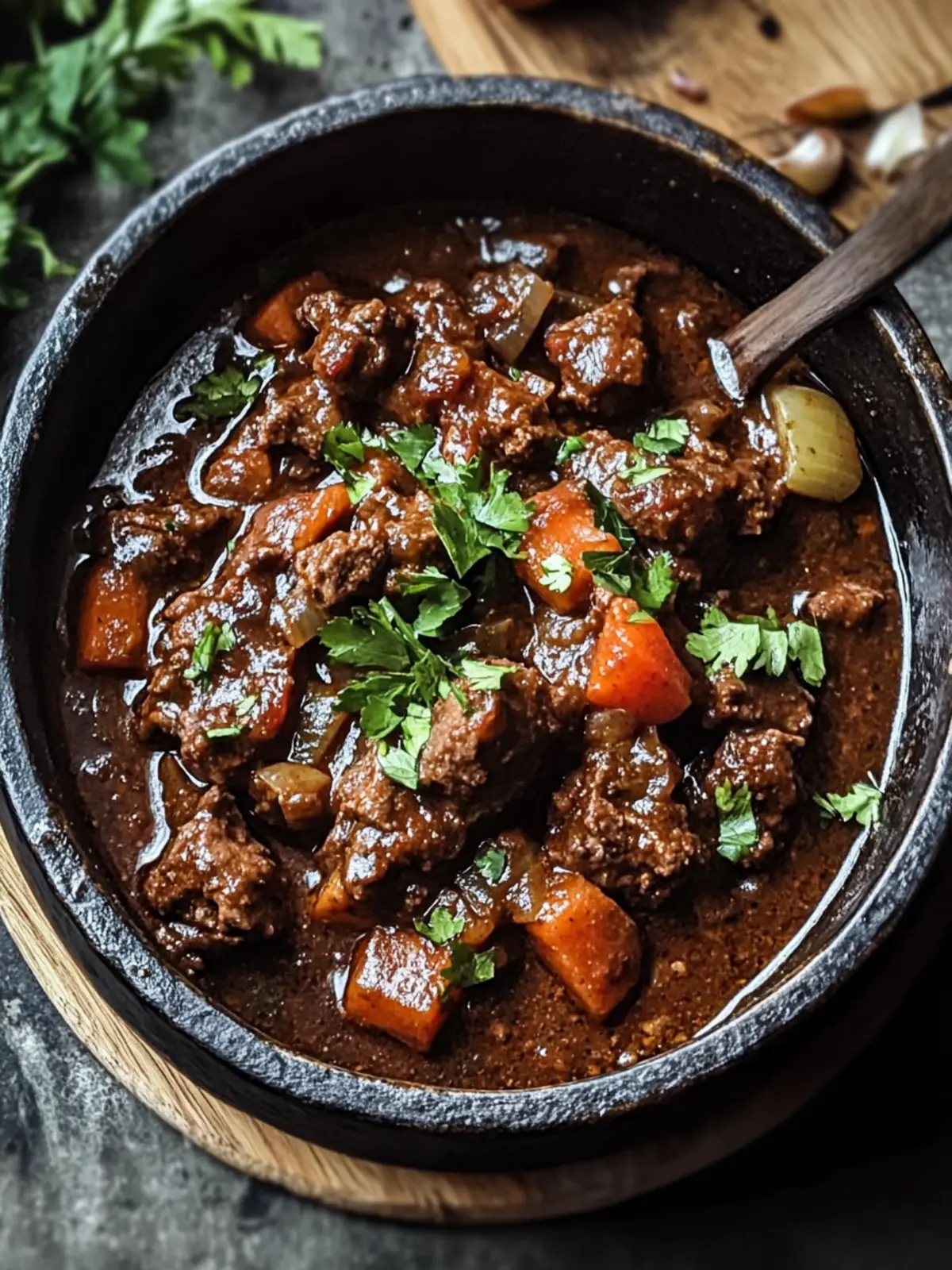
A rich and savory Latin beef stew made with tender chuck roast, a flavorful sofrito base, and a deeply satisfying gravy. This comforting dish comes together in about 90 minutes and is perfect for meal prep or a cozy dinner.
- Prep Time: 15 minutes
- Cook Time: 75 minutes
- Total Time: 90 minutes
- Yield: 6 servings 1x
- Category: Main Course
- Cuisine: Latin
Ingredients
- 2 ½ pounds beef chuck roast, cut into 1-inch cubes
- 2 tablespoons vegetable oil
- 1 ½ teaspoons kosher salt
- 1 teaspoon black pepper
- 1 large yellow onion, diced (about 2 cups)
- 1 medium green bell pepper, diced
- 4 cloves garlic, minced
- 2 Roma tomatoes, diced
- 1 jalapeño, seeded and minced (optional)
- 3 tablespoons all-purpose flour
- 2 cups low-sodium beef broth
- 1 tablespoon tomato paste
- 1 teaspoon ground cumin
- 1 teaspoon dried oregano (preferably Mexican oregano)
- ½ teaspoon smoked paprika
- 2 bay leaves
- Warm flour tortillas or steamed rice, for serving
- Fresh cilantro, chopped, for garnish
- Lime wedges, for serving
- Pickled jalapeños, for serving (optional)
Instructions
- Pat the beef cubes dry with paper towels and season generously with salt and pepper. Let sit at room temperature for 10 minutes.
- Heat the oil in a large Dutch oven over medium-high heat. Working in batches, brown the beef cubes on all sides, about 3-4 minutes per side. Transfer browned meat to a plate.
- Reduce heat to medium. Add the diced onion and bell pepper to the pot and cook for 5-6 minutes until softened and starting to brown. Add the garlic and jalapeño (if using) and cook for 1 minute. Add the diced tomatoes and cook for 2 minutes, scraping up any browned bits.
- Sprinkle the flour over the vegetables and stir constantly for 1-2 minutes until the flour is incorporated and the mixture looks like a paste.
- Return the browned beef to the pot. Add the beef broth, tomato paste, cumin, oregano, smoked paprika, and bay leaves. Stir to combine, scraping the bottom of the pot. Bring to a gentle boil, then reduce heat to low, cover, and simmer for 60-75 minutes, until the meat is fork-tender.
- After about 45 minutes, check the meat and taste the broth. Adjust salt and pepper as needed. If the gravy is too thin, remove the lid and simmer uncovered for the last 15 minutes to thicken.
- Remove the bay leaves. Let the stew rest for 5 minutes before serving. Serve with warm tortillas or rice, and garnish with fresh cilantro, lime wedges, and pickled jalapeños if desired.
Notes
For best flavor, don’t skip browning the meat. Pat the beef dry before searing to ensure a good crust. If the gravy is too thin, simmer uncovered to thicken. This stew tastes even better the next day. For a gluten-free version, use a gluten-free flour blend or cornstarch.
Nutrition
- Serving Size: 1 ½ cups (without to
- Calories: 485
- Sugar: 5
- Sodium: 780
- Fat: 28
- Saturated Fat: 10
- Carbohydrates: 14
- Fiber: 3
- Protein: 42
Keywords: carne guisada, Latin beef stew, hearty stew, comfort food, beef chuck, Mexican stew, easy dinner, meal prep, freezer-friendly