Love this? Save it for later!
Share the inspiration with your friends
I was standing in my kitchen, staring at a sad piece of toast, when the idea hit me. It was one of those Tuesday nights where dinner felt more like a chore than a joy, and I needed something—anything—to make plain bread feel special. I had just finished a long day of recipe testing for the blog, my fingers still smelling faintly of garlic from a batch of quick Chinese garlic butter shrimp I had made earlier. My kitchen counter was a mess of butter wrappers, herb stems, and a single black truffle I had impulsively bought at the farmers market that weekend. It sat there, this ugly little lump of earth, looking completely unassuming. I had no real plan for it. Honestly, I was a little intimidated. Truffles felt fancy, like something you needed a special occasion for, not a random Tuesday.
So I did what any reasonable person would do. I grabbed a stick of unsalted butter, let it soften on the counter, and chopped that truffle into the tiniest pieces I could manage. I mixed it in with a pinch of flaky salt, wrapped it up in parchment paper, and stuck it in the fridge. The next morning, I spread that homemade black truffle butter on a piece of toasted sourdough, took a bite, and actually laughed out loud. It was that good. The butter had transformed overnight—the truffle flavor had mellowed and deepened, infusing every little bit of that creamy fat with an earthy, almost nutty richness. I ate three pieces of toast that morning. No regrets.
That accidental experiment turned into a full-blown obsession. I started putting this homemade black truffle butter on everything. Steaks, pasta, roasted vegetables, scrambled eggs—you name it, I slathered it. Friends started asking for jars as gifts. My neighbor texted me at 9 PM asking for the recipe after I dropped off a slice of moist extreme banana nut bread with a pat of truffle butter on the side. It became my little secret weapon, the thing that made even a simple weeknight meal feel like a celebration. And the best part? It is ridiculously easy to make. You don’t need to be a chef or own fancy equipment. You just need good butter, a decent truffle, and a little bit of patience. This recipe is proof that the most luxurious things in life don’t have to be complicated.
Why You’ll Love This Recipe
This homemade black truffle butter is the kind of recipe that makes you feel like a kitchen wizard without actually doing much work. I have tested this method about a dozen times, tweaking the truffle-to-butter ratio, experimenting with different salts, and even trying out various resting times. What I am sharing with you today is the version that consistently delivers the most intense, well-rounded truffle flavor. Trust me, I have had my fair share of truffle butters that tasted more like butter with a vague earthy whisper—this one sings.
- Incredibly Easy: It takes about 10 minutes of active prep time. Seriously, that is it. The hardest part is chopping the truffle, and even that is simple.
- Minimal Ingredients: You only need three main ingredients—good quality unsalted butter, a fresh black truffle, and flaky sea salt. No weird additives or hard-to-find items.
- Perfect for Gifting: Wrap it up in parchment paper, tie it with twine, and you have a homemade gift that looks and tastes like it came from a fancy gourmet shop.
- Instant Flavor Upgrade: A tiny pat of this butter can transform a plain steak, a bowl of pasta, or even a simple baked potato into something restaurant-worthy.
- Make-Ahead Friendly: It keeps in the fridge for up to two weeks and freezes beautifully for months. You can always have some on hand for those moments when dinner needs a little magic.
What makes this recipe different from all the others I have tried? It is the resting time. Most recipes tell you to use the butter immediately, but I have found that letting it sit in the fridge for at least 24 hours allows the truffle flavor to fully permeate the butter. The result is a deeply aromatic, evenly flavored butter that tastes like it has been infused for days. It is not just good—it is the kind of butter that makes you close your eyes after the first bite. It is comfort food reimagined, something that turns a simple meal into a memorable experience without any stress or fuss.
What Ingredients You Will Need
This recipe uses a short list of high-quality ingredients to deliver that rich, decadent flavor. Each component plays a specific role, so choosing the right ones makes a real difference. Here is everything you will need:
- 1 cup (2 sticks / 226 grams) unsalted butter, softened to room temperature: This is the foundation of your truffle butter. I strongly recommend using a high-quality European-style butter like Kerrygold or Plugrà. These butters have a higher fat content (around 82-84%) and less water, which means a creamier texture and a better canvas for the truffle flavor. Let it sit out on the counter for about 30-45 minutes until it is soft but not melting. You want it pliable enough to mix easily.
- 1 fresh black truffle (about 0.5 to 1 ounce / 15 to 28 grams): This is the star of the show. Fresh black truffles are available in the winter months (Périgord truffles are the classic choice) and have a pungent, earthy, slightly chocolatey aroma. Look for truffles that are firm, heavy for their size, and have a strong, pleasant smell. Avoid any that feel spongy or have a faint ammonia odor. If fresh truffles are out of season or budget, you can use a high-quality black truffle paste (about 1-2 tablespoons), but the flavor will be less nuanced. I have also used preserved black truffles in a jar, but you need to drain them well and pat them dry before chopping.
- 1/2 teaspoon flaky sea salt (like Maldon or fleur de sel): The salt is not just for seasoning—it enhances the truffle’s earthy notes and balances the richness of the butter. Flaky salt is preferred because it dissolves more slowly and provides little bursts of flavor. Regular table salt can be used in a pinch, but use only 1/4 teaspoon as it is much more concentrated.
- Optional: 1 small clove garlic, minced (about 1/4 teaspoon): I know purists might disagree, but I occasionally add a tiny bit of fresh garlic to the mix. It adds a subtle savory backbone that complements the truffle beautifully. Use it sparingly—you do not want it to overpower the truffle. This is completely optional and I often leave it out.
- Optional: 1 teaspoon fresh lemon juice: A tiny squeeze of lemon juice can brighten the butter and cut through the richness. Again, completely optional, but I have found it helps the truffle flavor pop a little more.
When it comes to sourcing your truffle, I have had good luck with online specialty food retailers and even some well-stocked farmers markets during the season. If you are on a budget, you can also try using black truffle oil, but be warned—most truffle oils are synthetic and can taste artificial. I personally avoid them. Stick with the real thing or a good quality paste for the best results.
Equipment Needed
You do not need a lot of fancy gear to make this homemade black truffle butter, which is part of its charm. Here is what I use every time:
- A sharp chef’s knife and cutting board: You will be finely mincing the truffle, and a sharp knife makes all the difference. A dull knife will just mash the truffle and release too much moisture.
- A medium mixing bowl: Any bowl will do. I prefer a ceramic or glass bowl because they do not retain odors.
- A rubber spatula or wooden spoon: For mixing the butter and truffle together. A spatula is great for scraping every last bit.
- Parchment paper or plastic wrap: For shaping and wrapping the butter log. Parchment paper is my go-to because it is eco-friendly and gives a nice rustic look if you are gifting it.
- A small microplane or fine grater (optional but helpful): Some people prefer to grate the truffle instead of chopping it. I have tried both methods, and I prefer chopping because it gives you little flecks of truffle throughout the butter. Grating can sometimes make the truffle disappear into the butter too much.
- Plastic wrap or an airtight container: For storing the finished butter in the fridge or freezer.
If you do not have a microplane, do not worry. A sharp knife and a steady hand are all you really need. I have made this recipe using just a butter knife and a plate before (in a pinch), and it worked fine. The key is to get the truffle as fine as possible so it distributes evenly.
Preparation Method
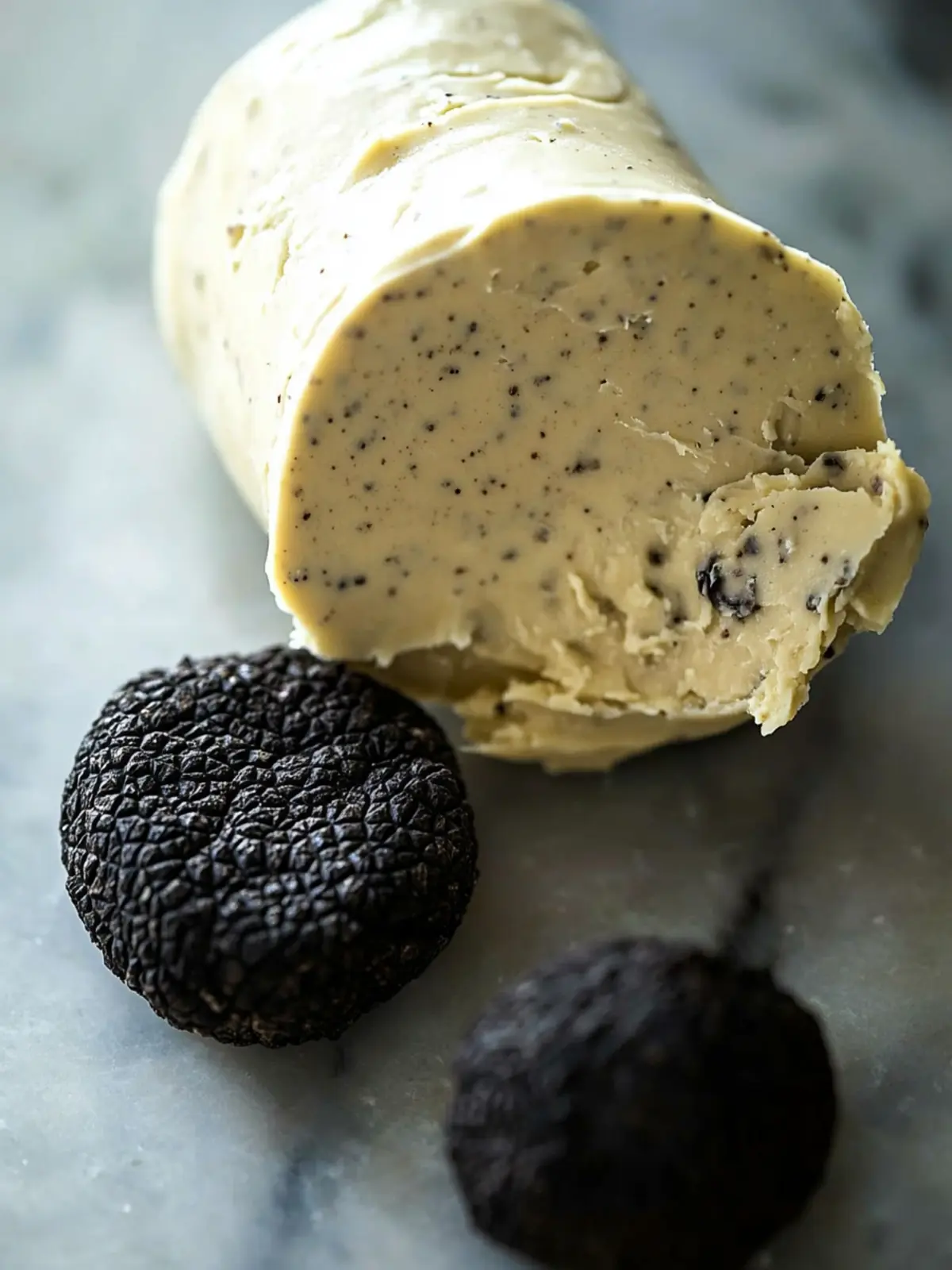
Making this homemade black truffle butter is almost embarrassingly simple, but the results are anything but. Follow these steps, and you will have a batch of decadent butter that will make everything taste better.
- Soften the butter: Take your 1 cup (2 sticks) of unsalted butter out of the fridge about 30-45 minutes before you plan to start. You want it to be soft enough that a finger pressed into it leaves an indent, but not so soft that it is greasy or melting. If you are short on time, you can cut the butter into small cubes and let them sit for 15 minutes, but I find the slow, natural softening works best for even mixing.
- Prepare the truffle: Gently brush the fresh black truffle with a soft brush or a dry paper towel to remove any dirt. Do not wash it—truffles are like mushrooms and will absorb water, which dilutes their flavor. Using your sharp chef’s knife, finely mince the truffle into tiny pieces. You want them about the size of a grain of rice or smaller. Take your time here. The finer you chop, the more surface area there is for the flavor to infuse into the butter. I usually spend about 5 minutes on this step, carefully working my way through the truffle.
- Mix the butter and truffle: Place the softened butter in your mixing bowl. Add the minced truffle and the 1/2 teaspoon of flaky sea salt. If you are using the optional garlic or lemon juice, add them now. Using your rubber spatula or a wooden spoon, mix everything together until the truffle is evenly distributed throughout the butter. Do not overmix—you just want to combine it. You should see little black flecks of truffle speckled throughout the pale yellow butter. It looks beautiful, honestly.
- Shape the butter: Lay a sheet of parchment paper (about 12 inches long) on your work surface. Scrape the truffle butter mixture onto the center of the paper. Using the spatula, roughly shape it into a log about 6 inches long. Then, using the parchment paper to help you, roll the butter into a tight cylinder, twisting the ends like a candy wrapper to seal it. If you prefer, you can also press the butter into a small ramekin or jar for a different presentation. I usually make a log because it is easy to slice off pats as needed.
- Chill the butter: Place the wrapped butter log in the refrigerator and let it chill for at least 2 hours, but ideally 24 hours. This resting time is crucial. During this period, the truffle flavor migrates from the solid pieces into the fat of the butter, creating a much more complex and integrated taste. I have tried using it immediately, and while it is still good, the flavor is much more subtle. After a full day in the fridge, it is a completely different experience—richer, earthier, and more aromatic.
- Slice and serve: Once the butter is firm, unwrap it and slice off a pat (about 1/2 inch thick) to use. Let it sit at room temperature for 5-10 minutes to soften slightly before spreading on bread, melting over a steak, or tossing with hot pasta. The butter will be creamy and luxurious, with those beautiful flecks of black truffle throughout.
A quick note: if you notice any small bits of truffle falling out during mixing, do not worry. Just press them back into the butter log before you chill it. Also, if your butter is too soft and starts to look greasy while mixing, pop the bowl in the fridge for 5 minutes to firm it up a bit before shaping.
Cooking Tips & Techniques
Over the many batches of truffle butter I have made, I have learned a few tricks that make a real difference. Here are my top tips for getting the best results every time.
Do not skimp on the resting time. I cannot stress this enough. The first time I made this, I was impatient and used the butter after only an hour in the fridge. It was fine, but the truffle flavor was barely there. It tasted like fancy butter, not truffle butter. Letting it rest for a full 24 hours allows the truffle’s volatile aromatic compounds to fully infuse the butterfat. The difference is night and day. I have even let it rest for 48 hours, and the flavor just gets deeper and better.
Use cold butter for slicing, not for mixing. When you are ready to use your truffle butter, slice off what you need from the cold log. Then let the slices come to room temperature before spreading. This prevents the butter from crumbling and gives you a smooth, creamy texture. If you try to spread cold butter directly, it will just tear your bread.
Watch out for moisture. Truffles contain some natural moisture, and if you add too much liquid (like from washing the truffle or using a wet garlic clove), your butter can become watery and separate slightly. Always dry your truffle thoroughly with a paper towel before chopping. If you are using preserved truffles in a jar, drain them well and pat them dry. A little bit of moisture is okay, but too much will ruin the texture.
Experiment with different salts. I have tried this recipe with smoked salt, pink Himalayan salt, and even a touch of truffle salt. Each one gives the butter a slightly different character. Smoked salt adds a subtle smoky note that pairs surprisingly well with the earthy truffle. Truffle salt can boost the truffle flavor even further, but be careful not to oversalt. I usually stick with flaky sea salt because it is clean and lets the truffle shine.
One mistake I made early on: I tried to speed up the softening process by microwaving the butter. Big mistake. The butter melted unevenly, and when I mixed in the truffle, the texture was all wrong—grainy and separated. Always soften your butter at room temperature. It takes a little longer, but the results are worth it.
Variations & Adaptations
This homemade black truffle butter is incredibly versatile, and I have played around with quite a few variations over the years. Here are some of my favorites:
- Herb-Infused Truffle Butter: Add 1 tablespoon of finely chopped fresh herbs like thyme, rosemary, or chives along with the truffle. The herbs add a fresh, aromatic contrast to the earthy truffle. I love this version on roasted chicken or tossed with roasted potatoes. It is also fantastic spread on a slice of easy homemade chocolate croissants for a savory-sweet breakfast treat.
- Garlic Truffle Butter: This is my go-to for pasta. Add 1-2 cloves of finely minced or grated fresh garlic to the butter along with the truffle. Let it rest for 24 hours, then toss it with hot spaghetti or fettuccine. Add a little pasta water to emulsify, and you have a restaurant-quality dish in minutes. I have even used this garlic truffle butter to make a quick sauce for easy baked pineapple salmon, and it was incredible.
- Vegan Truffle Butter: For a dairy-free version, use a high-quality vegan butter stick (like Miyoko’s or Violife). The process is exactly the same. The flavor will be slightly different, but it is still delicious. I have made this for friends with dairy allergies, and they always ask for more. Just make sure your vegan butter is unsalted so you can control the salt level.
- White Truffle Butter: If you can get your hands on a fresh white truffle, by all means, use it! White truffles have a more delicate, garlicky aroma compared to black truffles. Use the same method, but reduce the resting time to 12 hours, as white truffle flavor can fade more quickly. This version is absolutely divine on simple scrambled eggs or risotto.
- Spicy Truffle Butter: Add a pinch of red pepper flakes or a tiny bit of cayenne pepper to the butter along with the truffle. The heat cuts through the richness and adds an unexpected kick. I love this on grilled corn on the cob or spread on a steak before searing.
One personal variation I tried that surprised me: I added a teaspoon of honey to the butter along with the truffle. It sounds weird, but the subtle sweetness actually complemented the earthy truffle beautifully. I used it on roasted carrots, and it was a hit. Don’t be afraid to experiment—truffle butter is forgiving and fun to play with.
Serving & Storage Suggestions
This homemade black truffle butter is a gift that keeps on giving. Here is how to serve it and keep it fresh.
Serving temperature: For the best flavor and texture, let the butter sit at room temperature for about 10-15 minutes before serving. This softens it just enough to spread easily without becoming greasy. Serve it alongside a crusty baguette, warm dinner rolls, or even crackers for a simple but elegant appetizer.
How to use it: The possibilities are endless. Melt a pat over a hot steak or grilled fish. Toss it with freshly cooked pasta and a little pasta water for an instant sauce. Spread it on toast and top with flaky salt and a fried egg for the ultimate breakfast. Stir a spoonful into mashed potatoes or risotto at the end of cooking. I have even used it to finish a bowl of cozy creamy chicken pot pie soup for an extra layer of richness.
Storage: Wrap the butter log tightly in parchment paper and then in plastic wrap, or place it in an airtight container. It will keep in the refrigerator for up to 2 weeks. The flavor actually continues to develop over the first few days, so do not be afraid to make it ahead of time.
Freezing: Truffle butter freezes beautifully. Wrap the log tightly in plastic wrap, then in a layer of aluminum foil, and place it in a freezer-safe bag. It will keep for up to 3 months. When you are ready to use it, simply thaw it in the refrigerator overnight. I like to freeze individual pats wrapped in parchment paper so I can grab one whenever I need it.
Reheating note: If you are melting the butter for a sauce or to drizzle over vegetables, do it gently over low heat. High heat can cause the butter to separate and the truffle flavor to become harsh. A gentle melt preserves the delicate aroma.
Nutritional Information & Benefits
While truffle butter is definitely an indulgence, it does offer some surprising benefits. Here is a quick breakdown per 1-tablespoon serving (about 14 grams):
| Nutrient | Amount Per Serving |
|---|---|
| Calories | 100-110 |
| Total Fat | 11-12g |
| Saturated Fat | 7-8g |
| Cholesterol | 30-35mg |
| Sodium | 80-100mg (varies with salt) |
| Carbohydrates | 0g |
| Protein | 0g |
| Vitamin A | 8-10% DV |
Black truffles themselves are a good source of antioxidants, including polyphenols and flavonoids, which help fight oxidative stress in the body. They also contain small amounts of fiber, protein, and minerals like iron and magnesium. Of course, since you are using just a small amount of truffle in the butter, these benefits are minimal, but every little bit helps.
Butter, especially from grass-fed cows, provides fat-soluble vitamins like A, D, E, and K2, as well as conjugated linoleic acid (CLA), which has been linked to various health benefits. That said, this is a high-fat, high-calorie condiment, so use it in moderation. A little goes a long way.
Dietary considerations: This recipe is naturally gluten-free, low-carb, and keto-friendly. It is not suitable for vegans (unless using the vegan butter variation) or those with dairy allergies. Always check your truffle source if you have specific dietary concerns.
Conclusion
This homemade black truffle butter is one of those recipes that feels like a secret weapon. It is so simple to make, yet it has the power to transform the most ordinary meal into something genuinely special. Whether you are spreading it on a piece of toast for a quiet breakfast, melting it over a steak for a date night dinner, or gifting it to a friend who loves to cook, it always delivers. It is rich, decadent, and deeply satisfying in a way that only real, simple ingredients can be.
I love this recipe because it reminds me that you do not need to spend hours in the kitchen or use a dozen complicated techniques to create something luxurious. Sometimes, all you need is good butter, a little patience, and a willingness to experiment. I hope you give it a try and make it your own. Maybe you will add a little garlic, or some fresh herbs, or even a pinch of heat. The beauty of this recipe is that it is a starting point, not a rulebook.
I would love to hear how you use your truffle butter! Leave a comment below and tell me your favorite way to enjoy it. Did you try a variation? Did you serve it with something unexpected? Share your experience—I read every comment and love getting inspired by your creativity. And if you loved this recipe, do not forget to pin it for later or share it with a friend who deserves a little extra decadence in their life. Happy cooking!
Frequently Asked Questions
Can I use truffle oil instead of fresh truffle?
You can, but I do not recommend it. Most truffle oils are made with synthetic compounds that taste artificial and can have a harsh, chemical flavor. The texture will also be different, as oil does not incorporate into butter the same way solid truffle does. If fresh truffles are not available, a good quality black truffle paste is a much better alternative.
How long does homemade truffle butter last in the fridge?
Properly wrapped and stored in an airtight container, your truffle butter will last for up to 2 weeks in the refrigerator. The flavor will be at its peak after 24-48 hours of resting, and it will gradually mellow over the following days. Always check for any off smells or mold before using if it has been stored for a while.
Can I freeze truffle butter?
Absolutely! Truffle butter freezes very well. Wrap it tightly in plastic wrap, then in aluminum foil, and place it in a freezer-safe bag. It will keep for up to 3 months. Thaw it overnight in the refrigerator before using. The texture and flavor remain excellent after freezing.
Do I have to use unsalted butter?
I strongly recommend unsalted butter for this recipe. Salted butters vary widely in their salt content, which can make your truffle butter too salty, especially since we are adding flaky sea salt separately. Using unsalted butter gives you full control over the seasoning. If you only have salted butter on hand, reduce or omit the added salt.
What is the best way to chop a truffle?
Use a sharp chef’s knife and a steady hand. First, brush off any dirt with a soft brush or dry paper towel. Then, slice the truffle into very thin rounds, stack a few slices, and cut them into thin strips. Finally, cut across the strips to create a fine mince. Take your time—the finer the mince, the better the flavor distribution. Some people use a microplane, but I find chopping gives a better texture with visible flecks throughout the butter.
Pin This Recipe!

Easy Homemade Black Truffle Butter Recipe – Rich & Decadent
This homemade black truffle butter is incredibly easy to make with just three main ingredients and transforms any meal into something special. It’s perfect for gifting and adds instant flavor to steaks, pasta, vegetables, and more.
- Prep Time: 10 minutes
- Cook Time: 0 minutes
- Total Time: 24 hours 10 minutes (includes resting time)
- Yield: 16 servings (1 tablespoon per serving) 1x
- Category: Condiment
- Cuisine: French
Ingredients
- 1 cup (2 sticks / 226 grams) unsalted butter, softened to room temperature
- 1 fresh black truffle (about 0.5 to 1 ounce / 15 to 28 grams)
- 1/2 teaspoon flaky sea salt (like Maldon or fleur de sel)
- Optional: 1 small clove garlic, minced (about 1/4 teaspoon)
- Optional: 1 teaspoon fresh lemon juice
Instructions
- Soften the butter: Take your 1 cup (2 sticks) of unsalted butter out of the fridge about 30-45 minutes before you plan to start. You want it to be soft enough that a finger pressed into it leaves an indent, but not so soft that it is greasy or melting.
- Prepare the truffle: Gently brush the fresh black truffle with a soft brush or a dry paper towel to remove any dirt. Do not wash it. Using your sharp chef’s knife, finely mince the truffle into tiny pieces about the size of a grain of rice or smaller.
- Mix the butter and truffle: Place the softened butter in your mixing bowl. Add the minced truffle and the 1/2 teaspoon of flaky sea salt. If you are using the optional garlic or lemon juice, add them now. Using your rubber spatula or a wooden spoon, mix everything together until the truffle is evenly distributed throughout the butter.
- Shape the butter: Lay a sheet of parchment paper (about 12 inches long) on your work surface. Scrape the truffle butter mixture onto the center of the paper. Using the spatula, roughly shape it into a log about 6 inches long. Then, using the parchment paper to help you, roll the butter into a tight cylinder, twisting the ends like a candy wrapper to seal it.
- Chill the butter: Place the wrapped butter log in the refrigerator and let it chill for at least 2 hours, but ideally 24 hours. This resting time is crucial for the truffle flavor to fully infuse the butter.
- Slice and serve: Once the butter is firm, unwrap it and slice off a pat (about 1/2 inch thick) to use. Let it sit at room temperature for 5-10 minutes to soften slightly before spreading on bread, melting over a steak, or tossing with hot pasta.
Notes
For best flavor, let the butter rest in the fridge for at least 24 hours. Use high-quality European-style butter for a creamier texture. Do not wash the truffle; just brush off dirt. If using preserved truffles, drain and pat dry thoroughly.
Nutrition
- Serving Size: 1 tablespoon (about
- Calories: 105
- Sodium: 90
- Fat: 12
- Saturated Fat: 8
Keywords: black truffle butter, homemade truffle butter, truffle butter recipe, easy truffle butter, gourmet butter, truffle condiment