Love this? Save it for later!
Share the inspiration with your friends
The pineapple juice was pooling around the salmon fillets, and I was pretty sure I’d just ruined dinner. It was a Tuesday, the kind where you stare into the fridge hoping something will cook itself. I had a pack of salmon thawing on the counter, a can of pineapple rings I’d bought on a whim, and about twenty minutes before the hangry phase of the evening officially began. My original plan—something fancy with a pan sauce—felt like a joke. So I just dumped it all in a baking dish. No marinating. No searing. Just fruit and fish, side by side in the oven.
Honestly, I expected to be ordering pizza by 6:15. But then the smell started drifting out of the oven. Sweet, but not cloying. Savory, but bright. It smelled like a vacation I hadn’t taken. When I pulled that dish out, the salmon was flaky, the pineapple had caramelized at the edges, and the juices had turned into this gorgeous, sticky glaze. I took one bite and literally texted my sister: “I think I accidentally made the best thing ever.” And that’s the truth. This easy baked pineapple salmon wasn’t planned. It was a happy accident that became a weekly staple.
It’s not complicated. It doesn’t require any special skills. You just toss everything in a dish, let the oven do the heavy lifting, and twenty minutes later you have a dinner that looks and tastes like you tried way harder than you actually did. It’s the kind of recipe that makes you feel like a genius without actually doing much work. And honestly? That’s my favorite kind of recipe.
Why You’ll Love This Recipe
I’ve tested this baked pineapple salmon more times than I can count, tweaking the heat, the thickness of the slices, and the type of pineapple. What I landed on is the perfect balance of sweet, savory, and tangy, all cooked in one dish with minimal cleanup. It’s the kind of recipe that proves simple ingredients can create something truly special when you let them do their thing.
- Ready in 20 Minutes: From fridge to table in the time it takes to watch a single episode of a sitcom. This is a lifesaver on those nights when you just can’t.
- Simple, Everyday Ingredients: You need salmon, canned pineapple, soy sauce, and a few pantry staples. No fancy grocery runs required.
- Perfect for Busy Weeknights: It’s impressive enough to serve to guests but easy enough to make on a random Tuesday when you’re tired.
- One-Dish Wonder: Everything bakes in a single dish, which means less scrubbing and more relaxing. I’m all about that.
- Unbelievably Delicious: The pineapple caramelizes, the salmon stays incredibly moist, and the sauce is addictive. It’s a flavor combination that just works.
What makes this recipe different from all the other pineapple salmon recipes out there? It’s the technique. Instead of grilling or pan-searing (which can dry out the fish), we bake it low and slow enough to keep the salmon tender while the pineapple juices reduce into a thick, glossy glaze. No flipping, no fussing, just perfect results every single time. It’s comfort food with a tropical twist, and it’s fast enough to save even the most chaotic weeknight.
What Ingredients You Will Need
This recipe relies on a handful of simple, wholesome ingredients that work together to deliver big flavor without a lot of hassle. Most of these are probably already in your kitchen, which makes this a perfect last-minute dinner option.
- Salmon Fillets (4 fillets, about 6 oz each): You want fillets that are roughly the same thickness so they cook evenly. I prefer wild-caught salmon when I can find it, but farm-raised works perfectly here too. Look for fillets that are bright in color and smell fresh, not fishy.
- Pineapple Rings (1 can, 20 oz, in juice): Canned pineapple is the star here—it’s consistent, sweet, and the juice is essential for the glaze. Don’t use fresh pineapple for this recipe; it contains an enzyme that can break down the salmon and make it mushy. I like Dole or Del Monte for reliable quality.
- Soy Sauce (¼ cup, low sodium): This provides the salty, savory backbone that balances the sweetness of the pineapple. Low sodium is key so you can control the salt level. Tamari or coconut aminos work great as a gluten-free alternative.
- Brown Sugar (2 tablespoons, packed): A little extra sweetness helps the glaze caramelize beautifully in the oven. Light or dark brown sugar both work, but dark will give a deeper, more molasses-like flavor.
- Garlic (3 cloves, minced): Fresh garlic is non-negotiable here. It adds a pungent, aromatic quality that the glaze needs. Don’t use the jarred stuff if you can avoid it—fresh makes a real difference.
- Fresh Ginger (1 tablespoon, grated): Ginger and pineapple are a classic pairing. It adds a warm, slightly spicy kick that cuts through the sweetness. If you don’t have fresh, you can use ½ teaspoon of ground ginger, but fresh is better.
- Rice Vinegar (1 tablespoon): A touch of acidity to brighten everything up and balance the richness of the salmon. Apple cider vinegar or a squeeze of lime juice can be used in a pinch.
- Sesame Oil (1 teaspoon): This adds a lovely nutty aroma that ties the Asian-inspired flavors together. Toasted sesame oil is best for this.
- Green Onions (for garnish): A sprinkle of sliced green onions adds a fresh, mild onion flavor and a pop of color.
- Sesame Seeds (for garnish, optional): Toasted sesame seeds add a nice little crunch and visual appeal.
Equipment Needed
You don’t need a lot of fancy equipment for this one, which is part of why I love it. Here’s what you’ll need to get started:
- 9×13-inch Baking Dish: This is the perfect size to hold four salmon fillets and the pineapple rings in a single layer. A glass or ceramic dish works best for even heat distribution. If you don’t have one, a rimmed baking sheet will work, just make sure it has sides to catch the juices.
- Small Bowl: For whisking together the glaze ingredients. Any small mixing bowl will do.
- Chef’s Knife and Cutting Board: For mincing the garlic and ginger, and slicing the green onions. A sharp knife makes this job a lot easier.
- Measuring Spoons and Cups: Accuracy matters for the glaze, so use proper measuring tools.
- Whisk or Fork: To combine the glaze ingredients until the sugar is dissolved.
- Tongs: For handling the hot salmon when it comes out of the oven. A spatula works too.
I’ve made this in a cast-iron skillet before, and it works beautifully—the heat retention helps the glaze bubble up nicely. Just be careful if you’re using an enameled cast iron, as the acid from the pineapple can affect the finish over time.
Preparation Method
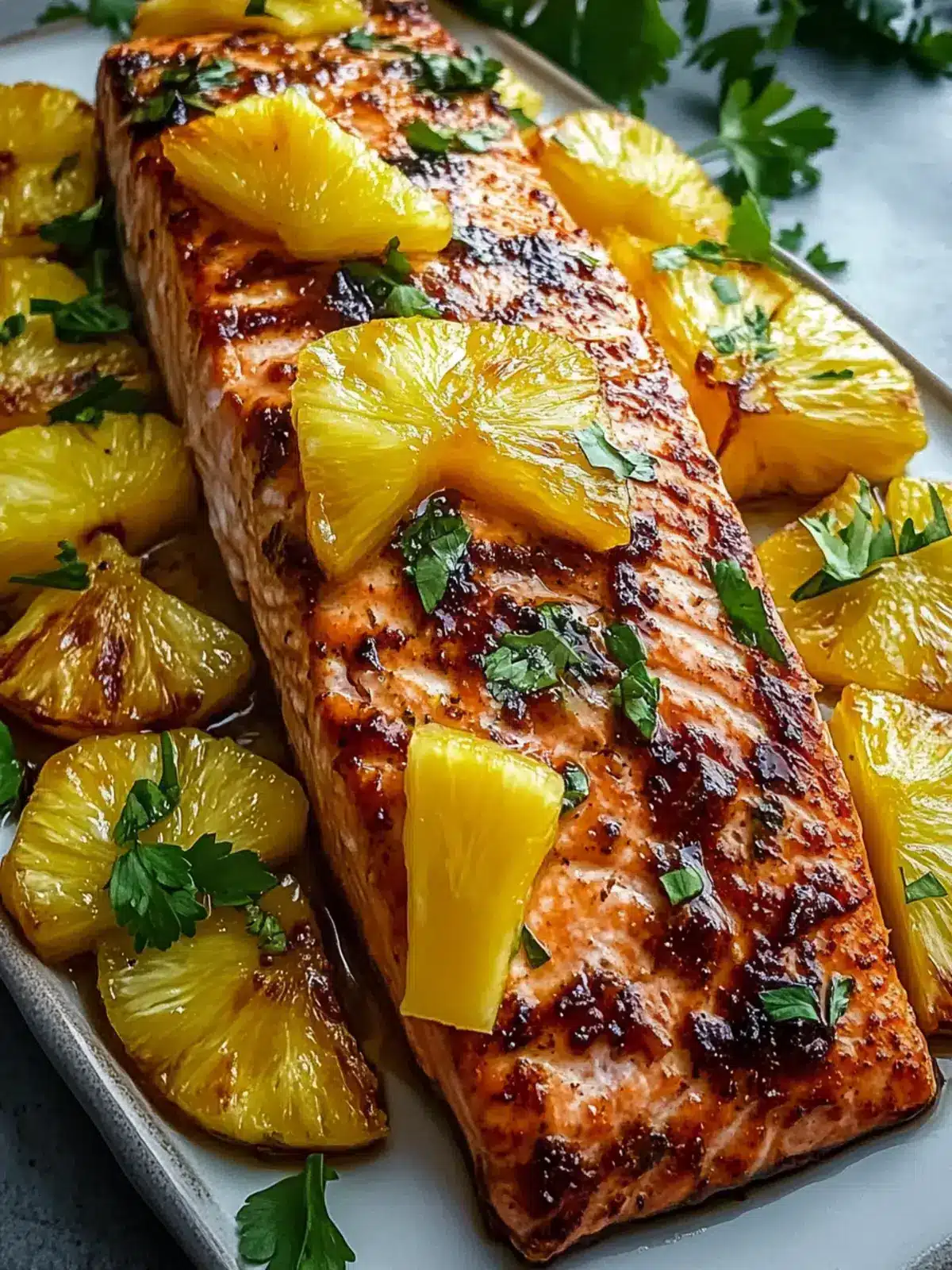
Let’s get cooking. This comes together so fast, you’ll barely believe it. Follow these steps, and you’ll have a gorgeous dinner on the table in no time.
- Preheat your oven to 400°F (200°C). This is important—a hot oven ensures the salmon cooks quickly and the glaze caramelizes without drying out the fish. While the oven heats up, take your salmon fillets out of the fridge and let them sit at room temperature for about 10 minutes. This helps them cook more evenly.
- Make the glaze. In your small bowl, whisk together the soy sauce, brown sugar, minced garlic, grated ginger, rice vinegar, and sesame oil. Whisk until the brown sugar is fully dissolved. The mixture should be fragrant and slightly thick. Set it aside.
- Prepare the baking dish. Lightly grease your 9×13-inch baking dish with a little cooking spray or a drizzle of olive oil. Arrange the salmon fillets skin-side down (if they have skin) in the center of the dish. Leave a little space between each fillet so the heat can circulate.
- Add the pineapple. Drain the can of pineapple rings, reserving about ¼ cup of the juice. Place one or two pineapple rings on top of each salmon fillet, depending on their size. If there are leftover rings, tuck them around the fillets in the dish. They’ll soak up the glaze and become deliciously soft.
- Pour the glaze. Pour the prepared soy sauce mixture evenly over the salmon and pineapple. Make sure each fillet gets some of the glaze. Then, pour the reserved pineapple juice into the dish around the salmon, not directly on top. This helps create the sauce without diluting the glaze.
- Bake. Place the dish in the preheated oven and bake for 12-15 minutes, depending on the thickness of your salmon. For fillets that are about 1-inch thick, 13 minutes is usually perfect. The salmon is done when it flakes easily with a fork and the internal temperature reaches 145°F (63°C). The glaze should be bubbly and slightly thickened.
- Broil for a minute (optional but recommended). For a beautiful caramelized top, switch your oven to broil for the last 1-2 minutes of cooking. Watch it closely—the sugar in the glaze can burn quickly. You want the edges of the pineapple to just start to brown and caramelize.
- Rest and garnish. Remove the dish from the oven and let it rest for 2-3 minutes. This allows the juices to redistribute and the glaze to set a little. Sprinkle with sliced green onions and sesame seeds before serving.
Pro tip from my kitchen: The first time I made this, I didn’t let the salmon rest. I was too hungry. The glaze was runny and the salmon broke apart when I tried to serve it. Letting it rest for those few minutes makes a huge difference. Trust me on this one.
Cooking Tips & Techniques
Over the many times I’ve made this baked pineapple salmon, I’ve learned a few things the hard way. Here are my best tips to make sure yours turns out perfect every time.
- Don’t skip the resting step. I know I said it already, but it’s worth repeating. Letting the salmon rest after baking allows the juices to settle and the glaze to thicken. If you serve it immediately, the sauce will be watery and the salmon will fall apart.
- Watch the broiler like a hawk. The sugar in the brown sugar and pineapple can go from beautifully caramelized to burnt in seconds. If you decide to broil at the end, don’t walk away. Stand right there and watch it. I learned this lesson when I almost set off the smoke detector.
- Use room temperature salmon. Cold salmon straight from the fridge will cook unevenly. Let it sit on the counter for 10-15 minutes before baking. This small step makes a big difference in texture.
- Don’t overcrowd the dish. If you’re cooking for a crowd, use two baking dishes instead of one. Overcrowding traps steam and prevents the glaze from caramelizing properly. You want the heat to circulate around each fillet.
- Line your dish with foil for easier cleanup. The glaze can be sticky and hard to scrub off. Lining the dish with aluminum foil before adding the ingredients makes cleanup a breeze. Just lift out the foil and toss it.
I once made the mistake of using fresh pineapple because I thought it would be “healthier.” The salmon turned out mushy and weird. The enzyme bromelain in fresh pineapple breaks down protein, which is great for tenderizing meat but not so great for keeping salmon intact. Canned pineapple is the way to go here because the heat from canning deactivates that enzyme.
Variations & Adaptations
This recipe is wonderfully flexible. Here are a few ways you can change it up based on what you have on hand or what you’re in the mood for.
- Spicy Pineapple Salmon: Add ½ teaspoon of red pepper flakes or a chopped Thai chili to the glaze for a sweet and spicy kick. The heat pairs beautifully with the sweet pineapple.
- Garlic Butter Version: Replace the sesame oil with melted butter and add an extra clove of garlic. This makes the dish richer and more decadent, perfect for when you want something extra comforting. It’s a great twist if you’ve already tried our easy lemon basil salmon rolls and want something different.
- Air Fryer Method: Cook the salmon and pineapple in an air fryer at 375°F (190°C) for 8-10 minutes. The air fryer creates an even crispier exterior on the pineapple. You may need to reduce the glaze slightly so it doesn’t burn.
- Low-Carb / Keto Adaptation: Swap the brown sugar for a monk fruit sweetener or erythritol, and use coconut aminos instead of soy sauce. The result is just as flavorful but much lower in carbs.
- Vegetable Add-Ins: Add sliced bell peppers, zucchini, or snap peas to the baking dish. They’ll cook in the glaze and become a delicious side dish. Just make sure to cut them into similar-sized pieces so they cook evenly.
My personal favorite variation is to add a squeeze of lime juice and a handful of chopped cilantro at the end. It brightens everything up and makes it taste even more tropical. I’ve also served this over a bed of coconut rice for a truly indulgent meal.
Serving & Storage Suggestions
This baked pineapple salmon is incredibly versatile when it comes to serving. Here’s how I like to enjoy it, and how to store any leftovers (if there are any).
- Serving Temperature: Serve the salmon warm, right out of the oven. The glaze is at its best when it’s hot and glossy. Spoon some of the pan juices over the top for extra flavor.
- Perfect Pairings: This salmon is fantastic with steamed jasmine rice or coconut rice to soak up all that delicious sauce. A simple green salad with a tangy vinaigrette or some roasted asparagus or broccoli also works beautifully. For a lighter option, try it with cauliflower rice or zucchini noodles.
- Beverage Pairing: A crisp white wine like Sauvignon Blanc or a light Pinot Grigio complements the sweet and savory flavors perfectly. For a non-alcoholic option, iced green tea or sparkling water with a squeeze of lime is refreshing.
- Refrigerator Storage: Store leftover salmon in an airtight container in the refrigerator for up to 3 days. The flavors will actually meld together a bit more overnight, making it even more delicious the next day.
- Freezer Storage: You can freeze the cooked salmon for up to 2 months. Wrap each fillet individually in plastic wrap and then place them in a freezer-safe bag. Thaw in the refrigerator overnight before reheating.
- Reheating Tips: The best way to reheat is in a low oven (300°F or 150°C) for about 10 minutes, or in a skillet over medium-low heat with a splash of water or extra pineapple juice. Avoid the microwave if possible—it tends to dry out the salmon and make the glaze rubbery.
I’ve found that the glaze thickens as it sits, so leftovers are almost like a candied salmon. It’s fantastic flaked over a salad for lunch the next day.
Nutritional Information & Benefits
This recipe isn’t just delicious—it’s also packed with nutrients that make you feel good about eating it. Here’s a quick look at what you’re getting in each serving (based on 4 servings).
| Nutrient | Amount Per Serving |
|---|---|
| Calories | 380 |
| Protein | 35g |
| Fat | 18g |
| Saturated Fat | 3g |
| Carbohydrates | 18g |
| Fiber | 1g |
| Sugar | 14g |
| Sodium | 680mg |
Pin This Recipe!
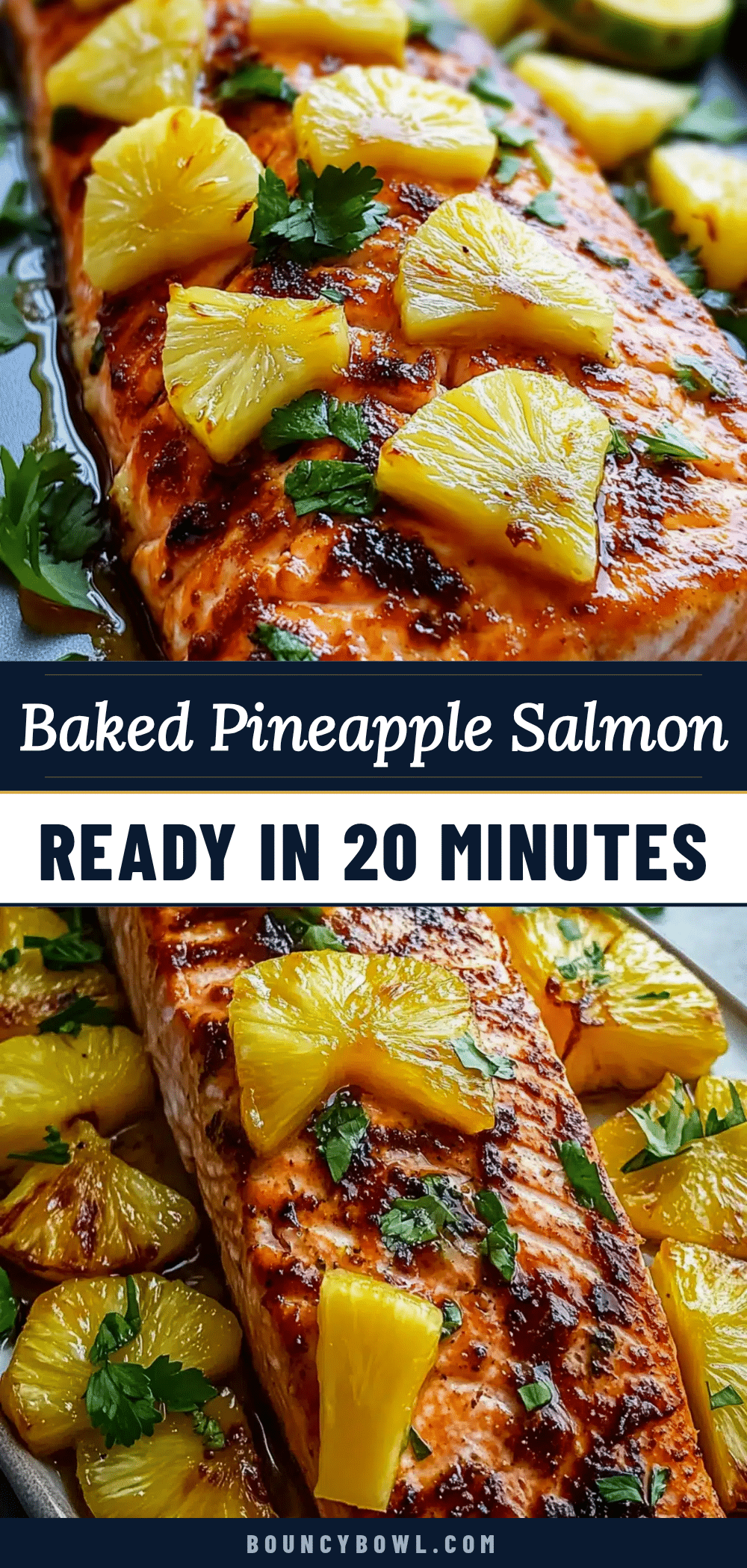
Easy Baked Pineapple Salmon Ready in 20 Minutes
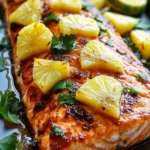
A quick and easy baked pineapple salmon recipe that’s ready in 20 minutes. Sweet pineapple caramelizes against a savory soy glaze, keeping the salmon moist and flaky. Perfect for busy weeknights.
- Prep Time: 5 minutes
- Cook Time: 15 minutes
- Total Time: 20 minutes
- Yield: 4 servings 1x
- Category: Main Course
- Cuisine: American
Ingredients
- 4 salmon fillets (about 6 oz each)
- 1 can (20 oz) pineapple rings in juice
- ¼ cup low sodium soy sauce
- 2 tablespoons packed brown sugar
- 3 cloves garlic, minced
- 1 tablespoon fresh ginger, grated
- 1 tablespoon rice vinegar
- 1 teaspoon sesame oil
- Green onions, sliced (for garnish)
- Sesame seeds (for garnish, optional)
Instructions
- Preheat your oven to 400°F (200°C). Let salmon fillets sit at room temperature for about 10 minutes.
- In a small bowl, whisk together soy sauce, brown sugar, minced garlic, grated ginger, rice vinegar, and sesame oil until sugar is dissolved.
- Lightly grease a 9×13-inch baking dish. Arrange salmon fillets skin-side down in the dish, leaving space between each.
- Drain the can of pineapple rings, reserving ¼ cup of the juice. Place one or two pineapple rings on top of each salmon fillet; tuck any leftover rings around the fillets.
- Pour the soy sauce mixture evenly over the salmon and pineapple. Pour the reserved pineapple juice into the dish around the salmon.
- Bake for 12-15 minutes, until salmon flakes easily with a fork and internal temperature reaches 145°F (63°C).
- Optional: Broil for 1-2 minutes for caramelized top, watching closely to prevent burning.
- Remove from oven and let rest for 2-3 minutes. Garnish with sliced green onions and sesame seeds before serving.
Notes
Do not use fresh pineapple; canned is essential to avoid the enzyme bromelain breaking down the salmon. Let salmon rest after baking for best texture. Watch the broiler closely to prevent burning. For easier cleanup, line the dish with foil.
Nutrition
- Serving Size: 1 fillet with pineap
- Calories: 380
- Sugar: 14
- Sodium: 680
- Fat: 18
- Saturated Fat: 3
- Carbohydrates: 18
- Fiber: 1
- Protein: 35
Keywords: baked pineapple salmon, easy salmon recipe, 20 minute dinner, weeknight dinner, one dish meal, pineapple salmon, salmon with pineapple