Love this? Save it for later!
Share the inspiration with your friends
The pineapple sat on my counter for three days, staring at me every time I walked past. I’d bought it on a whim at the farmers’ market, seduced by its golden color and that sweet, tropical smell that somehow escaped through the thick skin. But then life got busy, and there it sat. By day three, I knew I had to do something with it before it went from perfectly ripe to past its prime. That’s when I remembered a little takeout container sitting in my fridge from the week before—leftover jasmine rice from a Thai delivery order that was too good to toss. And just like that, this Easy One-Pan Thai Pineapple Fried Rice Recipe was born, not from a grand plan, but from a fridge full of odds and ends that somehow begged to come together.
I’d never made Thai pineapple fried rice at home before. Honestly, it always felt like one of those dishes you leave to the pros, you know? The kind that arrives in a hollowed-out pineapple half at your favorite restaurant, looking all fancy and intimidating. But standing there in my kitchen, staring at that pineapple and that cold rice, something clicked. I grabbed a knife, a wok, and just went for it. Twenty minutes later, I was leaning against the counter, fork in hand, genuinely shocked at how good it was. The sweetness of the pineapple, the salty bite of the soy sauce, the little kick of curry powder—it all worked. And the best part? Only one pan to wash.
That first attempt turned into a full-blown obsession. I made it three times that week, tweaking the amounts, testing different proteins, figuring out which little details made the biggest difference. This one-pan Thai pineapple fried rice has become my go-to for using up leftover rice, clearing out the veggie drawer, and impressing myself on a Tuesday night when I need dinner to feel a little special without any actual effort. It’s the kind of recipe that feels like a cheat code—fast, forgiving, and packed with flavor that tastes like you spent way more time than you actually did.
Why You’ll Love This Recipe
Let me tell you why this Thai pineapple fried rice has earned a permanent spot in my weekly rotation. First off, it’s genuinely quick. From the moment you start chopping to the moment you’re eating, we’re talking about 20 minutes, tops. That’s faster than waiting for delivery, and honestly, it tastes better than most takeout versions I’ve had.
- One-Pan Wonder : Everything happens in a single wok or large skillet. Less cleanup means more time actually enjoying your meal.
- Pantry-Friendly Ingredients : You probably have most of this stuff already—soy sauce, garlic, eggs, rice. The pineapple is the star, but it’s easy to find and worth the tiny bit of effort.
- Perfect for Using Leftover Rice : This recipe was practically designed for that container of day-old rice sitting in your fridge. Cold rice fries up way better than fresh, so this is a win for meal prep.
- Crowd-Pleaser Every Time : I’ve served this to picky kids, skeptical parents, and friends who “don’t really like pineapple in savory food.” Every single person went back for seconds. It’s sweet, savory, and just a little bit spicy.
- Unbelievably Flavorful : The combination of juicy pineapple, umami-rich soy sauce, fragrant curry powder, and fresh herbs creates a flavor profile that’s complex without being complicated. It’s comfort food with a tropical twist.
What makes this Thai pineapple fried rice recipe different from the dozens of others you’ll find online? It’s the balance. I’ve tested this exact method more times than I care to admit, tweaking the ratio of pineapple to rice, the amount of curry powder, and the cooking technique until every grain of rice was perfectly coated and every bite had that sweet-savory harmony. This isn’t just another version—it’s the version I’d serve to anyone who asked for my best weeknight dinner.
This recipe connects with that feeling of wanting something special without the stress. It’s the meal you make when you want to feel like you’re on vacation, even if you’re just sitting in your kitchen in sweatpants. One bite, and you’ll close your eyes for a second. That’s the kind of recipe this is.
What Ingredients You Will Need
This recipe uses simple, wholesome ingredients that come together to create something truly special. Most of these are pantry staples or easy to find at any grocery store. Here’s what you’ll need to make this flavorful Thai pineapple fried rice come to life.
For the Fried Rice Base
- 3 cups cooked jasmine rice, preferably day-old and cold – Fresh rice works in a pinch, but cold rice that’s been sitting in the fridge overnight fries up so much better. The grains stay separate and don’t turn mushy. If you’re using fresh rice, spread it on a baking sheet and pop it in the freezer for 15 minutes to dry it out a bit.
- 1 ½ cups fresh pineapple, diced into ½-inch cubes – Fresh pineapple is non-negotiable here. Canned pineapple is too soft and sweet, and it releases too much liquid. Look for a pineapple that smells fragrant at the stem and gives just slightly when you press it. I like to use about half the pineapple and save the rest for snacking.
- 2 tablespoons vegetable oil or coconut oil – Coconut oil adds a lovely subtle coconut flavor that pairs beautifully with the pineapple. Vegetable oil is great if you want a neutral base.
- 3 cloves garlic, minced – Fresh garlic is key here. Don’t use the jarred stuff—it just doesn’t have the same punch.
- 1 small shallot or ¼ cup red onion, finely diced – Shallots are traditional, but red onion works great and adds a nice color.
- 2 large eggs – These get scrambled right into the rice, adding protein and richness. Make sure they’re at room temperature so they cook evenly.
- ½ cup frozen peas and carrots, thawed – These add color, texture, and a little vegetable serving without any extra work. You can use fresh if you have them, but frozen is perfectly fine.
- ¼ cup cashews or peanuts, roughly chopped – Cashews are more traditional for Thai pineapple fried rice, but peanuts work in a pinch. Toast them lightly in the pan before adding the other ingredients for extra crunch.
- 2 green onions, sliced – For that fresh, oniony finish.
- ¼ cup fresh cilantro, chopped – Optional, but highly recommended. It adds a bright, herbal note that ties everything together.
For the Sauce
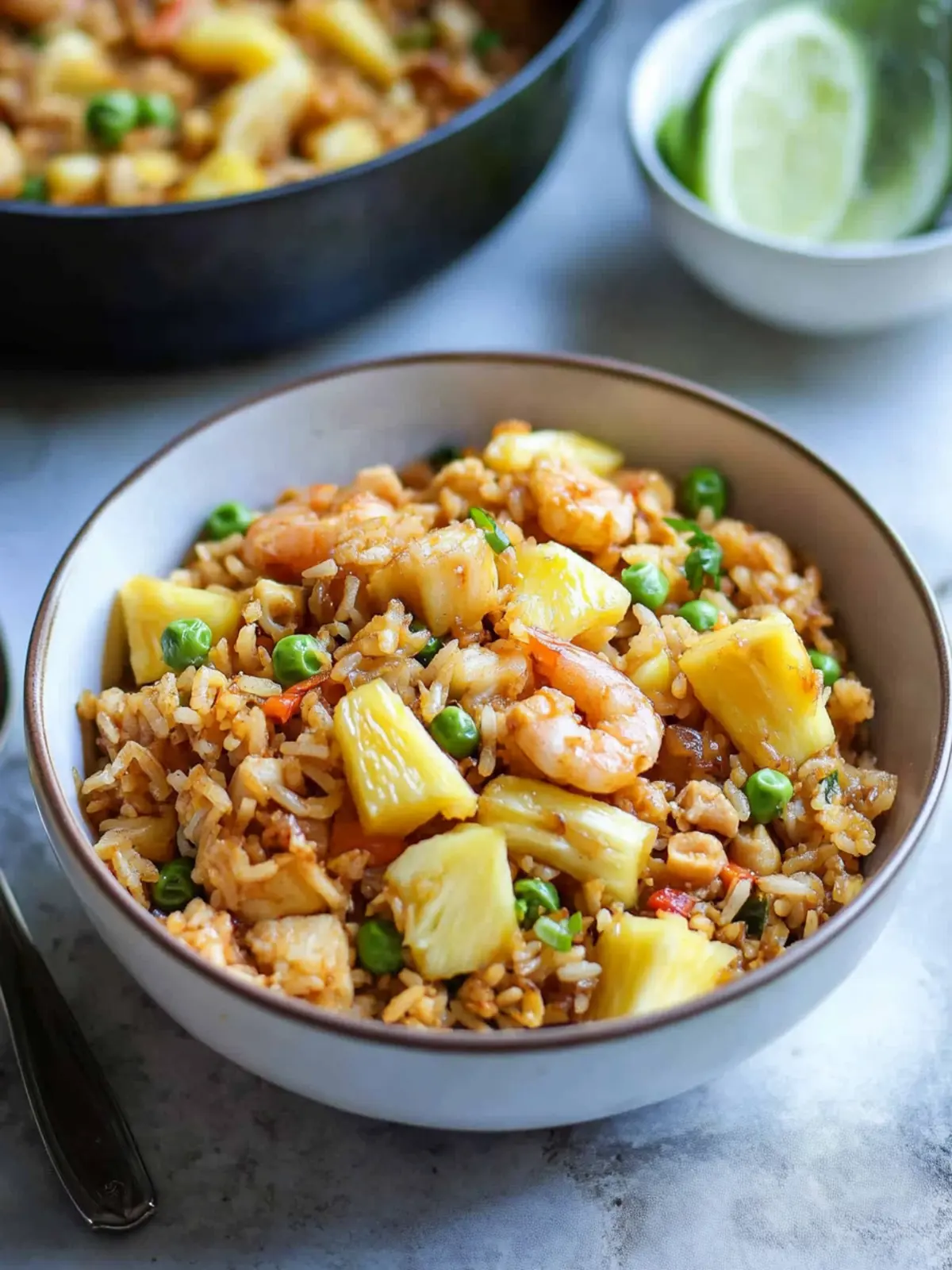
- 2 tablespoons soy sauce – Use low-sodium if you’re watching your salt intake. Tamari works for a gluten-free option.
- 1 tablespoon fish sauce – This is the secret to authentic Thai flavor. It adds that deep, savory umami that makes the dish taste restaurant-quality. Don’t skip it—you won’t taste “fishy,” I promise. If you need a vegetarian option, use soy sauce or coconut aminos.
- 1 teaspoon curry powder – This is what gives the rice that beautiful golden color and warm, aromatic flavor. I use a mild yellow curry powder, but any blend works.
- ½ teaspoon white pepper – White pepper is traditional in Thai cooking and adds a gentle heat without the black specks. Black pepper works in a pinch.
- 1 teaspoon sugar – A tiny bit of sugar balances the salty and sour elements. Palm sugar is traditional, but regular granulated sugar works perfectly.
- 1 tablespoon lime juice, fresh – Adds brightness and acidity right at the end.
For Garnish (Optional but Lovely)
- Extra cilantro sprigs
- Thinly sliced red chili or chili flakes
- Lime wedges
- Extra toasted cashews
Ingredient Tip : I’ve found that using a good-quality fish sauce makes a real difference. My personal favorite is Red Boat—it’s clean, pure, and doesn’t have that harsh aftertaste some cheaper brands have. For the curry powder, I love Penzey’s or a small-batch blend from a local spice shop. Freshness matters with spices, so if your curry powder has been sitting in the cabinet for two years, it’s time for a new jar.
Equipment Needed
You don’t need a fully stocked professional kitchen to make this one-pan Thai pineapple fried rice. Here’s what I use and what you can substitute if you don’t have the exact tool.
- A large wok or 12-inch skillet – A wok is ideal because its high sides make tossing the rice easy, but a large non-stick skillet works beautifully. Cast iron is great too if you’ve got it seasoned well. Just make sure whatever you use is big enough to hold all the ingredients without crowding.
- A sharp chef’s knife – Cutting a pineapple requires a good knife. A dull blade makes the job frustrating and dangerous. Take two minutes to sharpen yours before you start.
- A sturdy cutting board – Preferably one with a groove to catch pineapple juice. Trust me on this one.
- A wooden spoon or spatula – For stirring and breaking up the rice. A metal spatula works fine in a wok or cast iron, but use wood or silicone if you’re using non-stick.
- A small bowl for the sauce – Mixing the sauce ingredients together before you start cooking makes the process so much smoother.
- A citrus juicer – Not strictly necessary, but it makes squeezing that lime much easier and gets every last drop of juice.
If you don’t have a wok, don’t worry. I’ve made this in a regular non-stick skillet more times than I can count, and it turns out great every time. The key is to use high heat and work quickly, regardless of what pan you’re using. Also, if you’re buying a wok for the first time, a carbon steel one is affordable and will last forever with proper care. Just season it well before your first use.
Preparation Method
Alright, let’s get cooking. This Thai pineapple fried rice recipe comes together fast, so I recommend having all your ingredients prepped and measured before you turn on the heat. Trust me, once that wok gets hot, there’s no time for chopping.
- Prep your pineapple – Cut off the top and bottom of the pineapple, then stand it upright and slice off the skin in wide strips from top to bottom. Cut out any remaining “eyes” with the tip of your knife. Slice the pineapple into rounds, then cut into ½-inch cubes. You should have about 1 ½ cups. Set aside.
- Make the sauce – In a small bowl, whisk together the soy sauce, fish sauce, curry powder, white pepper, and sugar until the sugar dissolves. Set this near your stove so you can grab it quickly.
- Prep the aromatics – Mince your garlic, dice your shallot, slice your green onions, and chop your cilantro. Have everything ready to go in little piles on your cutting board.
- Crack the eggs – Crack the eggs into a small bowl and beat them lightly with a fork. Having them ready to pour means you won’t be fumbling when the pan is hot.
- Heat your wok or skillet – Place your wok over high heat and add 1 tablespoon of the oil. Swirl it around to coat the surface. You want the oil shimmering and almost smoking—that’s the sweet spot for fried rice.
- Toast the cashews – Add the chopped cashews to the hot oil and stir for about 30 seconds until they’re fragrant and lightly golden. Scoop them out with a slotted spoon and set aside on a plate. Don’t walk away—nuts burn fast.
- Scramble the eggs – Add another ½ tablespoon of oil to the wok if it looks dry. Pour in the beaten eggs and let them set for about 10 seconds, then scramble them quickly with your spatula. Cook until they’re just set but still soft—about 30 seconds total. Scoop them out and add them to the plate with the cashews.
- Cook the aromatics – Add the remaining ½ tablespoon of oil to the wok. Toss in the garlic and shallot. Stir-fry for about 20 seconds until fragrant. Your kitchen should smell amazing at this point.
- Add the pineapple and vegetables – Toss in the diced pineapple and the thawed peas and carrots. Stir-fry for about 1 minute until the pineapple starts to caramelize slightly and the vegetables are heated through.
- Add the rice – Crumble the cold rice into the wok with your hands to break up any clumps. Spread it out in an even layer and let it sit undisturbed for about 30 seconds. This helps it get those lovely crispy bits. Then start stir-frying, tossing and turning the rice to coat it in the oil and aromatics.
- Pour in the sauce – Drizzle the sauce mixture all over the rice. Toss and stir vigorously for about 1-2 minutes until every grain of rice is evenly coated and the color is uniform. You should see the rice turning a beautiful golden yellow from the curry powder.
- Add back the eggs and cashews – Return the scrambled eggs and toasted cashews to the wok. Toss everything together gently to combine without breaking up the eggs too much.
- Finish with lime and herbs – Remove the wok from the heat. Squeeze the fresh lime juice over the top, then toss in the green onions and cilantro. Give it one final toss.
- Taste and adjust – Take a bite. Does it need a pinch more salt? A little more lime? This is your moment to adjust. I often add a tiny splash more fish sauce at this point if I want it saltier.
- Serve immediately – Spoon the fried rice onto plates or into bowls. Garnish with extra cilantro sprigs, lime wedges, and a sprinkle of chili flakes if you like heat. Serve hot.
Sensory Cue : Throughout this process, pay attention to the sounds. You want that satisfying sizzle every time you add something to the wok. If the pan goes quiet, the heat isn’t high enough. The rice should be popping and crackling as it fries. And the smell—you’re looking for that intoxicating blend of caramelized pineapple, savory soy, and warm curry powder. That’s how you know you’re on the right track.
Cooking Tips & Techniques
After making this Thai pineapple fried rice more times than I can count, I’ve learned a few things the hard way. Here are my best tips to help you nail it on your first try.
Use cold, day-old rice. This is the single most important tip for any fried rice. Freshly cooked rice is too moist and steamy—it’ll turn into a sticky, clumpy mess. Cook your rice a day ahead, spread it on a baking sheet to cool, then refrigerate it uncovered for a few hours. The cold, dry grains fry up perfectly separate and get those little crispy edges that make fried rice so good. If you absolutely must use fresh rice, spread it thin on a baking sheet and pop it in the freezer for 20 minutes before using.
High heat is your friend. Don’t be scared to crank that burner. Fried rice needs high, intense heat to get that wok hei—the smoky, charred flavor that makes restaurant fried rice so addictive. If your stove doesn’t get screaming hot, work in smaller batches. Crowding the pan lowers the temperature and steams the rice instead of frying it.
Prep everything before you start. I learned this lesson the hard way. The first time I made this, I was chopping pineapple while my garlic was burning in the pan. This dish moves fast. Have all your ingredients measured, chopped, and within arm’s reach. A little mise en place goes a long way.
Don’t skip the fish sauce. I know it smells funky. I know it’s tempting to leave it out. But fish sauce is what gives this dish that deep, savory, authentic Thai flavor. It doesn’t taste fishy in the final dish—it just tastes like umami. If you’re vegetarian, use a splash of soy sauce and a tiny bit of mushroom powder or MSG to mimic that savory depth.
Let the pineapple caramelize. Don’t just toss the pineapple in and immediately add the rice. Give it a minute or two in the hot pan to develop some golden-brown caramelization. This concentrates the sweetness and adds a layer of flavor that makes the dish so much more interesting.
Taste as you go. I know recipes give exact measurements, but everyone’s palate is different. Maybe you want more lime, or a bigger kick of curry powder. Taste the rice after you add the sauce and adjust accordingly. Cooking is about making it yours.
A mistake I made : The first time I made this, I used canned pineapple. Big mistake. The texture was mushy, and there was so much extra liquid that my rice turned into a soggy mess. Fresh pineapple only, my friend. It’s worth the extra minute of chopping.
Variations & Adaptations
One of the best things about this flavorful Thai pineapple fried rice is how adaptable it is. Here are some of my favorite ways to change it up.
Protein Variations : This recipe is fantastic as-is, but adding protein makes it a heartier meal. Try adding ½ pound of peeled shrimp during step 8—cook them for about 2 minutes per side before adding the pineapple. Diced chicken breast works too; just cook it through before adding the aromatics. For a vegetarian version, add cubed firm tofu that’s been pressed and pan-fried until golden. I’ve also used leftover Chinese-style sautéed shrimp in this, and it was incredible.
Dietary Adaptations : To make this gluten-free, use tamari or coconut aminos instead of soy sauce. Most fish sauces are naturally gluten-free, but double-check the label. For a vegan version, skip the eggs and use extra tofu or just load up on veggies. Use soy sauce or coconut aminos in place of fish sauce. The rice will still be incredibly flavorful.
Spice It Up : If you like heat, add 1-2 minced Thai bird chilies along with the garlic and shallot. You can also drizzle sriracha or chili crisp over the finished dish. My husband loves this with a generous spoonful of homemade chili oil on top.
Vegetable Swaps : Use whatever vegetables you have on hand. Bell peppers, snap peas, broccoli florets, or corn all work beautifully. Just make sure to cut them into small, uniform pieces so they cook quickly. In the summer, I love adding fresh corn cut straight off the cob.
Different Rice Options : While jasmine rice is traditional, brown rice works beautifully and adds a nutty flavor and more fiber. Cauliflower rice is a great low-carb option—just reduce the cooking time since it cooks much faster. I’ve even made this with leftover quinoa, and while it’s not exactly the same, it’s still delicious.
A personal variation I love : Sometimes I add a handful of golden raisins along with the pineapple. They plump up slightly in the heat and add little bursts of sweetness that play perfectly against the savory flavors. It’s not traditional, but it’s become my secret-weapon version for potlucks.
Serving & Storage Suggestions
This one-pan Thai pineapple fried rice is best served hot, straight from the wok. But here’s how to make the most of it, whether you’re eating it now or saving some for later.
Serving Temperature and Presentation : Serve the rice hot, piled onto a plate or into a bowl. For a fun presentation, you can serve it in a hollowed-out pineapple half. It’s a little extra work, but it looks stunning for dinner parties. Garnish with fresh cilantro sprigs, lime wedges, and a sprinkle of toasted cashews. A few thin slices of red chili on top add beautiful color and a hint of heat.
What to Serve With It : This fried rice is substantial enough to be a meal on its own, but it pairs beautifully with other Thai-inspired dishes. Try it alongside Chinese garlic butter shrimp for a surf-and-turf twist, or serve it with fresh spring rolls and a peanut dipping sauce. A simple cucumber salad with rice vinegar and sesame seeds makes a refreshing side. For drinks, an ice-cold Thai iced tea or a crisp lager beer is perfect.
Storage Instructions : Store any leftover fried rice in an airtight container in the refrigerator for up to 3 days. The flavors actually meld and deepen overnight, so leftovers are often even better the next day. I wouldn’t recommend freezing this dish—the texture of the rice and pineapple changes too much upon thawing.
Reheating Methods : The best way to reheat fried rice is in a hot wok or skillet with a tiny splash of water or soy sauce. Toss it over high heat for about 2-3 minutes until steaming hot. You can also microwave it in 30-second bursts, stirring in between, but the texture won’t be quite as good. If you’re using the microwave, cover the bowl with a damp paper towel to add a little steam.
How Flavors Develop : I’ve noticed that this rice tastes even better about 10 minutes after it’s done cooking. The flavors have a chance to settle and meld together. So if you’re making this for a party, it’s totally fine to let it rest for a bit before serving. Just keep it covered to retain the heat.
Nutritional Information & Benefits
This Thai pineapple fried rice isn’t just delicious—it also offers some surprising nutritional benefits. Here’s a rough breakdown per serving (about 1 ½ cups, without additional protein).
- Calories : Approximately 380-420 calories per serving
- Protein : 10-12 grams
- Carbohydrates : 55-60 grams
- Fat : 14-16 grams
- Fiber : 3-4 grams
- Sugar : 12-15 grams (mostly natural from pineapple)
- Sodium : 600-700 mg (can be reduced with low-sodium soy sauce)
Health Benefits : Pineapple is packed with bromelain, an enzyme that aids digestion and has anti-inflammatory properties. It’s also an excellent source of vitamin C and manganese. The cashews provide healthy fats, magnesium, and a little bit of protein. Garlic and shallots are both known for their immune-boosting properties. And the curry powder contains turmeric, which is famous for its anti-inflammatory benefits.
Dietary Considerations : This recipe is naturally dairy-free and can easily be made gluten-free and vegan with the swaps mentioned above. It’s not low-carb due to the rice, but you can use cauliflower rice for a lighter version. The protein content is moderate, so adding shrimp, chicken, or tofu makes it a more balanced meal.
Potential Allergens : This recipe contains eggs, soy (in soy sauce), fish (in fish sauce), and tree nuts (cashews). For a nut-free version, simply omit the cashews or substitute with toasted pumpkin seeds. For a soy-free version, use coconut aminos.
I personally love that this dish feels indulgent but is actually built on real, whole foods. It’s the kind of meal that satisfies a takeout craving without leaving you feeling heavy or sluggish. And that’s a win in my book.
Conclusion
This Easy One-Pan Thai Pineapple Fried Rice Recipe has become one of those dishes I turn to again and again. It’s quick enough for a frantic Tuesday night, but impressive enough to serve to guests who think you spent hours in the kitchen. The combination of sweet pineapple, savory soy, warm curry, and crunchy cashews is just perfect—every bite hits a different note, and somehow they all harmonize.
What I love most about this recipe is how forgiving it is. Maybe you don’t have cashews—use peanuts. Maybe you want extra vegetables—throw them in. Maybe you’re out of cilantro—skip it. The core formula is so solid that it welcomes your personal touches. I want you to make this recipe your own. Add more spice. Use brown rice. Double the pineapple. There are no rules here, just delicious possibilities.
I’d love to hear how yours turns out. Did you add something unexpected? Did your family love it? Drop a comment below and share your version. And if you’re looking for another quick and satisfying meal, try this creamy tzatziki chicken salad for a completely different but equally easy dinner. Happy cooking, my friend. Go make that pineapple proud.
Frequently Asked Questions
Can I use canned pineapple for this recipe?
I really don’t recommend it. Canned pineapple is much softer and releases a lot of extra liquid, which can make your fried rice soggy. Fresh pineapple has a firmer texture and a brighter, more complex sweetness that holds up beautifully to high-heat cooking. The few minutes it takes to cut a fresh pineapple are absolutely worth it.
What if I don’t have fish sauce?
Fish sauce is pretty essential for authentic Thai flavor, but you can substitute it with soy sauce or coconut aminos in a pinch. The dish won’t taste exactly the same, but it will still be delicious. Add an extra pinch of salt to compensate for the missing saltiness from the fish sauce.
Can I make this recipe vegan?
Absolutely! Skip the eggs and use extra tofu or just load up on vegetables. Use soy sauce or coconut aminos in place of fish sauce. The rest of the ingredients are naturally plant-based. I’ve made a vegan version with extra cashews and added bell peppers, and it was fantastic.
How do I prevent the rice from being mushy?
The number one secret is using cold, day-old rice. Fresh rice has too much moisture and will clump together. If you’re using fresh rice, spread it on a baking sheet and refrigerate it uncovered for at least 30 minutes to dry it out. Also, make sure your pan is really hot before you add the rice—high heat helps evaporate excess moisture quickly.
Can I add other proteins to this dish?
Yes! This recipe is incredibly versatile. Shrimp, chicken, pork, or tofu all work beautifully. Just cook your protein of choice first, remove it from the pan, and then proceed with the recipe as written. Add the cooked protein back in at the end along with the eggs and cashews. Leftover crock pot beef bites would also be an amazing addition for a heartier version.
Pin This Recipe!
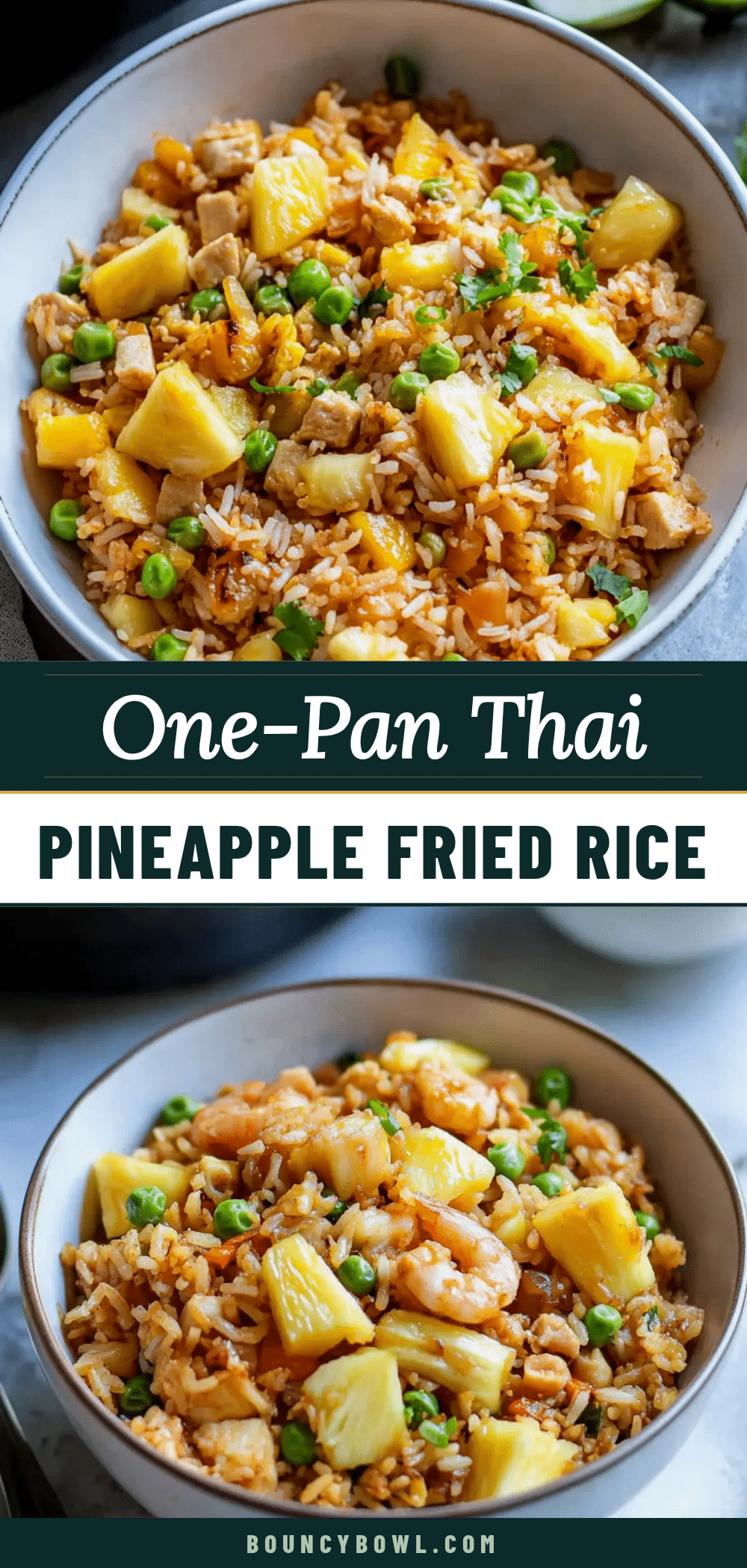
Easy One-Pan Thai Pineapple Fried Rice Recipe

This quick and flavorful Thai pineapple fried rice is made in one pan with sweet pineapple, savory soy sauce, and warm curry powder. Perfect for using leftover rice, it’s a 20-minute weeknight dinner that tastes like takeout.
- Prep Time: 10 minutes
- Cook Time: 10 minutes
- Total Time: 20 minutes
- Yield: 4 servings 1x
- Category: Main Course
- Cuisine: Thai
Ingredients
- 3 cups cooked jasmine rice, preferably day-old and cold
- 1 ½ cups fresh pineapple, diced into ½-inch cubes
- 2 tablespoons vegetable oil or coconut oil
- 3 cloves garlic, minced
- 1 small shallot or ¼ cup red onion, finely diced
- 2 large eggs, at room temperature
- ½ cup frozen peas and carrots, thawed
- ¼ cup cashews or peanuts, roughly chopped
- 2 green onions, sliced
- ¼ cup fresh cilantro, chopped
- 2 tablespoons soy sauce (low-sodium if desired)
- 1 tablespoon fish sauce
- 1 teaspoon curry powder
- ½ teaspoon white pepper
- 1 teaspoon sugar
- 1 tablespoon fresh lime juice
- Extra cilantro sprigs for garnish
- Thinly sliced red chili or chili flakes for garnish
- Lime wedges for garnish
- Extra toasted cashews for garnish
Instructions
- Prep your pineapple: Cut off the top and bottom, stand upright, slice off the skin in wide strips, remove any remaining eyes, slice into rounds, then cut into ½-inch cubes. Set aside 1 ½ cups.
- Make the sauce: In a small bowl, whisk together soy sauce, fish sauce, curry powder, white pepper, and sugar until sugar dissolves. Set near the stove.
- Prep the aromatics: Mince garlic, dice shallot, slice green onions, and chop cilantro. Have everything ready.
- Crack the eggs into a small bowl and beat lightly with a fork.
- Heat a wok or large skillet over high heat. Add 1 tablespoon oil and swirl to coat. Heat until shimmering and almost smoking.
- Toast the cashews: Add chopped cashews to hot oil and stir for about 30 seconds until fragrant and lightly golden. Remove with a slotted spoon and set aside on a plate.
- Scramble the eggs: Add another ½ tablespoon oil if needed. Pour in beaten eggs, let set for 10 seconds, then scramble quickly until just set but still soft (about 30 seconds). Remove and add to the plate with cashews.
- Cook the aromatics: Add remaining ½ tablespoon oil to the wok. Add garlic and shallot, stir-fry for about 20 seconds until fragrant.
- Add pineapple and vegetables: Add diced pineapple and thawed peas and carrots. Stir-fry for about 1 minute until pineapple starts to caramelize and vegetables are heated through.
- Add the rice: Crumble cold rice into the wok with your hands to break up clumps. Spread in an even layer and let sit undisturbed for 30 seconds to get crispy bits. Then stir-fry to coat rice in oil and aromatics.
- Pour in the sauce: Drizzle sauce mixture over rice. Toss and stir vigorously for 1-2 minutes until every grain is evenly coated and rice turns golden yellow.
- Add back eggs and cashews: Return scrambled eggs and toasted cashews to the wok. Toss gently to combine without breaking up eggs too much.
- Finish with lime and herbs: Remove wok from heat. Squeeze fresh lime juice over top, then toss in green onions and cilantro. Give one final toss.
- Taste and adjust: Add a pinch more salt or lime if needed. Serve immediately.
- Serve: Spoon onto plates or into bowls. Garnish with extra cilantro, lime wedges, and chili flakes if desired. Serve hot.
Notes
Use cold, day-old rice for best texture. Fresh pineapple is essential—canned will make the rice soggy. Fish sauce adds authentic umami; do not skip. High heat is key for wok hei. Prep all ingredients before starting as the cooking process is fast.
Nutrition
- Serving Size: 1 ½ cups
- Calories: 400
- Sugar: 14
- Sodium: 650
- Fat: 15
- Saturated Fat: 3
- Carbohydrates: 58
- Fiber: 4
- Protein: 11
Keywords: Thai pineapple fried rice, one-pan fried rice, easy fried rice, pineapple fried rice, quick Thai dinner, leftover rice recipe