Love this? Save it for later!
Share the inspiration with your friends
The first time I made shumai, I was standing in my tiny apartment kitchen at 11 PM on a Tuesday, staring at a package of wonton wrappers I’d bought on a whim. I had zero business making dumplings that late. My counter was cluttered with mail, my sink had dishes from two days ago, and I was supposed to be asleep. But I had this craving—not for takeout, but for something specific. I wanted those little open-faced dumplings from the dim sum cart, the ones that come in the steamer basket with the bright yellow dots of fish roe on top. The ones that disappear before the cart even reaches your table.
I’d ordered them so many times at our local spot that the owner, Mrs. Chen, started calling me “shumai girl.” She’d see me walk in and just point toward the kitchen. Honestly, I never thought I could make them myself. Dumplings felt like one of those things you leave to the experts, you know? Like puff pastry or croissants. But that night, I pulled up a recipe, chopped some shrimp, and just went for it. The filling was too wet at first. I added too much soy sauce. The wrappers kept tearing because I’d left them out too long. It was a mess. But when I finally got a batch into the steamer and lifted the lid ten minutes later, the smell that hit me was pure dim sum nostalgia. And the taste? Close enough that I actually texted my friend at midnight to tell her.
That’s the thing about this easy homemade Cantonese shumai recipe. It’s forgiving. It doesn’t demand perfect pleating or years of practice. It just asks for thirty minutes and a little patience. And once you taste one straight from the steamer, still hot and juicy, you’ll understand why I couldn’t stop making them that week. I made them three times that week, actually. Thursday, Friday, and Sunday. By Sunday, I didn’t even need the recipe anymore.
Why You’ll Love This Recipe
Let’s be real for a second—most homemade dumpling recipes are either too complicated or too bland. This one sits right in the sweet spot. Here’s why it works:
- Ready in 20 Minutes : From the moment you start chopping to the moment you’re biting into a hot shumai, it’s about twenty minutes. That’s faster than delivery, and way more satisfying.
- Simple Ingredients : Ground pork, shrimp, some basic seasonings, and round wonton wrappers. No trips to a specialty grocery store required. You can find everything at a regular supermarket.
- Perfect for Dim Sum at Home : Craving dim sum but don’t want to deal with the wait? This is your answer. It’s also great for parties—people go crazy for homemade dumplings.
- Freezer-Friendly : Make a double batch and freeze half. They steam straight from frozen, which means you’re always twenty minutes away from dumplings.
- Authentic Texture : The secret is the combination of ground pork and chopped shrimp. The pork gives it that rich, savory base, while the shrimp adds a bouncy, slightly firm texture that makes shumai different from other dumplings.
I’ve tested this recipe more times than I care to admit. I tried it with all pork, all shrimp, different ratios, different seasonings. This version—the one I’m sharing today—is the one that tastes most like the shumai from Mrs. Chen’s restaurant. It’s not exactly the same, but honestly, it’s close enough that I don’t miss the takeout anymore. And that’s saying something.
What Ingredients You Will Need
This recipe keeps things straightforward. You don’t need obscure ingredients or specialty items. Here’s what you’ll need and why each one matters:
For the Filling
- Ground pork (8 oz / 225 g) : Use regular ground pork, not lean. The fat keeps the filling moist and juicy. If you can find ground pork with about 20% fat, that’s perfect.
- Raw shrimp (8 oz / 225 g) : Peeled and deveined. I prefer medium or large shrimp. You want to chop them by hand, not use a food processor. The texture is better when they’re roughly chopped—small pieces that still have a little bite.
- Water chestnuts (¼ cup / 60 ml, finely chopped) : These add that subtle crunch that makes shumai texturally interesting. Canned water chestnuts work perfectly. Just drain and rinse them first.
- Green onions (3 stalks, finely chopped) : For freshness and a mild onion flavor. Use both the white and green parts.
- Grated ginger (1 teaspoon) : Fresh ginger only. The powdered stuff won’t give you the same bright, warm flavor. I use a microplane for this.
- Soy sauce (1 tablespoon) : Regular soy sauce, not light or dark. It adds saltiness and umami without overpowering the other flavors.
- Sesame oil (1 tablespoon) : This is non-negotiable. Toasted sesame oil gives shumai that distinctive nutty aroma. Don’t skip it.
- Shaoxing wine (1 tablespoon) : This Chinese cooking wine adds depth. If you don’t have it, dry sherry works as a substitute. In a pinch, you can leave it out and add a splash more soy sauce.
- White pepper (½ teaspoon) : White pepper is milder than black pepper and has a slightly floral note. It’s traditional in Cantonese cooking. If you only have black pepper, use it, but white pepper really is better here.
- Sugar (½ teaspoon) : Just a pinch to balance the saltiness and round out the flavors.
- Cornstarch (1 tablespoon) : Helps bind the filling and gives it that slightly springy texture.
For Assembly
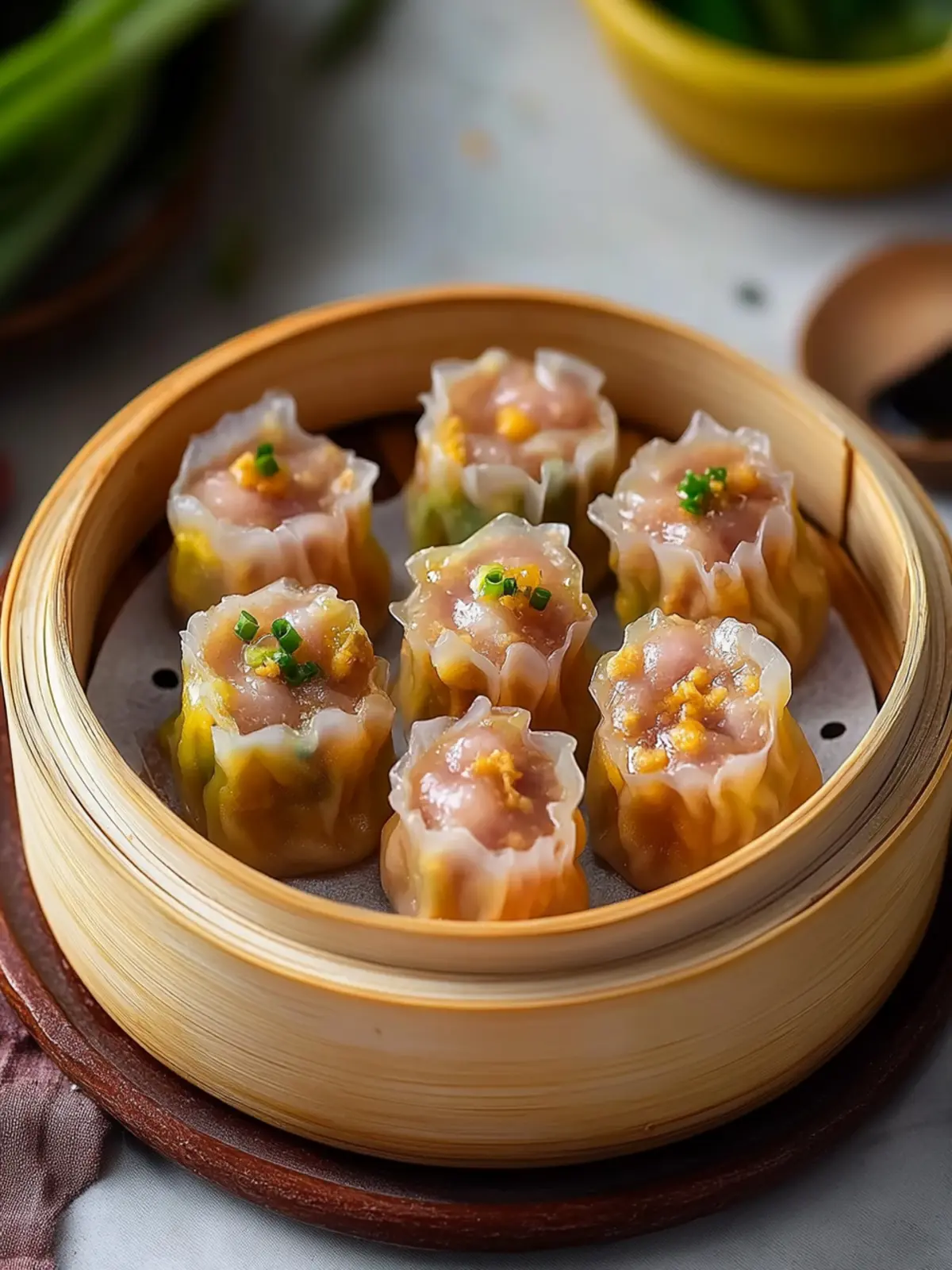
- Round wonton wrappers (about 30 wrappers) : Look for the round ones specifically. Square wrappers work in a pinch, but round wrappers make the pleating easier and look more authentic. Keep them covered with a damp towel while you work—they dry out fast.
- Carrot (optional, for garnish) : Finely grated. Some dim sum places use carrot instead of fish roe. It adds a nice pop of color.
- Fish roe or tobiko (optional, for garnish) : Those bright orange dots on top. Totally optional, but it does look pretty.
For the Dipping Sauce
- Soy sauce (3 tablespoons)
- Rice vinegar (1 tablespoon)
- Chili oil (1 teaspoon, optional)
- Minced garlic (1 clove)
- Sugar (½ teaspoon)
I personally like using Chinese garlic butter shrimp as inspiration for the dipping sauce sometimes—it works surprisingly well with the shumai.
Equipment Needed
You don’t need a lot of specialized gear for this recipe. Here’s what I use:
- Bamboo steamer basket : This is ideal. The bamboo absorbs excess moisture and gives the shumai a slight woody aroma. If you don’t have one, a metal steamer basket works fine.
- Large pot or wok : To hold the steamer. A wok works perfectly because the curved sides hold the steamer basket securely.
- Mixing bowl : For the filling. Any medium-sized bowl works.
- Sharp knife and cutting board : For chopping the shrimp and vegetables. A dull knife will mash the shrimp instead of cutting it cleanly.
- Small spoon or offset spatula : For filling the wrappers. I use a regular teaspoon.
- Parchment paper or cabbage leaves : To line the steamer. This prevents the shumai from sticking. Cabbage leaves add a nice subtle flavor, but parchment is easier.
- Pastry brush (optional) : For brushing the steamer basket with oil if you’re not using liners.
I’ve made these with a metal steamer basket and a regular pot before. It works fine. The bamboo steamer just feels more authentic and looks prettier when you bring it to the table.
Preparation Method
Let me walk you through this step by step. It’s easier than you think.
Step 1: Make the Filling (5 minutes)
Start by chopping your shrimp. Don’t go overboard here—you want small pieces, not a paste. Roughly chop the shrimp until the largest pieces are about the size of a pea. Transfer to a mixing bowl. Add the ground pork, chopped water chestnuts, green onions, ginger, soy sauce, sesame oil, Shaoxing wine, white pepper, sugar, and cornstarch. Use your hands to mix everything together. Yes, your hands. A spoon won’t incorporate the ingredients as evenly. Mix until the filling looks uniform and feels slightly sticky. Don’t overmix, or the filling will become tough. You should be able to scoop up a spoonful and have it hold its shape.
Step 2: Set Up Your Wrappers (2 minutes)
Take the wonton wrappers out of the fridge. Keep them in the package until you’re ready to use them. Fill a small bowl with water—you’ll use this to seal the edges. Lay a clean kitchen towel on your work surface and place a damp paper towel on top. This is where you’ll keep the wrappers you’re not actively using.
Step 3: Assemble the Shumai (10 minutes)
Take one round wrapper and place it in the palm of your non-dominant hand. Scoop about one tablespoon of filling into the center. Don’t overfill—about a heaping tablespoon is perfect. Here’s the trick: instead of folding and pleating like regular dumplings, you’re going to gather the wrapper up around the filling. Use your thumb and forefinger to form a ring around the filling, then gently squeeze the wrapper so it clings to the filling. The top should be open, with the filling exposed. Tap the bottom of the shumai on your work surface to flatten it slightly—this helps it sit upright in the steamer. Use your fingers to smooth the filling so it’s level with the top of the wrapper. If you’re using carrot or fish roe, place a small amount on top now. Repeat with the remaining wrappers and filling. Place each finished shumai on a parchment-lined baking sheet, making sure they don’t touch each other.
Step 4: Steam the Shumai (8 minutes)
Fill your pot or wok with about 2 inches of water. Bring it to a boil over high heat. Line your steamer basket with parchment paper or cabbage leaves. Arrange the shumai in the basket, leaving about ½ inch of space between each one—they expand slightly as they cook. Place the steamer over the boiling water, cover, and reduce the heat to medium. Steam for 8 minutes. The wrappers will become translucent, and the filling will be firm and cooked through. If you’re unsure, cut one open to check—the pork should be cooked and the shrimp should be opaque.
Step 5: Make the Dipping Sauce (1 minute)
While the shumai steam, whisk together the soy sauce, rice vinegar, chili oil, minced garlic, and sugar in a small bowl. Set aside.
Step 6: Serve Immediately
Transfer the shumai to a serving plate. They’re best eaten hot, straight from the steamer. Serve with the dipping sauce on the side.
If you’re looking for something to serve alongside these, I’d recommend making a batch of quick Chinese-style sautéed shrimp for a full dim sum spread at home.
Cooking Tips & Techniques
I’ve made enough mistakes with these dumplings to fill a notebook. Here’s what I’ve learned:
- Don’t overwork the filling. Mix just until everything comes together. Overmixing makes the pork tough and the shrimp rubbery. The filling should be cohesive but still light.
- Keep the wrappers covered. Wonton wrappers dry out faster than you’d expect. Keep the stack under a damp paper towel while you’re assembling. If a wrapper feels dry and cracks when you try to shape it, toss it and grab a fresh one.
- Wet your fingers slightly. If the wrapper isn’t sticking to itself, dip your fingertip in water and run it along the edge before gathering. This helps create a seal.
- Don’t crowd the steamer. The shumai need room to expand. If you pack them too tightly, they’ll stick together and tear when you try to separate them.
- Use parchment with holes. If you’re using parchment paper, poke a few holes in it with a fork. This allows steam to circulate properly and prevents the bottoms from getting soggy.
- Check the water level. Make sure your pot has enough water before you start steaming. Running out of water mid-steam is a disaster. I speak from experience.
One time, I forgot to line the steamer basket and ended up with shumai bottoms stuck to the bamboo. I had to soak the basket for an hour to get them off. Learn from my mistakes—always line the basket.
Variations & Adaptations
This recipe is surprisingly flexible. Here are some ways to change it up:
- Pork and Shrimp Shumai : This is the classic combination. You can adjust the ratio—more shrimp for a lighter texture, more pork for richness.
- Chicken Shumai : Substitute ground chicken for the pork. The texture will be slightly leaner, so add an extra tablespoon of sesame oil to keep it moist.
- Vegetarian Shumai : Use finely chopped mushrooms (shiitake work best), crumbled firm tofu, and shredded cabbage. Add a splash of soy sauce and sesame oil for flavor. The texture won’t be exactly the same, but it’s still delicious.
- Spicy Shumai : Add 1 tablespoon of sambal oelek or chili garlic sauce to the filling. It gives the dumplings a nice kick without overwhelming the other flavors.
- Baked Shumai : If you don’t have a steamer, you can bake these. Place them on a parchment-lined baking sheet, brush with a little oil, and bake at 375°F (190°C) for 12-15 minutes. They won’t be as tender, but they’ll still taste great.
- Pan-Fried Shumai : For a crispy bottom, pan-fry the shumai in a little oil for 2 minutes, then add ¼ cup of water, cover, and steam for 6 minutes. The bottoms get golden and crunchy while the tops stay tender.
I’ve tried the chicken version when I was out of pork one night, and honestly, it was a pleasant surprise. Not exactly the same, but good enough that I make it on purpose now sometimes.
Serving & Storage Suggestions
Shumai are best served hot, right after steaming. Arrange them on a plate with the dipping sauce in a small bowl on the side. They’re perfect as an appetizer, a snack, or part of a larger dim sum spread. I like serving them with a simple cucumber salad or some steamed bok choy to balance the richness.
If you’re planning a party, you can assemble the shumai a few hours ahead and keep them in the fridge, covered with plastic wrap. Steam them just before serving.
Storage : Leftover cooked shumai can be stored in an airtight container in the refrigerator for up to 3 days. To reheat, steam them for 3-4 minutes until hot. You can also microwave them, but the wrappers will be softer and less pleasant.
Freezing : This is where shumai really shine. Arrange uncooked shumai on a parchment-lined baking sheet and freeze until solid (about 2 hours). Transfer to a freezer bag. They’ll keep for up to 3 months. To cook from frozen, steam for 10-12 minutes directly from the freezer—no need to thaw. This is my favorite trick for busy weeknights.
The flavors actually develop a bit overnight in the fridge. I’ve found that day-old shumai taste even more flavorful, though the texture of the wrappers is slightly softer.
For a fun brunch idea, try serving these alongside my pretty pink cinnamon rolls for a sweet and savory spread that’ll impress any guest.
Nutritional Information & Benefits
Here’s the approximate nutritional breakdown for one shumai (based on 30 dumplings):
- Calories : 55-65
- Protein : 4-5g
- Fat : 3-4g
- Carbohydrates : 4-5g
- Fiber : 0.5g
- Sugar : 0.5g
- Sodium : 120-150mg
These numbers are estimates and will vary based on your specific ingredients and portion sizes.
Shumai actually have some nutritional benefits worth noting. The shrimp provides lean protein and is a good source of selenium and vitamin B12. Ginger aids digestion and has anti-inflammatory properties. And because these are steamed rather than fried, they’re lower in fat than many other dumpling preparations.
If you’re watching your sodium intake, you can use low-sodium soy sauce in both the filling and the dipping sauce. The recipe is naturally gluten-free if you use gluten-free soy sauce and rice paper wrappers instead of wonton wrappers, though the texture will be different.
For a lighter meal, serve these with a side of fresh sushi cucumber salad for a refreshing, low-carb crunch that complements the shumai perfectly.
Conclusion
Honestly, I never thought I’d be the person who makes dumplings at home. It always seemed like one of those things you leave to the professionals, like sushi or croissants. But this recipe changed my mind. It’s simple enough for a Tuesday night, impressive enough for company, and forgiving enough for beginners.
The first time I brought these to a potluck, four different people asked for the recipe. One of them texted me the next day saying she’d made them twice already. That’s the kind of recipe this is—it makes you feel like you’ve discovered a secret, and you want to share it with everyone.
So go ahead and give these a try. Customize the filling, play with the seasonings, make a double batch and freeze half. And when you take that first bite and taste how good they are, drop a comment below and let me know how it went. I’d love to hear about your shumai journey.
Happy steaming, friends.
Frequently Asked Questions
Can I use square wonton wrappers instead of round ones?
Yes, you can. Square wrappers work fine—just place the filling in the center and gather the corners up like a little bundle. The shape will be slightly different, but the taste is the same. You can also trim the corners off with a knife to make them round if you’re feeling fancy.
Why is my shumai filling too wet?
This usually happens if the shrimp releases too much moisture during mixing. Make sure your shrimp is thoroughly patted dry before chopping. Also, don’t overmix the filling, as this can break down the proteins and release more liquid. If the filling still seems wet, add an extra teaspoon of cornstarch to help bind it.
Can I make these ahead of time for a party?
Absolutely. You can assemble the shumai up to 24 hours in advance and keep them in the refrigerator, covered with plastic wrap. Steam them just before serving. You can also freeze them uncooked for up to 3 months and steam directly from frozen.
What’s the best way to reheat leftover shumai?
Steaming is the best method. Place leftover shumai in a steamer basket and steam for 3-4 minutes until heated through. You can also pan-fry them in a little oil for a crispy exterior, or microwave them in 30-second intervals (though the texture won’t be as good).
Can I make this recipe without a bamboo steamer?
Yes. A metal steamer basket works perfectly. You can also improvise by placing a heatproof colander or sieve over a pot of boiling water, as long as it doesn’t touch the water. Cover with a lid or foil to trap the steam. The cooking time will be the same.
Pin This Recipe!
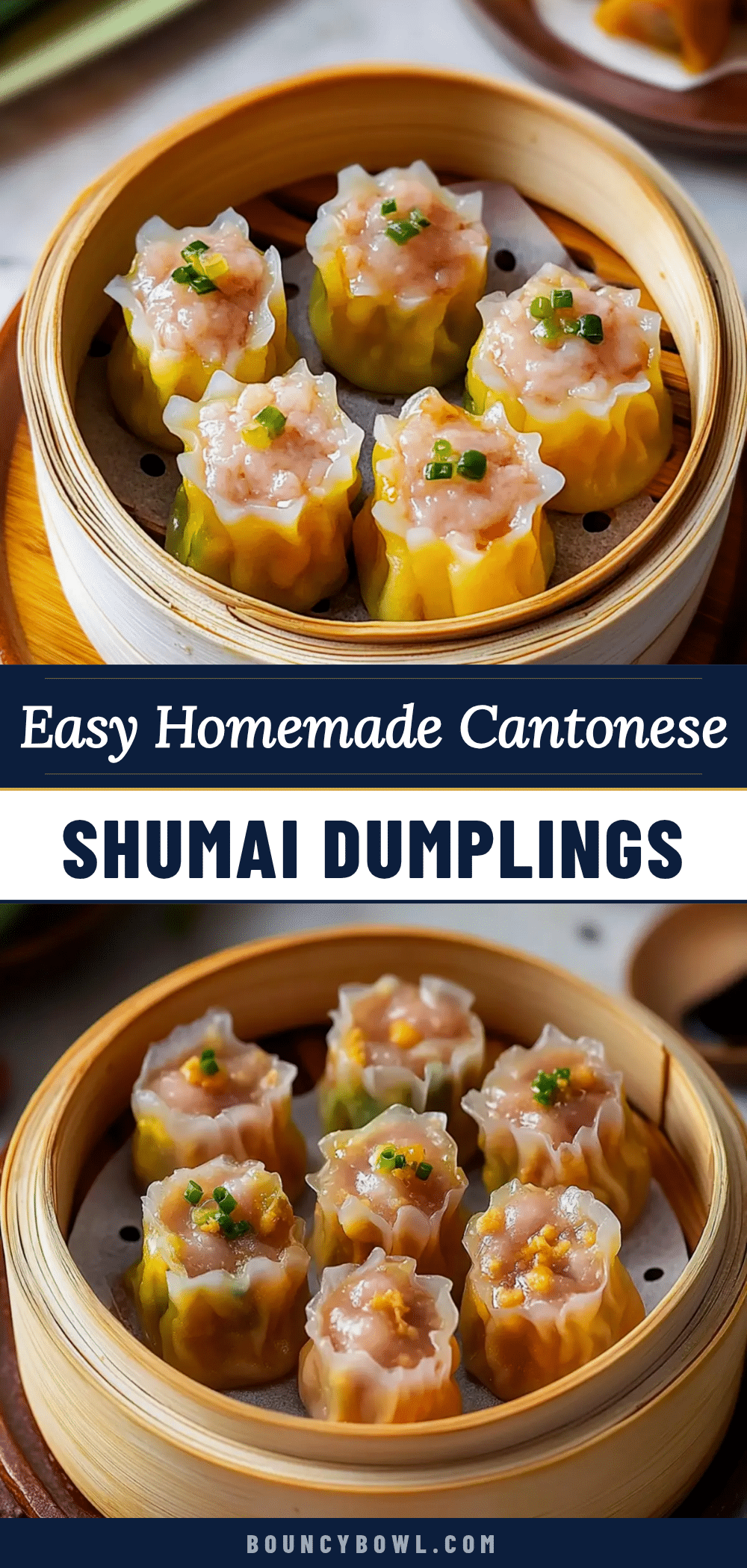
Easy Homemade Cantonese Shumai: The Best 20-Minute Recipe
This easy homemade Cantonese shumai recipe is forgiving and quick, ready in just 20 minutes. With simple ingredients like ground pork and shrimp, you can enjoy authentic dim sum at home without the wait.
- Prep Time: 15 minutes
- Cook Time: 8 minutes
- Total Time: 23 minutes
- Yield: 30 shumai (about 6 servings) 1x
- Category: Appetizer
- Cuisine: Cantonese
Ingredients
- 8 oz ground pork (about 20% fat)
- 8 oz raw shrimp, peeled and deveined, roughly chopped
- 1/4 cup finely chopped water chestnuts (canned, drained and rinsed)
- 3 stalks green onions, finely chopped
- 1 teaspoon grated fresh ginger
- 1 tablespoon soy sauce
- 1 tablespoon toasted sesame oil
- 1 tablespoon Shaoxing wine (or dry sherry)
- 1/2 teaspoon white pepper
- 1/2 teaspoon sugar
- 1 tablespoon cornstarch
- 30 round wonton wrappers
- Finely grated carrot (optional, for garnish)
- Fish roe or tobiko (optional, for garnish)
- For the dipping sauce:
- 3 tablespoons soy sauce
- 1 tablespoon rice vinegar
- 1 teaspoon chili oil (optional)
- 1 clove garlic, minced
- 1/2 teaspoon sugar
Instructions
- Make the filling: Roughly chop shrimp into pea-sized pieces. In a mixing bowl, combine shrimp, ground pork, water chestnuts, green onions, ginger, soy sauce, sesame oil, Shaoxing wine, white pepper, sugar, and cornstarch. Mix with your hands until uniform and slightly sticky. Do not overmix.
- Set up wrappers: Remove wonton wrappers from fridge. Fill a small bowl with water. Lay a clean kitchen towel with a damp paper towel on top to keep wrappers covered.
- Assemble shumai: Place one round wrapper in your palm. Scoop about 1 tablespoon of filling into the center. Gather the wrapper up around the filling, using thumb and forefinger to form a ring. Gently squeeze so wrapper clings to filling, leaving top open. Tap bottom to flatten slightly. Smooth filling level with wrapper top. Garnish with carrot or fish roe if desired. Repeat with remaining wrappers and filling. Place finished shumai on a parchment-lined baking sheet without touching.
- Steam shumai: Fill a pot or wok with about 2 inches of water and bring to a boil. Line steamer basket with parchment paper (poke holes) or cabbage leaves. Arrange shumai in basket with 1/2 inch space between. Place steamer over boiling water, cover, reduce heat to medium, and steam for 8 minutes until wrappers are translucent and filling is cooked through.
- Make dipping sauce: Whisk together soy sauce, rice vinegar, chili oil, minced garlic, and sugar in a small bowl.
- Serve immediately: Transfer shumai to a serving plate and serve hot with dipping sauce.
Notes
Keep wonton wrappers covered with a damp paper towel to prevent drying. Don’t overmix the filling to avoid toughness. For freezing, arrange uncooked shumai on a baking sheet, freeze until solid, then transfer to a freezer bag. Steam from frozen for 10-12 minutes. Leftover cooked shumai can be refrigerated for up to 3 days and reheated by steaming for 3-4 minutes.
Nutrition
- Serving Size: 5 shumai
- Calories: 275325
- Sugar: 2.5
- Sodium: 600750
- Fat: 1520
- Saturated Fat: 57
- Carbohydrates: 2025
- Fiber: 2.5
- Protein: 2025
Keywords: shumai, dim sum, dumplings, pork and shrimp, homemade, easy, 20-minute recipe, Cantonese