Love this? Save it for later!
Share the inspiration with your friends
I was staring into the fridge at 5:15 PM, and honestly, the only thing staring back was a can of salmon I’d bought on a whim three weeks ago. Dinner needed to happen fast. My family was already doing that hungry shuffle around the kitchen, opening cabinets and sighing dramatically. I had no plan, no energy for a grocery run, and definitely no desire to hear “what’s for dinner?” one more time.
That can of salmon felt like a challenge. I’d made salmon patties before, but they always fell apart in the pan and left a greasy mess. I wanted something easier. Something that baked itself while I unloaded the dishwasher. So I grabbed some breadcrumbs, an egg, a little onion, and just started mixing. I shaped it into a loaf, popped it in the oven, and crossed my fingers.
Thirty minutes later, I pulled out the most golden, fragrant, and surprisingly beautiful salmon loaf I’d ever made. It didn’t crumble. It sliced cleanly. And my kids—who swear they don’t like fish—asked for seconds. That’s when I knew this quick savory salmon loaf was going to become a regular in our dinner rotation. It’s not fancy. It’s not complicated. But it’s the kind of meal that makes a tired weeknight feel a little bit special.
Why You’ll Love This Recipe
This isn’t just another fish recipe. This quick savory salmon loaf has earned a permanent spot in my kitchen for a bunch of reasons. Let me break it down for you.
- Quick & Easy: From fridge to table in about 40 minutes. The active prep time is maybe 10 minutes. You mix everything in one bowl, shape it, and let the oven do the rest.
- Simple Ingredients: You probably have most of these in your pantry right now. Canned salmon, eggs, breadcrumbs, and a few seasonings. No fancy trips to a specialty store.
- Perfect for Cozy Family Dinners: This is comfort food that feels warm and satisfying without being heavy. It’s great for a Sunday night supper or a Tuesday when you just need a win.
- Crowd-Pleaser: I’ve served this to picky eaters, seafood skeptics, and my in-laws. Everyone leaves the table happy. It’s mild, flaky, and delicious.
- Unbelievably Delicious: The outside gets beautifully browned and a little crisp, while the inside stays tender and moist. The lemon and dill add a freshness that cuts through the richness perfectly.
What makes this recipe different from every other salmon loaf out there? It’s the texture. I add a little mayonnaise and some finely grated onion. The mayo keeps it from drying out, and the onion melts into the loaf, adding sweetness without any crunch. It’s a small trick, but it makes all the difference. This isn’t a dry, sad loaf from your grandmother’s recipe box. It’s moist, flavorful, and genuinely something to look forward to.
Honestly, this recipe is the kind that makes you close your eyes after the first bite. It’s comfort food reimagined—faster and simpler, but with the same soul-soothing satisfaction. Perfect for impressing guests without stress, or turning a simple Tuesday into something memorable.
What Ingredients You Will Need
This recipe uses simple, wholesome ingredients to deliver bold flavor and satisfying texture without the fuss. Most of these are pantry staples, which makes this dish perfect for those nights when you haven’t planned ahead.
- Canned salmon (two 14.75 oz cans), drained and flaked: I prefer wild-caught pink or red salmon. Look for boneless, skinless varieties to save time. If you get the kind with bones, just remove them—they’re edible but can be a little off-putting for kids.
- 1/2 cup plain breadcrumbs (panko or regular): Panko gives a lighter texture, but regular breadcrumbs work just fine. For a gluten-free option, use almond flour or crushed pork rinds.
- 2 large eggs, lightly beaten: These bind everything together. Make sure your eggs are at room temperature for easier mixing.
- 1/4 cup mayonnaise: This is my secret weapon for moisture. Don’t skip it. You can use Greek yogurt for a lighter version, but the texture will be slightly different.
- 1/4 cup finely grated onion (about half a small onion): Grating the onion (not chopping) lets it melt into the loaf. It adds sweetness and moisture without any harsh raw onion bite.
- 2 tablespoons fresh lemon juice: Fresh is best here. Bottled lemon juice has a different flavor that can taste a little artificial.
- 1 tablespoon Dijon mustard: Adds a subtle tang and helps bind the ingredients. Yellow mustard works in a pinch, but Dijon is better.
- 1 teaspoon dried dill (or 1 tablespoon fresh, chopped): Dill and salmon are a classic pairing. If you don’t have dill, try parsley or a pinch of thyme.
- 1/2 teaspoon garlic powder: Not fresh garlic—it can be too strong. Garlic powder gives a gentle background warmth.
- 1/2 teaspoon salt: Adjust based on your salmon. Some canned salmon is saltier than others.
- 1/4 teaspoon black pepper: Freshly ground is always better.
- Optional: 1/4 cup chopped fresh parsley for garnish: Adds a pop of color and freshness at the end.
I personally recommend using Bumble Bee or Wild Planet canned salmon for the best flavor and texture. They’re consistently good and widely available.
Equipment Needed
You don’t need a fancy kitchen to make this quick savory salmon loaf. Here’s what you’ll need:
- Large mixing bowl: Any bowl will do, but a wide one makes mixing easier.
- Measuring cups and spoons: For accuracy, especially with the breadcrumbs and mayo.
- Box grater or microplane: For grating the onion. A microplane works beautifully and creates a fine paste.
- Fork or spatula: For flaking the salmon and mixing everything together.
- 9×5 inch loaf pan: A standard loaf pan works perfectly. If you don’t have one, you can shape the mixture into a free-form loaf on a baking sheet lined with parchment.
- Parchment paper or non-stick spray: Trust me, line your pan. It makes cleanup so much easier.
- Small bowl: For beating the eggs.
If you don’t have a loaf pan, try using an 8×8 inch baking dish and shape the mixture into a rectangle. It will cook a little faster, so start checking at 25 minutes. I’ve also made this as individual patties on a sheet pan—just shape them into 3-inch rounds and bake for 15-18 minutes.
Preparation Method
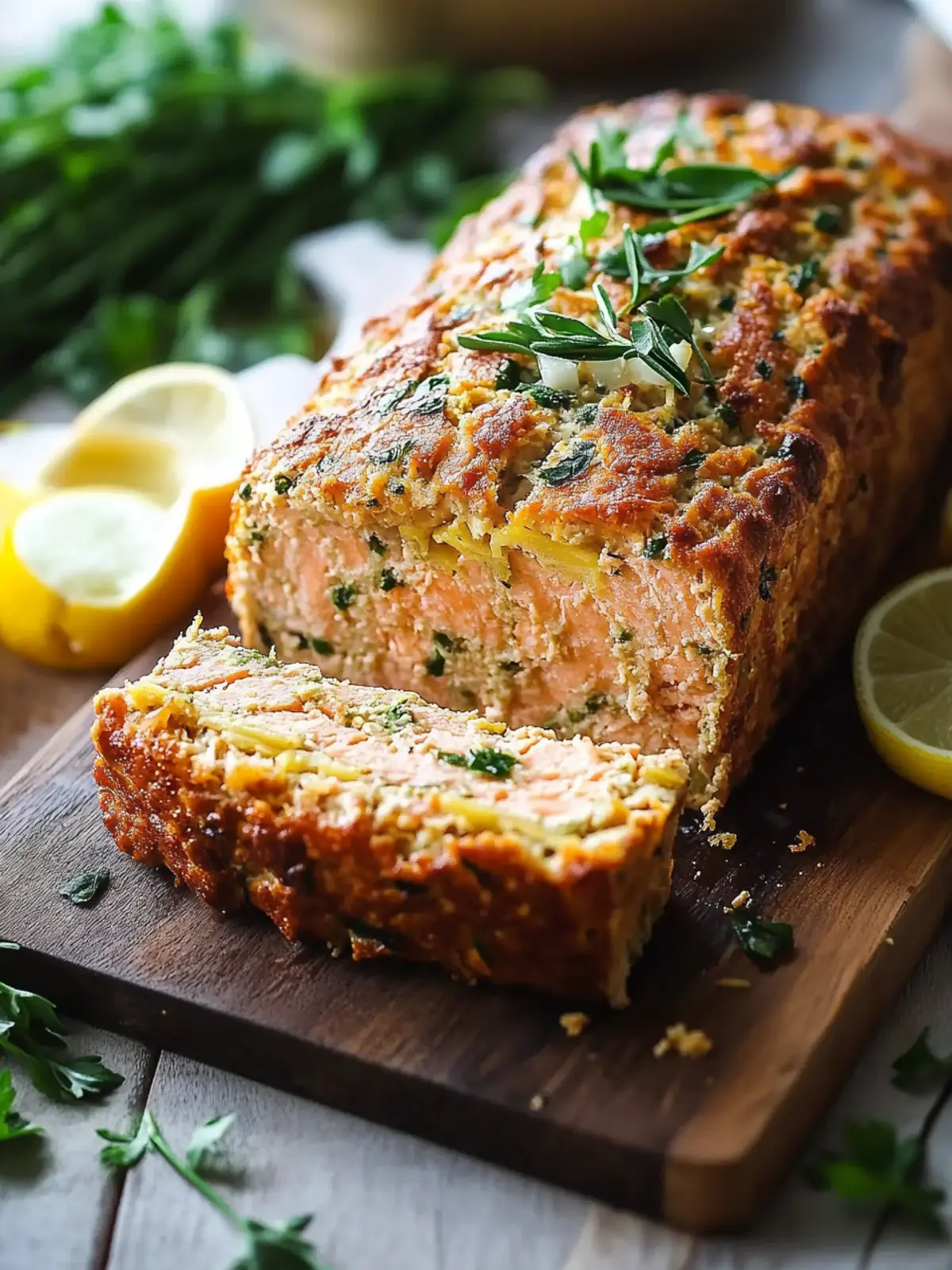
Let’s get cooking. This recipe is straightforward, but a few little tricks make it perfect every time.
- Preheat your oven to 375°F (190°C). Line your loaf pan with parchment paper, leaving some overhang on the sides. This makes it super easy to lift the finished loaf out. If you don’t have parchment, spray the pan generously with non-stick spray.
- Drain and flake the salmon. Open both cans and drain off the liquid. Transfer the salmon to your large mixing bowl. Use a fork to break it into small, even flakes. Take a minute to feel for any bones or tough bits and remove them. Your future self will thank you.
- Grate the onion. Using the small holes of your box grater or a microplane, grate the onion directly into the bowl with the salmon. You want about 1/4 cup of grated onion and its juices. That juice adds so much moisture and flavor.
- Add the remaining ingredients. To the bowl, add the breadcrumbs, beaten eggs, mayonnaise, lemon juice, Dijon mustard, dried dill, garlic powder, salt, and black pepper. Use a fork or spatula to mix everything together. Don’t overmix—you want it combined, not pasty. The mixture should be moist but hold together when pressed. If it feels too wet, add another tablespoon of breadcrumbs. If it’s too dry, add a teaspoon of lemon juice or water.
- Press the mixture into the pan. Transfer the salmon mixture to your prepared loaf pan. Use the back of a spoon or your hands (lightly wet your hands to prevent sticking) to press it down evenly. Don’t pack it too tightly—just smooth the top so it’s even.
- Bake for 30-35 minutes. Place the pan in the preheated oven and bake until the top is golden brown and the loaf feels firm to the touch. A thermometer inserted into the center should read 160°F (71°C). The edges will start to pull away from the pan slightly.
- Let it rest before slicing. This is the hardest part, I know. Let the loaf rest in the pan for a full 10 minutes. This allows the proteins to relax and the loaf to set, so your slices hold together beautifully. After 10 minutes, use the parchment overhang to lift the loaf out. Transfer to a cutting board.
- Slice and serve. Use a sharp knife to cut even slices. They should be firm and hold their shape. Garnish with fresh parsley if you like, and serve warm.
A quick note: the loaf will be a little fragile right out of the oven, so handle it gently during the first few minutes of resting. Patience pays off here.
Cooking Tips & Techniques
I’ve made this quick savory salmon loaf more times than I can count, and I’ve learned a few things the hard way. Let me save you some trouble.
Don’t overmix the batter. I know it’s tempting to keep stirring until everything is perfectly smooth, but overmixing can make the loaf dense and tough. Just mix until the ingredients are evenly distributed. A few small lumps are totally fine.
Let the salmon drain well. Too much liquid from the cans will make your loaf soggy. After draining, you can even gently press the salmon with a paper towel to remove excess moisture. This helps the loaf hold its shape and develop a nice crust.
Use a thermometer for doneness. The visual cues are helpful, but a meat thermometer is your best friend here. Insert it into the center of the loaf. When it reads 160°F (71°C), you’re golden. Overcooking can dry it out, so don’t stray too far from the oven in the last 5 minutes.
Let it rest. I cannot stress this enough. I once sliced into a loaf after only 5 minutes of resting, and it fell apart into a glorious but messy pile of salmon. The 10-minute rest is non-negotiable for clean slices.
Toast your breadcrumbs first for extra crunch. If you have an extra 2 minutes, spread the breadcrumbs on a baking sheet and toast them in the oven while it preheats. This adds a lovely nutty flavor and helps the top of the loaf get extra crispy.
Make extra for leftovers. This loaf is even better the next day. The flavors meld together overnight, and cold slices are amazing on a sandwich with a little lettuce and tartar sauce.
Variations & Adaptations
This recipe is wonderfully flexible. Here are some ways to make it your own.
- Spicy Cajun Salmon Loaf: Add 1 teaspoon of Cajun seasoning and a pinch of cayenne pepper to the mix. Serve with a side of remoulade sauce for dipping. It’s got a nice kick without being overwhelming.
- Mediterranean Twist: Swap the dill for dried oregano, add 1/4 cup of chopped sun-dried tomatoes and 2 tablespoons of crumbled feta cheese. The salty feta and sweet tomatoes are a dream with the salmon.
- Gluten-Free Version: Use gluten-free breadcrumbs or almond flour. I’ve used crushed pork rinds too, and it works surprisingly well. The texture is a little denser but still delicious.
- Dairy-Free Adaptation: Replace the mayonnaise with a vegan mayo or mashed avocado. The avocado adds healthy fats and keeps the loaf moist. Just be aware it will turn a little greenish, but the flavor is fantastic.
- Lemon-Herb Variation: Double the lemon juice and add 2 tablespoons of chopped fresh parsley and 1 tablespoon of chopped fresh chives. The bright, herby flavor is perfect for spring and summer dinners.
- Add Some Veggies: Finely grate a small carrot or zucchini and squeeze out the excess moisture before adding it to the mix. It adds color, nutrients, and a little extra moisture. My kids never notice.
My personal favorite variation is the Mediterranean one. I made it for a small dinner party last summer, and everyone asked for the recipe. The feta gets a little melty and golden on top, and the sun-dried tomatoes add these little bursts of sweetness. It’s just lovely.
Serving & Storage Suggestions
This quick savory salmon loaf is incredibly versatile when it comes to serving. Here’s how I like to enjoy it.
Serving Temperature: Serve it warm, right after the 10-minute rest. It’s also delicious at room temperature, which makes it great for picnics or packed lunches.
Presentation: Slice the loaf into 1-inch thick slices. Arrange them on a platter with lemon wedges and a sprinkle of fresh dill or parsley. A dollop of tartar sauce or a simple lemon-herb yogurt sauce on the side is always a hit.
Complementary Dishes: This loaf pairs beautifully with a light, fresh side. A crisp green salad with a lemon vinaigrette, roasted asparagus, or some steamed green beans are all excellent choices. For a heartier meal, serve it alongside some roasted potatoes or a simple rice pilaf. If you’re in the mood for something cozy, you could even serve it with a bowl of creamy chicken pot pie soup for a truly comforting dinner spread.
Storage: Store leftover slices in an airtight container in the refrigerator for up to 4 days. The flavor actually improves as it sits, so don’t be afraid to make it ahead.
Reheating: The best way to reheat is in a low oven (300°F or 150°C) for about 10 minutes. This warms it through without drying it out. You can also microwave individual slices for 30-45 seconds, but the texture will be a little softer. For a crispy exterior, reheat slices in a non-stick skillet over medium heat for 2-3 minutes per side.
Freezing: This loaf freezes beautifully. Wrap the whole loaf or individual slices tightly in plastic wrap, then in foil. Freeze for up to 3 months. Thaw overnight in the refrigerator before reheating.
Nutritional Information & Benefits
This quick savory salmon loaf isn’t just delicious—it’s packed with good-for-you ingredients. Here’s a rough estimate per serving (based on 6 servings):
- Calories: Approximately 280-320
- Protein: 25-30 grams
- Fat: 16-20 grams (mostly healthy fats from the salmon and mayo)
- Carbohydrates: 8-10 grams
- Fiber: 1-2 grams
Health Benefits: Salmon is one of the best sources of omega-3 fatty acids, which are fantastic for heart and brain health. It’s also rich in high-quality protein, vitamin D, and B vitamins. The onions and garlic powder add antioxidants, and the lemon juice provides a nice dose of vitamin C.
Dietary Considerations: This recipe is naturally low-carb and can be made gluten-free with a simple swap. It’s also suitable for those following a Mediterranean diet or a high-protein eating plan.
Potential Allergens: This recipe contains fish, eggs, and gluten (if using traditional breadcrumbs). For a dairy-free version, use vegan mayo. Always check your ingredient labels if cooking for someone with allergies.
I love that I can serve this to my family and feel good about what they’re eating. It’s comfort food that actually nourishes you.
Conclusion
This quick savory salmon loaf has honestly become one of my most-requested recipes. It’s the kind of meal that proves you don’t need complicated techniques or a long ingredient list to make something truly satisfying. It’s fast enough for a busy weeknight, but special enough for a cozy Sunday dinner with the people you love.
I really hope you give this a try. Play with the variations, make it your own, and don’t be afraid to experiment. That’s the beauty of a simple recipe like this—it’s a perfect canvas for your creativity. And if you make it, I’d love to hear how it turned out. Drop a comment below and let me know your favorite variation, or share a photo of your beautiful salmon loaf. Your feedback and ideas are what make this community so wonderful.
Thank you for stopping by and spending a little time in my kitchen. Now go make some memories around your dinner table. You’ve got this.
Frequently Asked Questions
Can I use fresh salmon instead of canned?
Absolutely. If you have leftover cooked salmon or want to use fresh, just bake or poach about 1.5 pounds of salmon fillet until it flakes easily. Let it cool, then flake it and use it in place of the canned salmon. The texture will be even more tender.
Can I make this salmon loaf ahead of time?
Yes! You can assemble the loaf completely, cover it, and refrigerate it for up to 24 hours before baking. You might need to add 5-10 minutes to the baking time since it starts cold. It’s a great option for meal prep or when you’re hosting.
Why did my salmon loaf fall apart?
This usually happens for one of three reasons: the mixture was too wet, you didn’t let it rest long enough after baking, or you sliced it too soon. Make sure to drain the salmon well, and don’t skip the 10-minute rest. If it still seems fragile, try adding an extra tablespoon of breadcrumbs next time.
Can I freeze this salmon loaf?
Yes, it freezes wonderfully. Let the baked loaf cool completely, then wrap it tightly in plastic wrap and foil. Freeze for up to 3 months. Thaw overnight in the fridge and reheat in a low oven. Individual slices also freeze well for quick lunches.
What can I serve with this salmon loaf for a complete meal?
For a light meal, pair it with a simple green salad and lemon vinaigrette. For something heartier, try roasted potatoes and steamed green beans. It also goes beautifully with a side of creamy tzatziki chicken salad for a Mediterranean-inspired spread, or alongside some effortless crock pot beef bites if you’re feeding a crowd with varied tastes.
Pin This Recipe!
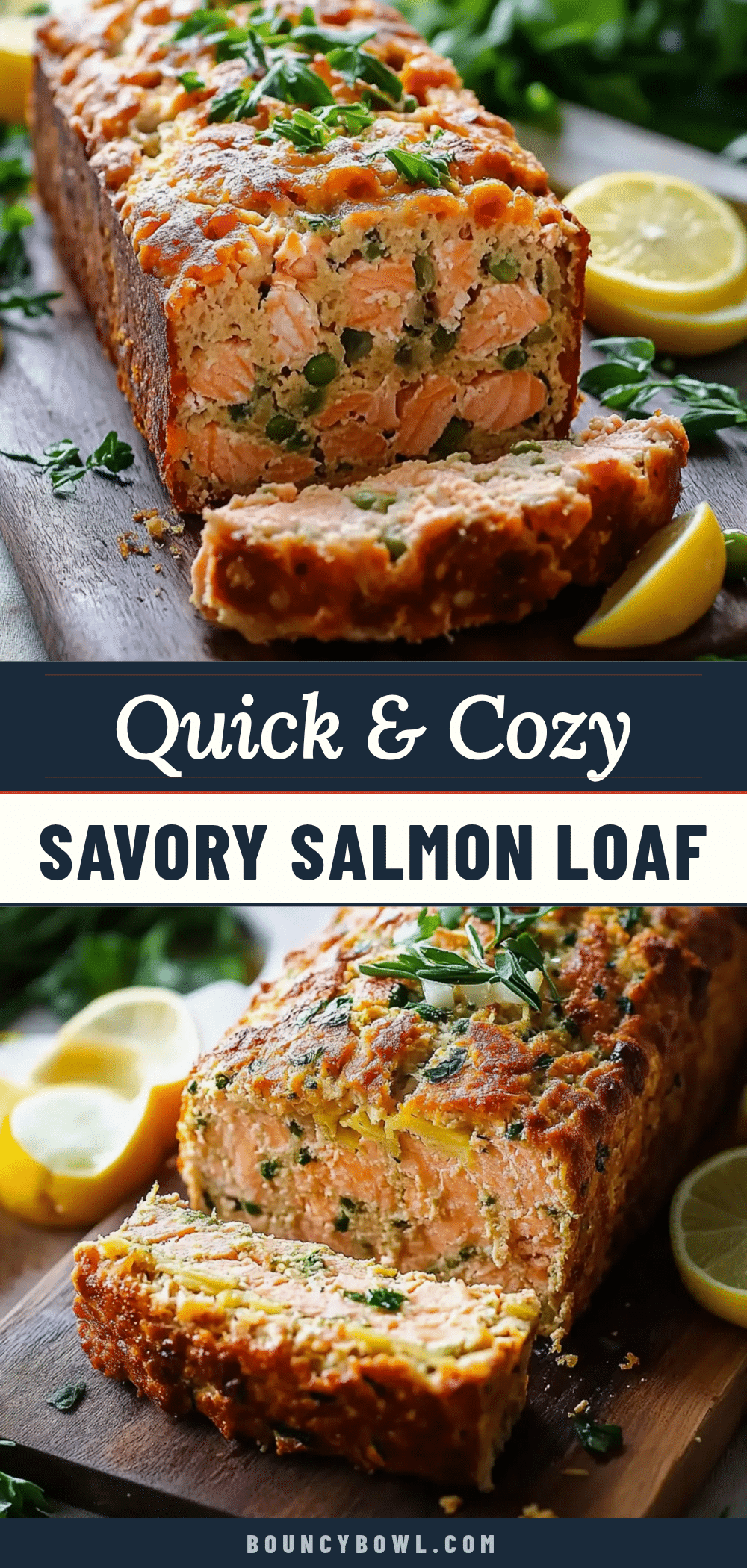
Best Easy Savory Salmon Loaf – Cozy Family Dinner

This quick and easy salmon loaf is made with canned salmon, breadcrumbs, and a few pantry staples. It bakes in 30 minutes and is moist, flavorful, and perfect for a cozy family dinner.
- Prep Time: 10 minutes
- Cook Time: 30 minutes
- Total Time: 40 minutes
- Yield: 6 servings 1x
- Category: Main Course
- Cuisine: American
Ingredients
- 2 cans (14.75 oz each) canned salmon, drained and flaked
- 1/2 cup plain breadcrumbs (panko or regular)
- 2 large eggs, lightly beaten
- 1/4 cup mayonnaise
- 1/4 cup finely grated onion (about half a small onion)
- 2 tablespoons fresh lemon juice
- 1 tablespoon Dijon mustard
- 1 teaspoon dried dill (or 1 tablespoon fresh, chopped)
- 1/2 teaspoon garlic powder
- 1/2 teaspoon salt
- 1/4 teaspoon black pepper
- Optional: 1/4 cup chopped fresh parsley for garnish
Instructions
- Preheat your oven to 375°F (190°C). Line your loaf pan with parchment paper, leaving some overhang on the sides. If you don’t have parchment, spray the pan generously with non-stick spray.
- Drain and flake the salmon. Open both cans and drain off the liquid. Transfer the salmon to your large mixing bowl. Use a fork to break it into small, even flakes. Remove any bones or tough bits.
- Grate the onion. Using the small holes of your box grater or a microplane, grate the onion directly into the bowl with the salmon. You want about 1/4 cup of grated onion and its juices.
- Add the remaining ingredients. To the bowl, add the breadcrumbs, beaten eggs, mayonnaise, lemon juice, Dijon mustard, dried dill, garlic powder, salt, and black pepper. Use a fork or spatula to mix everything together. Don’t overmix. The mixture should be moist but hold together when pressed. If it feels too wet, add another tablespoon of breadcrumbs. If it’s too dry, add a teaspoon of lemon juice or water.
- Press the mixture into the pan. Transfer the salmon mixture to your prepared loaf pan. Use the back of a spoon or your hands (lightly wet your hands to prevent sticking) to press it down evenly. Don’t pack it too tightly—just smooth the top so it’s even.
- Bake for 30-35 minutes. Place the pan in the preheated oven and bake until the top is golden brown and the loaf feels firm to the touch. A thermometer inserted into the center should read 160°F (71°C). The edges will start to pull away from the pan slightly.
- Let it rest before slicing. Let the loaf rest in the pan for a full 10 minutes. After 10 minutes, use the parchment overhang to lift the loaf out. Transfer to a cutting board.
- Slice and serve. Use a sharp knife to cut even slices. Garnish with fresh parsley if you like, and serve warm.
Notes
Don’t overmix the batter. Let the salmon drain well. Use a thermometer for doneness (160°F). Let the loaf rest for 10 minutes before slicing. Toast breadcrumbs first for extra crunch. Leftovers are even better the next day.
Nutrition
- Serving Size: 1 slice (1/6 of loaf
- Calories: 300
- Sugar: 2
- Sodium: 450
- Fat: 18
- Saturated Fat: 3
- Carbohydrates: 9
- Fiber: 1
- Protein: 27
Keywords: salmon loaf, easy salmon recipe, canned salmon, family dinner, quick dinner, savory salmon loaf