Love this? Save it for later!
Share the inspiration with your friends
I was standing in my kitchen last Tuesday, staring at a fillet of salmon and a half-used block of cream cheese, when it hit me. I had been craving something warm and comforting, but I was also tired of the same old weeknight pasta. I wanted the creamy, savory richness of a classic risotto, but with a twist that felt fresh and exciting. Then I remembered the miso paste hiding in the back of my fridge, and a bag of sushi rice I’d bought on a whim. That’s when this recipe was born—not from a fancy restaurant meal, but from a moment of pure, hungry curiosity.
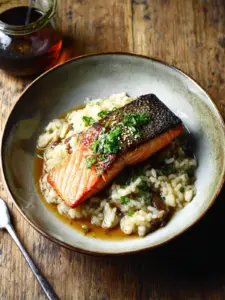
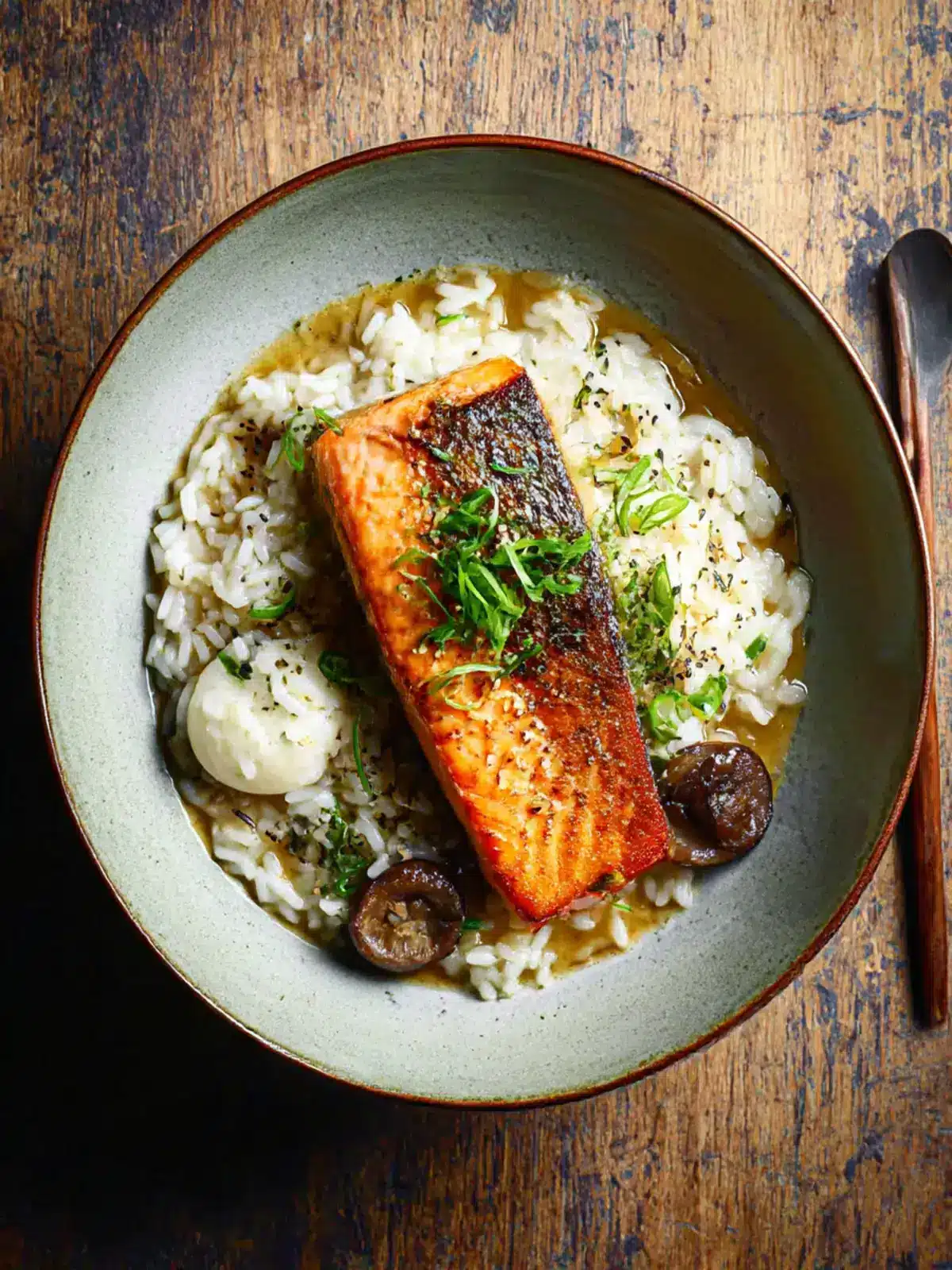
The first bite was a revelation. The rice was creamy and rich, with that deep, savory flavor you get from good miso and a splash of soy sauce. And the salmon on top? It was perfectly crispy on the outside, flaky and tender inside, giving the whole dish this amazing contrast in textures. I honestly didn’t expect it to work so well. I mean, Japanese flavors in a classic Italian technique? It felt a little rebellious, but let’s face it, the best recipes often are.
Now, this cozy Japanese salmon risotto has become my go-to for those nights when I need a little comfort but still want something that feels special. It’s the kind of meal that makes you slow down and actually enjoy the process of cooking, you know? The stirring, the sizzling, the way the kitchen fills with this incredible aroma. It’s not just dinner; it’s a moment. And once you try it, I think you’ll understand exactly what I mean.
Why You’ll Love This Recipe
This isn’t just another risotto recipe. After testing this dish about four times in one week (my family was very happy about that), I can confidently say it hits every single note you’d want from a cozy dinner. It’s the kind of meal that feels fancy enough for a date night but is simple enough for a random Wednesday.
- Quick & Easy : Comes together in about 40 minutes, which is surprisingly fast for a risotto. The active cooking time is only about 25 minutes, so you’re not stuck at the stove forever.
- Simple Ingredients : You probably have most of these in your pantry already. No need for a special trip to an Asian market—miso paste is common in most grocery stores now.
- Perfect for Cozy Nights : Great for a quiet dinner at home, a special weekend meal, or even when you want to impress a guest without the stress.
- Crowd-Pleaser : Even my picky eater friend, who swears she doesn’t like “fancy fish,” asked for seconds. The crispy salmon is a total game-changer.
- Unbelievably Delicious : The combination of creamy, umami-rich risotto with the crispy, salty salmon skin is next-level comfort food. It’s satisfying in a way that feels both indulgent and wholesome.
What makes this recipe different from the rest is the technique. Instead of just adding miso at the end, I bloom it in the broth, which deepens the flavor. And for the salmon, I use a dry-brining method that guarantees the crispiest skin you’ve ever had. This isn’t just another version of salmon and rice—it’s your new favorite way to make both.
This recipe is the kind that makes you close your eyes after the first bite. It’s comfort food reimagined—a little healthier, a little faster, but with the same soul-soothing satisfaction. Perfect for impressing guests without stress, or turning a simple Tuesday into something memorable.
What Ingredients You Will Need
This recipe uses simple, wholesome ingredients to deliver bold flavor and satisfying texture without the fuss. Most of these are pantry staples or easy to find at your local grocery store.
For the Crispy Salmon
- 2 (6-ounce) salmon fillets, skin-on (look for fillets that are about 1 inch thick for even cooking)
- 1 teaspoon kosher salt (for dry-brining the skin—this is the secret to maximum crispiness)
- 1 tablespoon neutral oil, like avocado or grapeseed (avoid olive oil here; it burns too easily at high heat)
For the Japanese Risotto
- 1 ½ cups arborio rice (or sushi rice, if that’s what you have—it works beautifully and gives a slightly stickier texture)
- 4 cups low-sodium chicken or vegetable broth (I prefer the Better Than Bouillon paste for the richest flavor)
- 2 tablespoons white miso paste (adds that deep, savory umami note)
- 1 tablespoon soy sauce (or tamari for gluten-free)
- 1 tablespoon mirin (a sweet Japanese cooking wine; you can substitute with a teaspoon of sugar mixed with a tablespoon of sake or dry sherry)
- 1 small onion, finely diced (about ¾ cup)
- 3 cloves garlic, minced
- ½ cup dry white wine (something you’d drink, like a Sauvignon Blanc)
- 2 tablespoons unsalted butter
- ½ cup grated Parmesan cheese (yes, even in a Japanese-inspired dish, Parmesan adds that essential creamy, salty finish)
- 1 tablespoon sesame oil (for drizzling at the end)
- 2 green onions, thinly sliced (for garnish)
- 1 teaspoon toasted sesame seeds (for garnish, optional but highly recommended)
Ingredient Selection Tips: For the best texture, look for firm, wild-caught salmon if possible. It has a better flavor and holds its shape beautifully. For the miso, white miso (also called shiro miso) is milder and sweeter than red miso, making it perfect for this creamy dish. If you only have red miso, use half the amount—it’s much saltier.
Substitution Guidance: You can easily swap the arborio rice for sushi rice or even short-grain brown rice, though the cooking time will increase. For a dairy-free version, use a high-quality vegan Parmesan and a good vegan butter. The flavor will be slightly different but still delicious.
Equipment Needed
You don’t need a ton of fancy equipment for this recipe, which is part of its charm. Here’s what you’ll need:
- A large, heavy-bottomed pot or Dutch oven (I use my trusty 5-quart Le Creuset; it holds heat like a dream and keeps the risotto from scorching)
- A non-stick skillet (for the salmon—trust me, this makes the crispy skin so much easier to achieve)
- A wooden spoon or silicone spatula (for stirring the risotto)
- A ladle (for adding the broth gradually)
- A small saucepan (to warm the broth)
- A sharp knife and cutting board
- A microplane or fine grater (for the Parmesan)
If you don’t have a non-stick skillet, you can use a well-seasoned cast iron pan for the salmon. Just make sure it’s hot and well-oiled. And if you don’t have a Dutch oven, any large, deep pot will work—just keep a close eye on the heat to prevent sticking.
Preparation Method
Step 1: Dry-Brine the Salmon (20 minutes before cooking)
Pat the salmon fillets completely dry with paper towels. This is crucial—any moisture on the skin will steam it instead of crisping it. Sprinkle the skin side generously with the kosher salt and place the fillets, skin-side up, on a paper towel-lined plate. Let them sit at room temperature for 20 minutes. This draws out excess moisture and seasons the skin deeply. You’ll notice tiny beads of water on the surface; just pat them off gently before cooking.
Step 2: Warm the Broth
In a small saucepan, combine the chicken broth, miso paste, soy sauce, and mirin. Warm over medium heat, whisking occasionally until the miso is fully dissolved. Do not let it boil—just keep it at a gentle simmer. You want the broth warm when you add it to the rice so the cooking process stays consistent.
Step 3: Start the Risotto
In your large pot or Dutch oven, melt 1 tablespoon of the butter over medium heat. Add the diced onion and cook for 3-4 minutes, until softened and translucent. Add the minced garlic and cook for another 30 seconds until fragrant. Stir in the arborio rice and cook for 1-2 minutes, stirring constantly, until the grains are slightly translucent at the edges and smell nutty. This step is called “toasting” the rice and it helps prevent the grains from turning mushy.
Step 4: Deglaze with Wine
Pour in the white wine and stir until it’s mostly absorbed by the rice. You’ll smell the alcohol cook off, leaving behind a lovely acidity. This should take about 1 minute.
Step 5: Add the Broth Gradually
Begin adding the warm miso broth one ladleful at a time (about ½ cup each), stirring frequently. Wait until each addition is mostly absorbed before adding the next. This is the key to creamy risotto. It should take about 18-20 minutes total. The rice should be tender but still have a slight bite in the center (al dente). You might not use all the broth, and that’s okay—stop when the rice is perfectly cooked.
Step 6: Cook the Salmon
While the risotto is cooking, heat the neutral oil in your non-stick skillet over medium-high heat until it shimmers. Pat the salmon fillets dry one more time, then place them skin-side down in the hot pan. Press down gently with a spatula for 5 seconds to ensure even contact. Cook for 4-5 minutes without moving them. The skin should be deep golden brown and crispy. Flip carefully and cook for another 2-3 minutes for medium (the center should be slightly translucent). Remove from the pan and let rest on a plate.
Step 7: Finish the Risotto
Once the rice is tender, remove the pot from the heat. Stir in the remaining 1 tablespoon of butter, the grated Parmesan, and the sesame oil. Season with salt and pepper to taste. The risotto should be loose and creamy—if it seems too thick, stir in a splash of warm water or leftover broth.
Step 8: Serve
Spoon the risotto into warm bowls. Place a crispy salmon fillet on top, skin-side up. Garnish with sliced green onions and a sprinkle of toasted sesame seeds. Drizzle with a tiny bit of sesame oil if you’re feeling extra fancy. Serve immediately.
Cooking Tips & Techniques
Let me save you from the same mistakes I made the first time. When I tried this recipe initially, I added the miso directly to the rice without dissolving it first. Big mistake. It clumped up and left salty pockets throughout the dish. Always dissolve the miso in warm broth before adding it—it makes a world of difference.
Another thing I learned the hard way: don’t rush the salmon. I know it’s tempting to flip it early to check, but the skin needs that uninterrupted contact with the hot pan to get truly crispy. If you try to flip it and it sticks, it’s not ready yet. Give it another 30 seconds and try again. Patience is the secret ingredient here.
For the risotto, the biggest tip I can give you is to keep the broth warm. Adding cold broth to the rice shocks the grains and makes them cook unevenly. It also extends the cooking time, which can lead to mushy rice. Keep that broth simmering gently on the back burner.
If you’re short on time, you can make the miso broth a day ahead and store it in the fridge. Just reheat it gently before starting the risotto. And don’t skip the resting step for the salmon—it allows the juices to redistribute, so the fish stays moist and flaky.
Variations & Adaptations
One of the best things about this recipe is how easy it is to adapt. Here are a few variations I’ve tried and loved:
- Vegan Version : Swap the salmon for crispy pan-fried tofu or tempeh. Use a vegan butter and a high-quality vegan Parmesan. The miso and sesame oil will still give you that deep, savory flavor.
- Spicy Kick : Add 1 teaspoon of chili crisp or sriracha to the broth for a spicy version. It pairs amazingly with the creamy rice and crispy salmon.
- Vegetable-Packed : Stir in a handful of baby spinach or sautéed mushrooms at the end. The earthy flavors complement the miso beautifully.
- Different Grains : Try this with brown rice or farro for a chewier texture. Just note that the cooking time will be longer, and you’ll need more broth.
- Lemon-Herb Twist : Add the zest of one lemon and a tablespoon of fresh dill or chives to the finished risotto. It brightens up the dish and adds a fresh, spring-like feel.
I personally love the spicy version on a cold winter night. It’s like a warm hug with a little kick.
Serving & Storage Suggestions
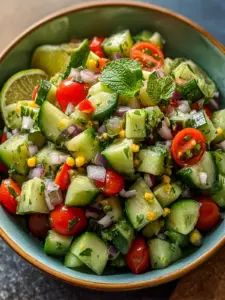
This dish is best served immediately, while the risotto is creamy and the salmon skin is still crispy. I like to serve it in shallow bowls with a side of steamed edamame or a simple fresh sushi cucumber salad for a complete meal. The cool, crunchy salad is the perfect contrast to the warm, creamy risotto.
If you have leftovers (which is rare in my house), store the risotto and salmon separately in airtight containers in the fridge. The risotto will keep for up to 3 days, and the salmon will last for about 2 days. To reheat, add a splash of water or broth to the risotto and warm it gently on the stovetop or in the microwave, stirring occasionally. The salmon is best reheated in a hot skillet to re-crisp the skin, but it will never be as crispy as the first time.
Flavors do develop over time—the miso and sesame oil meld together even more overnight, making the leftovers almost better the next day. Just don’t expect the salmon to stay crispy.
Nutritional Information & Benefits
This cozy Japanese salmon risotto is surprisingly balanced. Salmon is packed with omega-3 fatty acids, which are great for heart health and brain function. The miso paste is fermented, which means it contains probiotics that support gut health. And the arborio rice provides steady energy without spiking your blood sugar too much.
Here are the estimated nutritional values per serving (based on 2 servings):
- Calories: 680
- Protein: 38g
- Fat: 28g (mostly healthy fats from salmon and sesame oil)
- Carbohydrates: 62g
- Fiber: 2g
- Sugar: 4g
This recipe is naturally gluten-free if you use tamari instead of soy sauce. It’s also relatively low in sugar and can be made dairy-free with simple substitutions. The only potential allergen is the fish and dairy, so keep that in mind if you’re cooking for someone with sensitivities.
I love that this dish feels indulgent but is actually packed with nutrients. It’s the kind of meal that satisfies your cravings and fuels your body at the same time.
Conclusion
This cozy Japanese salmon risotto is more than just a recipe—it’s an experience. It’s the kind of meal that makes you feel like you’ve accomplished something special, even on a random weeknight. The creamy, umami-rich risotto paired with that perfectly crispy salmon is a combination that I honestly can’t get enough of.
I hope you give this a try and make it your own. Maybe add a little extra chili crisp, or swap the salmon for some crispy tofu. The beauty of this dish is how flexible it is. Don’t be afraid to experiment—that’s how the best recipes are born.
I’d love to hear how it turns out for you! Drop a comment below and let me know if you tried any fun variations. And if you loved it, share this post with a friend who needs a little cozy comfort in their life. Happy cooking!
Frequently Asked Questions
Can I use a different type of rice for this risotto?
Absolutely! While arborio rice is traditional for risotto because of its high starch content, you can use sushi rice or even short-grain brown rice. Just keep in mind that brown rice will take longer to cook and will have a chewier texture. You’ll also need to add more broth and stir more frequently.
How do I get the salmon skin extra crispy?
The secret is dry-brining. Pat the salmon completely dry, season the skin generously with salt, and let it sit uncovered in the fridge for 20-30 minutes. This draws out moisture. Then, cook it skin-side down in a hot pan with a little oil and don’t touch it for at least 4 minutes. Patience is key!
Can I make this recipe ahead of time?
Risotto is best served fresh, but you can prep the miso broth and dry-brine the salmon a few hours ahead. The actual cooking should be done just before serving for the best texture. Leftover risotto can be reheated with a splash of broth, but the salmon skin won’t be as crispy.
What can I substitute for miso paste?
If you don’t have miso paste, you can use a combination of soy sauce and a little bit of tahini or peanut butter for a similar savory depth. It won’t be exactly the same, but it will still be delicious. You can also try using a tablespoon of doenjang (Korean soybean paste) if you have it.
Is this recipe spicy?
No, this version is not spicy at all. It’s savory and umami-rich with a hint of sweetness from the mirin. If you want to add heat, simply stir in some chili crisp, sriracha, or red pepper flakes to the broth while it’s warming. Start with a little and taste as you go.
Pin This Recipe!
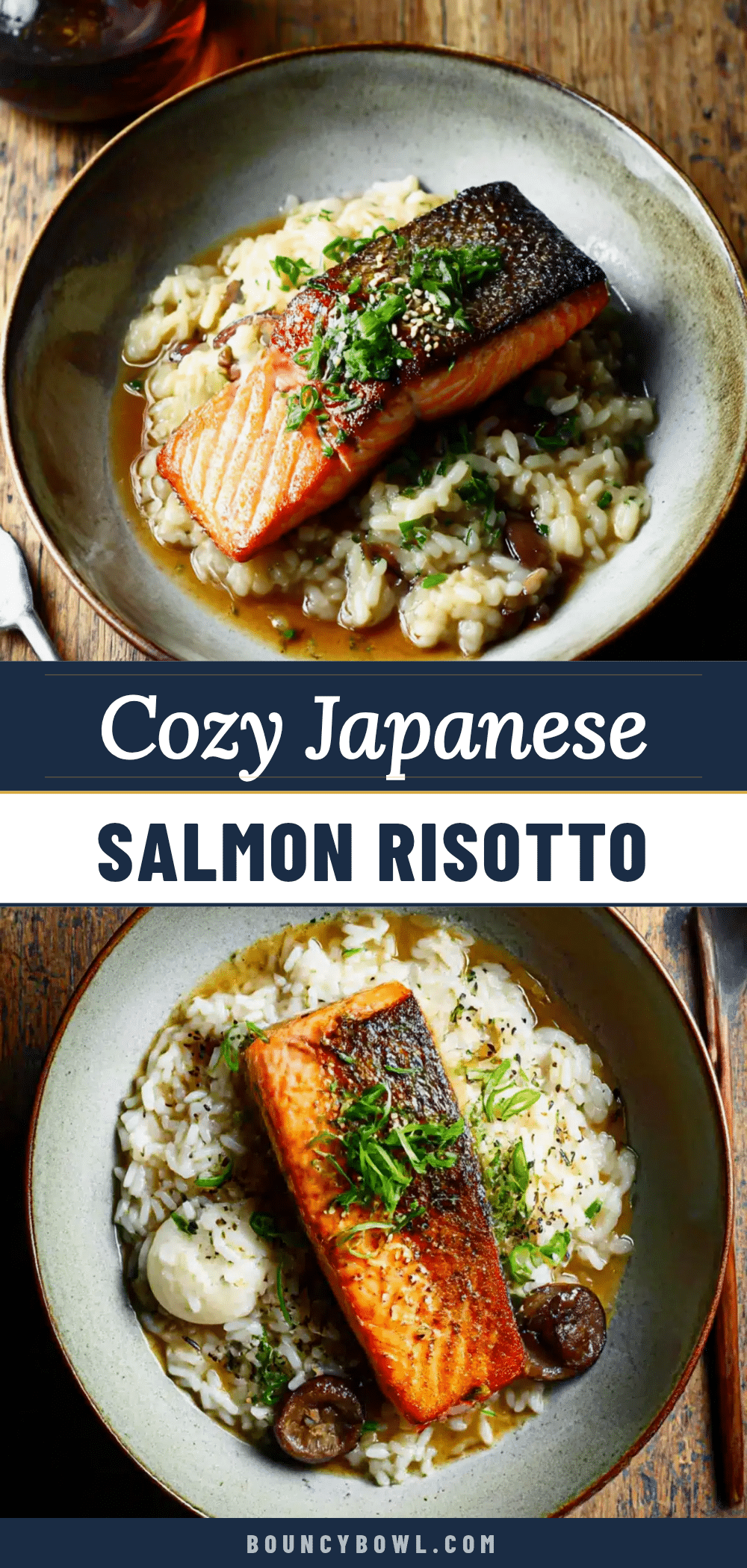
Cozy Japanese Salmon Risotto with Crispy Salmon
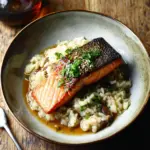
A creamy, umami-rich risotto made with miso and soy sauce, topped with perfectly crispy-skinned salmon. This fusion dish combines Japanese flavors with classic Italian technique for a comforting yet special weeknight meal.
- Prep Time: 20 minutes
- Cook Time: 25 minutes
- Total Time: 45 minutes
- Yield: 2 servings 1x
- Category: Main Course
- Cuisine: Japanese-Italian Fusion
Ingredients
- 2 (6-ounce) salmon fillets, skin-on
- 1 teaspoon kosher salt
- 1 tablespoon neutral oil (avocado or grapeseed)
- 1 ½ cups arborio rice (or sushi rice)
- 4 cups low-sodium chicken or vegetable broth
- 2 tablespoons white miso paste
- 1 tablespoon soy sauce (or tamari for gluten-free)
- 1 tablespoon mirin
- 1 small onion, finely diced (about ¾ cup)
- 3 cloves garlic, minced
- ½ cup dry white wine (e.g., Sauvignon Blanc)
- 2 tablespoons unsalted butter
- ½ cup grated Parmesan cheese
- 1 tablespoon sesame oil
- 2 green onions, thinly sliced
- 1 teaspoon toasted sesame seeds (optional)
Instructions
- Pat the salmon fillets completely dry with paper towels. Sprinkle the skin side generously with kosher salt and place skin-side up on a paper towel-lined plate. Let sit at room temperature for 20 minutes.
- In a small saucepan, combine the broth, miso paste, soy sauce, and mirin. Warm over medium heat, whisking until miso is dissolved. Keep at a gentle simmer.
- In a large pot or Dutch oven, melt 1 tablespoon butter over medium heat. Add the diced onion and cook for 3-4 minutes until softened. Add garlic and cook for 30 seconds until fragrant.
- Stir in the arborio rice and cook for 1-2 minutes, stirring constantly, until the grains are slightly translucent at the edges and smell nutty.
- Pour in the white wine and stir until mostly absorbed, about 1 minute.
- Begin adding the warm miso broth one ladleful at a time (about ½ cup each), stirring frequently. Wait until each addition is mostly absorbed before adding the next. Continue for 18-20 minutes until the rice is tender but still al dente.
- While the risotto cooks, heat the neutral oil in a non-stick skillet over medium-high heat until shimmering. Pat the salmon dry again, then place skin-side down in the pan. Press gently with a spatula for 5 seconds. Cook for 4-5 minutes without moving until skin is deep golden and crispy. Flip and cook for 2-3 minutes for medium. Remove and let rest.
- Once the rice is tender, remove the pot from heat. Stir in the remaining 1 tablespoon butter, Parmesan, and sesame oil. Season with salt and pepper to taste.
- Spoon the risotto into warm bowls. Top with a salmon fillet, skin-side up. Garnish with green onions and sesame seeds. Drizzle with extra sesame oil if desired. Serve immediately.
Notes
For the crispiest salmon skin, dry-brine the fillets for 20 minutes before cooking. Always dissolve miso in warm broth before adding to the rice to avoid salty clumps. Keep the broth warm throughout the cooking process for even rice cooking. Leftover risotto can be reheated with a splash of broth, but the salmon skin will not be as crispy.
Nutrition
- Serving Size: 1 bowl (half of reci
- Calories: 680
- Sugar: 4
- Sodium: 1200
- Fat: 28
- Saturated Fat: 8
- Carbohydrates: 62
- Fiber: 2
- Protein: 38
Keywords: salmon risotto, Japanese risotto, miso risotto, crispy salmon, creamy risotto, weeknight dinner, comfort food, fusion recipe