Love this? Save it for later!
Share the inspiration with your friends
The first time I made polenta, I didn’t even mean to. I had a half-empty bag of cornmeal staring at me from the pantry, and a fridge with exactly one container of chicken broth, some Parmesan rinds, and a stick of butter that was about to expire. It was one of those nights where takeout felt too expensive and cooking felt too exhausting. So I just poured the cornmeal into a pot, added the broth, and started stirring. Honestly, I expected nothing special. But then something happened. The grains softened, the liquid turned glossy, and the whole kitchen started smelling like a rustic Italian farmhouse I’d never even been to. I stirred in the butter and cheese, took one bite, and just stood there over the stove, eating straight from the pot. That was the moment I realized I had stumbled onto something I’d be making forever.
This creamy dreamy polenta you’ll crave is exactly that kind of recipe. It’s not fancy. It’s not complicated. It’s just simple ingredients doing their best work together. And somehow, it tastes like a hug in a bowl. I’ve made it for weeknight dinners when I needed comfort fast, and I’ve served it at dinner parties where people asked for seconds — and thirds. The texture is silky, the flavor is rich but not heavy, and it takes about 30 minutes from start to finish. No soaking, no baking, no complicated steps. Just you, a pot, and a little patience while you stir.
What I love most about this polenta is how forgiving it is. You don’t need to be a chef to get it right. You just need to trust the process and keep stirring. It’s the kind of recipe that feels like a secret weapon — something you pull out when you want to impress without the stress. And once you make it, you’ll understand why I couldn’t stop thinking about that first bowl.
Why You’ll Love This Recipe
- Quick & Easy : From pantry to plate in just 30 minutes. No soaking, no baking, no complicated steps.
- Simple Ingredients : You probably already have cornmeal, broth, butter, and cheese in your kitchen. No fancy grocery runs required.
- Perfect for Any Occasion : Serve it as a cozy weeknight side, a vegetarian main with roasted veggies, or a hearty base for braised meats like effortless crock pot beef bites.
- Crowd-Pleaser : Kids love the creamy texture, adults love the rich flavor, and everyone goes back for seconds.
- Unbelievably Delicious : The combination of silky cornmeal, savory broth, and melted cheese creates a comfort food experience that’s next-level.
What makes this polenta different from every other recipe out there? It’s the technique. Most recipes tell you to boil the liquid and dump in the cornmeal all at once. That leads to lumps. Instead, I whisk the cornmeal into cold liquid first, then bring it to a gentle simmer. This simple trick guarantees a smooth, lump-free texture every single time. No graininess, no clumps, just pure creaminess.
And let’s be honest — we all need recipes like this in our back pocket. The ones that feel special but don’t require a culinary degree. The ones that make you look like you spent hours in the kitchen when you actually just stirred for 20 minutes. This is that recipe. It’s comfort food reimagined — faster, easier, but with the same soul-soothing satisfaction that makes you close your eyes after the first bite.
What Ingredients You Will Need
This creamy dreamy polenta uses simple, wholesome ingredients to deliver bold flavor and satisfying texture without the fuss. Most of these are pantry staples, and the ones that aren’t are easy to find at any grocery store.
For the Polenta Base
- 1 cup (160g) coarse cornmeal (polenta) – Look for stone-ground cornmeal for the best texture. I prefer Bob’s Red Mill or any brand labeled specifically for polenta. Avoid instant polenta if you want that authentic creamy texture.
- 4 cups (950ml) low-sodium chicken or vegetable broth – The broth adds so much flavor compared to water. Use vegetable broth for a vegetarian version, or even a mix of broth and water if you want a milder taste.
- 1 cup (240ml) whole milk – Adds richness and creaminess. You can substitute with 2% milk, but avoid skim milk — it won’t give you the same silky texture. For a dairy-free option, use unsweetened oat milk or full-fat coconut milk (though that will add a subtle coconut flavor).
- ½ teaspoon fine sea salt – Plus more to taste. If your broth is salted, start with less and adjust at the end.
- ¼ teaspoon freshly ground black pepper – Adds a subtle warmth.
For the Creamy Finish
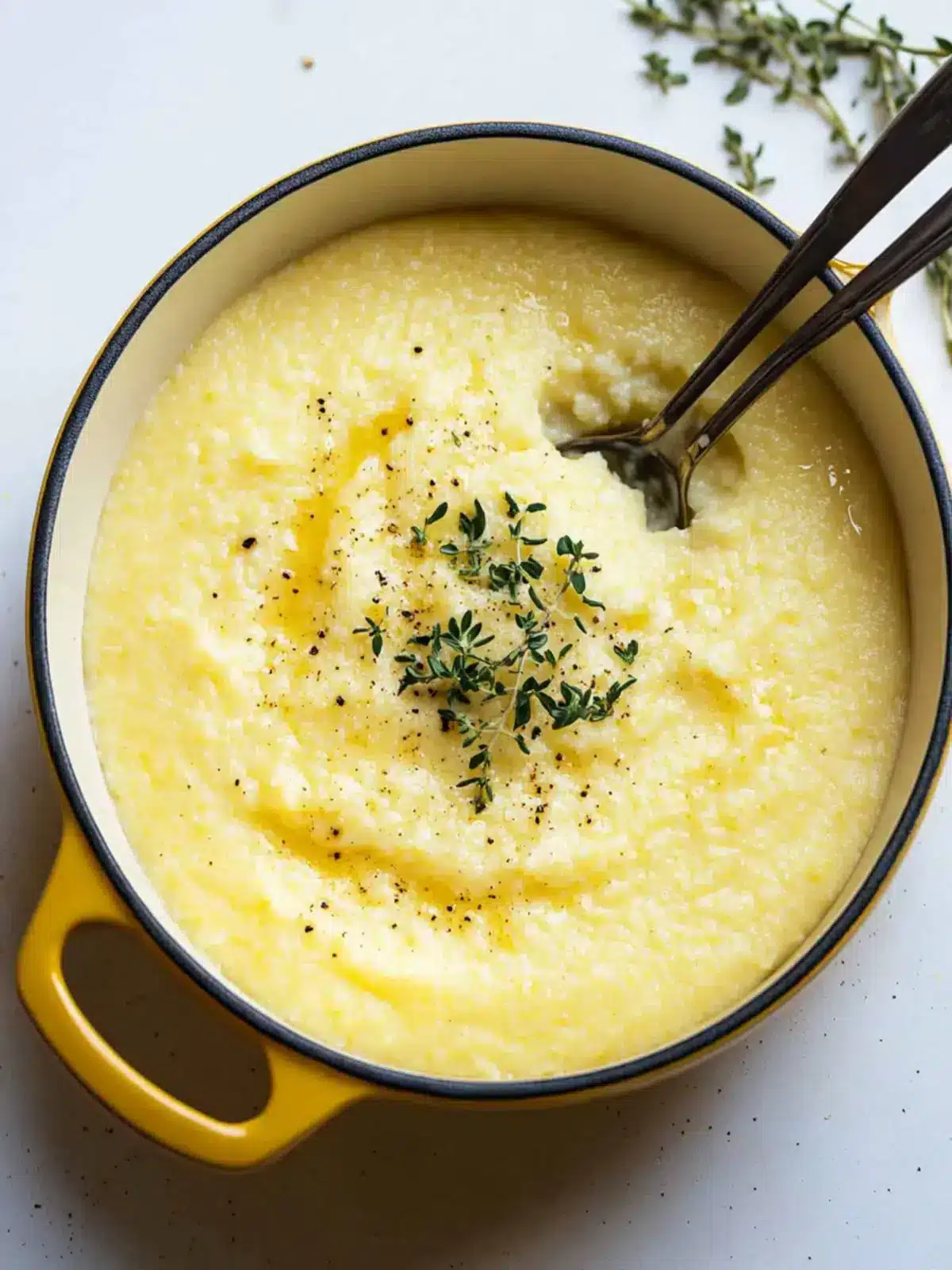
- 3 tablespoons (42g) unsalted butter – Use good quality butter here. It makes a real difference in flavor. I personally use Kerrygold when I want that extra richness.
- ½ cup (50g) freshly grated Parmesan cheese – Please, please grate it yourself. Pre-shredded cheese has anti-caking agents that prevent it from melting smoothly. Parmigiano-Reggiano is my go-to for its nutty, salty flavor.
- Optional: ¼ cup (60ml) heavy cream – For an extra-decadent version. Stir it in at the very end for the dreamiest texture imaginable.
Optional Add-Ins and Toppings
- Fresh herbs – Chopped thyme, rosemary, or parsley stirred in at the end adds brightness.
- Roasted garlic – Mash a few cloves into the polenta for a mellow, sweet garlic flavor.
- Mushrooms – Sautéed cremini or shiitake mushrooms make an incredible topping, especially if you’re serving this as a main dish.
- Balsamic glaze – A drizzle on top adds a tangy sweetness that pairs beautifully with the creamy polenta.
Equipment Needed
You don’t need much to make this creamy dreamy polenta, which is part of why I love it so much. Here’s what you’ll need:
- Heavy-bottomed pot or Dutch oven – A 4-quart pot works perfectly. The heavy bottom helps distribute heat evenly and prevents the polenta from scorching. I use my Le Creuset Dutch oven, but any sturdy pot will do.
- Whisk – Essential for getting that lump-free texture. A flat whisk works best, but a regular balloon whisk is fine too.
- Wooden spoon or silicone spatula – For stirring once the polenta starts to thicken. The whisk can get stuck, so switch to a spoon after the first few minutes.
- Measuring cups and spoons – Accuracy matters here, especially with the liquid-to-cornmeal ratio.
- Cheese grater – For grating fresh Parmesan. A microplane works great for fine grating, or use a box grater for larger shreds.
- Ladle – For serving. Polenta is soft and scoopable, so a ladle is easier than a spoon.
If you don’t have a heavy-bottomed pot, use a nonstick saucepan instead. Just keep the heat on low and stir frequently to avoid sticking. And if you’re making a double batch, use a larger pot — polenta bubbles up as it cooks, so leave plenty of room.
Preparation Method
This method is foolproof, I promise. Follow these steps and you’ll get creamy, dreamy polenta every single time.
- Combine the liquid and cornmeal in a cold pot. In your heavy-bottomed pot, whisk together the 4 cups of broth, 1 cup of milk, 1 teaspoon of salt, and 1 cup of cornmeal. Yes, you read that right — whisk the cornmeal into the cold liquid before turning on the heat. This is the secret to lump-free polenta. Whisk until the cornmeal is fully incorporated and there are no dry patches.
- Bring to a gentle simmer over medium heat. Place the pot on the stove over medium heat. Stir frequently with your whisk as it heats up. After about 5-7 minutes, you’ll see small bubbles start to break the surface. That’s your cue to reduce the heat to low. Don’t let it come to a rolling boil — that can make the polenta grainy.
- Switch to a wooden spoon and stir often. Once the polenta starts to thicken, switch from the whisk to a wooden spoon or silicone spatula. Stir every 2-3 minutes for the next 15-20 minutes. The polenta will sputter and pop as it cooks, so be careful — those bubbles are hot! I like to wear an apron or stand slightly back while stirring.
- Check for doneness. After about 20 minutes of simmering, the polenta should be thick, creamy, and tender. Taste a small spoonful — it should feel soft on your tongue with no grittiness. If it still feels sandy, cook for another 5 minutes and taste again. Cooking time can vary depending on your cornmeal and your stove.
- Finish with butter and cheese. Remove the pot from the heat. Add the 3 tablespoons of butter and stir until it’s fully melted and incorporated. Then add the ½ cup of grated Parmesan and stir until it’s melted and creamy. The polenta will look glossy and almost spreadable at this point. If you’re using heavy cream, stir it in now for extra decadence.
- Taste and adjust seasoning. Add more salt and pepper if needed. Remember that Parmesan is salty, so taste before adding extra salt. If the polenta seems too thick, stir in a splash of warm broth or milk to loosen it up.
- Serve immediately. Polenta is best served hot and fresh. Ladle it into bowls and top with your favorite toppings — sautéed mushrooms, roasted vegetables, braised meats, or just a drizzle of olive oil and a crack of black pepper.
Cooking Tips & Techniques
I’ve made polenta more times than I can count, and I’ve definitely had my share of failures. Here are the lessons I learned the hard way so you don’t have to.
Low and slow is your friend. I know it’s tempting to crank up the heat to speed things up, but patience pays off here. Cooking polenta over low heat allows the cornmeal to fully hydrate and soften, giving you that silky texture. High heat can make it seize up and turn into a gluey mess. Trust me, I’ve scraped enough burnt polenta off pot bottoms to know.
Stirring isn’t optional. I’m not going to lie — polenta requires attention. You don’t need to stir constantly, but you do need to stir every few minutes. If you walk away for too long, it will stick to the bottom and burn. Set a timer for 3-minute intervals if you’re easily distracted. I do this all the time, especially when I’m also trying to prep toppings.
Use the right cornmeal. Not all cornmeal is created equal. Fine cornmeal cooks faster but can turn pasty. Coarse cornmeal takes longer but gives you that perfect, toothsome texture. Stone-ground cornmeal labeled “polenta” is your best bet. Avoid instant polenta if you want that authentic creamy texture — it tends to be mushy.
Don’t skip the resting step. After you finish cooking, let the polenta sit off the heat for a minute or two before serving. This allows the starches to settle and the texture to become even creamier. It’s a small step that makes a big difference.
The leftover trick. If you have leftover polenta, pour it into a greased loaf pan or baking dish and refrigerate until firm. Then slice it and pan-fry in a little butter or oil until golden and crispy. It’s a completely different dish — and honestly, sometimes I like the crispy version even more. Serve it with quick Chinese garlic butter shrimp for an unforgettable meal.
Variations & Adaptations
One of the best things about this creamy dreamy polenta is how adaptable it is. Here are some of my favorite variations.
Vegan Polenta: Use vegetable broth, substitute the butter with 3 tablespoons of olive oil or vegan butter, and use ¼ cup of nutritional yeast instead of Parmesan. The nutritional yeast gives it that cheesy, savory flavor without any dairy. I’ve made this version for friends who are vegan, and they always ask for the recipe.
Herb and Garlic Polenta: While the polenta is cooking, add 2 crushed garlic cloves and a sprig of fresh rosemary or thyme to the liquid. Remove the herb sprig before serving. The garlic infuses the polenta with a subtle, aromatic flavor that pairs beautifully with roasted vegetables or grilled chicken.
Spicy Polenta: Stir in ½ teaspoon of red pepper flakes or a pinch of cayenne pepper along with the butter and cheese. The heat cuts through the richness and adds a lovely warmth. This is my go-to when I’m serving polenta with spicy sausages or a tomato-based ragu.
Baked Polenta: For a firmer texture, pour the cooked polenta into a greased 9×13 baking dish, spread it evenly, and refrigerate for at least 2 hours. Then cut it into squares or rounds, brush with olive oil, and bake at 400°F for 20-25 minutes until golden and crispy on the outside. This is perfect for making polenta “fries” or using as a base for appetizers.
Sweet Polenta: Yes, you can make sweet polenta! Skip the salt, pepper, and cheese, and instead stir in 2 tablespoons of honey or maple syrup, 1 teaspoon of vanilla extract, and a pinch of cinnamon. Serve it warm with fresh berries and a drizzle of cream for a cozy breakfast or dessert. It’s like oatmeal’s sophisticated Italian cousin.
Serving & Storage Suggestions
Polenta is one of those dishes that’s incredibly versatile when it comes to serving. Here’s how I like to enjoy it.
Serving Temperature: Polenta is best served hot, straight from the pot. It cools down quickly, so I recommend warming your serving bowls in the oven or with hot water before ladling in the polenta. This keeps it creamy and warm for longer at the table.
What to Serve With It: This polenta is a fantastic side dish for braised meats like effortless crock pot beef bites, roasted chicken, or sautéed mushrooms. It also works beautifully as a base for saucy dishes — spoon a rich tomato sauce, a creamy mushroom ragout, or even a simple poached egg over the top. For a vegetarian main, I love topping it with roasted vegetables and a drizzle of balsamic glaze. And if you’re in the mood for something lighter, serve it alongside fresh sushi cucumber salad for a surprisingly delicious contrast.
Storage: Leftover polenta can be stored in an airtight container in the refrigerator for up to 5 days. It will firm up significantly as it cools — that’s normal. Don’t try to reheat it as-is, because it will be a solid block. Instead, slice or scoop out what you need and reheat gently.
Reheating: The best way to reheat polenta is on the stovetop. Add the leftover polenta to a pot with a splash of broth, milk, or water. Warm it over low heat, stirring frequently, until it loosens up and becomes creamy again. This usually takes about 5-7 minutes. You can also reheat it in the microwave — just add a tablespoon of liquid, cover, and heat in 30-second bursts, stirring in between. For crispy polenta slices, pan-fry them in a little butter or oil until golden on both sides.
Flavor Development: Interestingly, polenta’s flavor actually mellows and deepens after a day in the fridge. The cornmeal continues to absorb the liquid, and the flavors of the broth and cheese become more integrated. Some people prefer day-old polenta for this reason — it’s less sharp and more rounded.
Nutritional Information & Benefits
While this creamy dreamy polenta is definitely a comfort food, it also has some surprising nutritional benefits. Here’s a rough estimate per serving (based on 6 servings, without optional heavy cream):
- Calories: Approximately 280-320
- Protein: 8-10g
- Fat: 14-18g
- Carbohydrates: 30-35g
- Fiber: 3-4g
- Sugar: 3-4g
- Sodium: 500-700mg (depending on broth and cheese)
Health Benefits: Cornmeal is a whole grain, which means it provides complex carbohydrates for sustained energy and fiber for digestive health. It’s also naturally gluten-free, making this recipe suitable for those with gluten sensitivities (just double-check your broth and cheese labels). The calcium from the milk and Parmesan supports bone health, and the butter adds vitamin A for immune function. While this isn’t a low-calorie dish, it’s a nourishing, satisfying comfort food that can absolutely fit into a balanced diet.
Dietary Considerations: This recipe is vegetarian as written. For a vegan version, see the variations section. For a lower-fat version, use 2% milk and reduce the butter to 1 tablespoon and the cheese to ¼ cup. The texture won’t be quite as luxurious, but it will still be delicious.
Potential Allergens: This recipe contains dairy (milk, butter, Parmesan). It is naturally gluten-free and nut-free. If you need it to be dairy-free, use the vegan variation mentioned above.
Conclusion
This creamy dreamy polenta is proof that the best recipes don’t have to be complicated. With just a handful of simple ingredients and a little bit of stirring, you can create something that feels truly special. It’s the kind of dish that turns a regular Tuesday night into a cozy, comforting experience — the kind you’ll find yourself craving on cold evenings, busy weekdays, or anytime you need a little warmth.
I hope you give this recipe a try. Don’t be afraid to make it your own — swap in different cheeses, add fresh herbs, or serve it with your favorite toppings. That’s the beauty of polenta: it’s a blank canvas that welcomes creativity. And if you make it, I’d love to hear how it turns out. Leave a comment below and let me know what you served it with, or tag me in your photos on social media. Your feedback and adaptations inspire me every day!
So grab a pot, your favorite wooden spoon, and let’s make some polenta magic. You deserve a bowl of something this good.
Frequently Asked Questions
Can I use instant polenta instead of regular polenta?
Yes, you can, but the texture will be different. Instant polenta cooks in about 5 minutes and has a finer, more uniform texture. It won’t be as creamy or toothsome as traditional polenta, but it works in a pinch. Just follow the package instructions for the liquid ratio, which is usually different from this recipe.
Why is my polenta lumpy?
Lumpy polenta usually happens when you add the cornmeal to boiling liquid all at once. The key is to whisk the cornmeal into cold liquid before heating it. This allows the grains to separate and hydrate evenly. If you already have lumps, don’t worry — just whisk vigorously while the polenta cooks, and most lumps will break apart. You can also use an immersion blender to smooth it out at the end.
Can I make polenta ahead of time?
Absolutely! You can cook the polenta up to 2 days in advance. Let it cool completely, then transfer it to an airtight container and refrigerate. When you’re ready to serve, reheat it on the stovetop with a splash of broth or milk, stirring until creamy. You can also pour the cooked polenta into a greased baking dish, refrigerate until firm, and then slice and pan-fry it for a different texture.
What’s the best way to reheat leftover polenta?
The stovetop method works best. Place the leftover polenta in a pot with a tablespoon or two of broth, milk, or water. Warm it over low heat, stirring constantly, until it loosens up and becomes creamy again. This usually takes 5-7 minutes. You can also microwave it in 30-second bursts, stirring in between, but the texture won’t be quite as smooth.
Is polenta gluten-free?
Yes, traditional polenta made from cornmeal is naturally gluten-free. However, you should always check the label on your cornmeal to make sure it was processed in a gluten-free facility if you have celiac disease or a severe gluten sensitivity. Also, be sure to use gluten-free broth and check that your Parmesan cheese doesn’t contain any gluten-based additives.
Pin This Recipe!
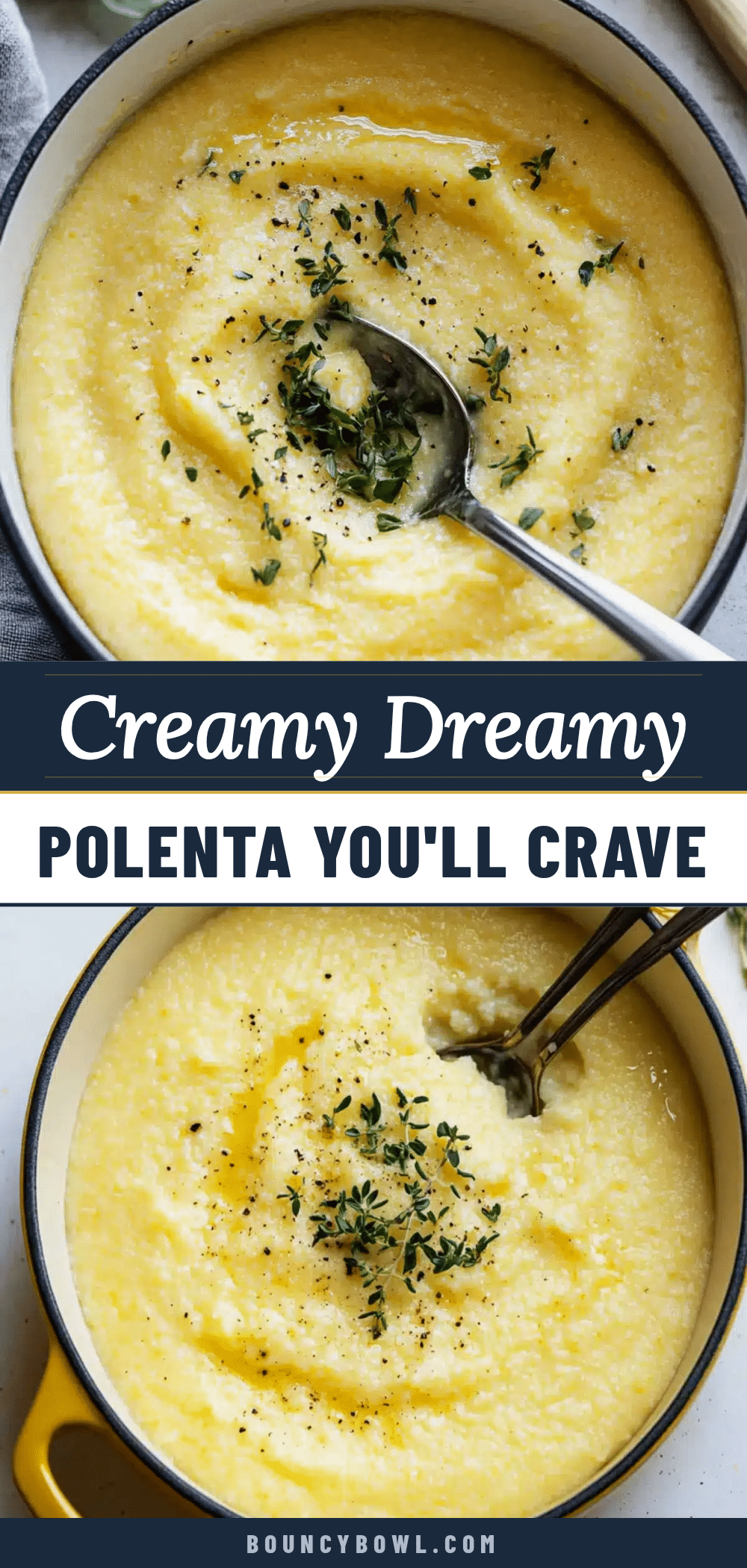
Creamy Dreamy Polenta – Easy 30-Minute Recipe You’ll Crave
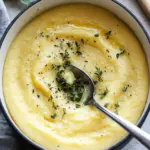
This creamy dreamy polenta is a quick and easy 30-minute recipe that delivers silky, rich comfort food with simple ingredients. Perfect as a weeknight side or a hearty base for braised meats and roasted vegetables.
- Prep Time: 5 minutes
- Cook Time: 25 minutes
- Total Time: 30 minutes
- Yield: 6 servings 1x
- Category: Side Dish
- Cuisine: Italian
Ingredients
- 1 cup (160g) coarse cornmeal (polenta)
- 4 cups (950ml) low-sodium chicken or vegetable broth
- 1 cup (240ml) whole milk
- ½ teaspoon fine sea salt
- ¼ teaspoon freshly ground black pepper
- 3 tablespoons (42g) unsalted butter
- ½ cup (50g) freshly grated Parmesan cheese
- Optional: ¼ cup (60ml) heavy cream
Instructions
- Combine the liquid and cornmeal in a cold pot. In your heavy-bottomed pot, whisk together the 4 cups of broth, 1 cup of milk, 1 teaspoon of salt, and 1 cup of cornmeal. Whisk until the cornmeal is fully incorporated and there are no dry patches.
- Bring to a gentle simmer over medium heat. Place the pot on the stove over medium heat. Stir frequently with your whisk as it heats up. After about 5-7 minutes, you’ll see small bubbles start to break the surface. Reduce the heat to low. Don’t let it come to a rolling boil.
- Switch to a wooden spoon and stir often. Once the polenta starts to thicken, switch from the whisk to a wooden spoon or silicone spatula. Stir every 2-3 minutes for the next 15-20 minutes.
- Check for doneness. After about 20 minutes of simmering, the polenta should be thick, creamy, and tender. Taste a small spoonful — it should feel soft on your tongue with no grittiness. If it still feels sandy, cook for another 5 minutes and taste again.
- Finish with butter and cheese. Remove the pot from the heat. Add the 3 tablespoons of butter and stir until it’s fully melted and incorporated. Then add the ½ cup of grated Parmesan and stir until it’s melted and creamy. If you’re using heavy cream, stir it in now.
- Taste and adjust seasoning. Add more salt and pepper if needed. If the polenta seems too thick, stir in a splash of warm broth or milk to loosen it up.
- Serve immediately. Ladle it into bowls and top with your favorite toppings.
Notes
For lump-free polenta, whisk cornmeal into cold liquid before heating. Stir every 2-3 minutes to prevent sticking. Leftover polenta can be refrigerated and pan-fried for a crispy version.
Nutrition
- Serving Size: 1 serving (about 1 c
- Calories: 300
- Sugar: 3
- Sodium: 600
- Fat: 16
- Saturated Fat: 9
- Carbohydrates: 33
- Fiber: 3
- Protein: 9
Keywords: creamy polenta, easy polenta, 30-minute polenta, Italian side dish, comfort food, vegetarian polenta