Love this? Save it for later!
Share the inspiration with your friends
“You’ve got to try this pork belly—it’s like a crispy cloud wrapped in savory heaven,” my coworker texted me one hectic Friday afternoon. Honestly, I was skeptical. Pork belly? Crispy? At home? But the idea stuck with me. That weekend, I found myself experimenting in the kitchen, half hoping it would flop so I could move on. Instead, it turned into one of those rare kitchen wins that you can’t stop making (and sharing). The crackling skin, the tender meat, the way it melts on your tongue—this crispy mouthwatering bossam Korean pork belly feast wasn’t just food, it was an event in my own little apartment.
There was something grounding about the whole process too—the slow simmer, the fragrant spices filling the air, the satisfying sizzle of the final crisp. I wasn’t really a pork belly person before, but this recipe changed my mind. It’s not complicated, but it’s got layers of flavor and texture that make every bite feel special. Even on a busy weeknight, it felt like a celebration. And that’s why this recipe stuck around in my rotation, surfacing anytime I wanted to impress someone (or just treat myself). If you’ve ever hesitated about making bossam at home, this easy homemade version might just turn you into a believer, too.
There’s a quiet joy in that perfect crackle, and a comfort in the juicy, tender pork beneath. It’s the kind of dish that asks you to slow down, savor, and maybe even share. That’s why I’m still excited to bring this feast to the table again and again.
Why You’ll Love This Crispy Mouthwatering Bossam Korean Pork Belly Feast
After countless trials (and a few crispy mishaps), this bossam pork belly recipe sits at the top of my favorites for good reasons. It’s tested in my busy kitchen and approved by friends who never think twice about seconds. Here’s why it’s worth your time:
- Quick & Easy: The whole feast comes together in about 2 hours, with most of that time hands-off simmering and roasting—ideal for a weekend treat or a special dinner.
- Simple Ingredients: No mystery spices or hard-to-find items here. Most ingredients are pantry staples or easy to grab at any market.
- Perfect for Entertaining: Whether you’re hosting a casual dinner or a festive gathering, this dish feels fancy without the fuss.
- Crowd-Pleaser: Kids, adults, picky eaters—they all love the crispy skin and juicy meat combo. It’s a guaranteed hit.
- Unbelievably Delicious: The balance of tender pork, aromatic broth, and crisp crackling creates a harmony that’s honestly addicting.
What sets this bossam apart is the technique of slow simmering the pork belly with aromatics before roasting it to crisp perfection. This two-step cooking process locks in moisture while giving you that coveted crispy skin that’s often tricky to master. Plus, the homemade dipping sauce adds the right zing and depth to every bite.
Honestly, this recipe isn’t just another pork belly—you get a feast that’s comforting and impressive all at once. It’s the kind of meal that makes you pause, close your eyes for a moment, and appreciate the magic of simple cooking done right.
What Ingredients You Will Need for the Bossam Korean Pork Belly Feast
This recipe relies on straightforward, wholesome ingredients that come together to create those bold, authentic flavors and that perfect crispy texture. Most are pantry staples, with a few fresh touches that make a difference.
- Pork Belly: 3 pounds (1.4 kg), skin on, preferably with evenly layered fat and meat for best flavor and texture.
- Water: For simmering the pork belly gently.
- Garlic: 6 cloves, smashed (adds a deep, aromatic base).
- Ginger: 2-inch piece, sliced (brings warmth and freshness).
- Green Onions: 3 stalks, trimmed (for subtle onion flavor in the broth).
- Soy Sauce: 1/4 cup (60 ml), use a naturally brewed variety for richer umami.
- Rice Wine or Mirin: 2 tablespoons (adds subtle sweetness and depth).
- Salt: About 1 tablespoon, adjusted to taste.
- Black Peppercorns: 1 teaspoon, whole (helps season and flavor the pork).
- Bay Leaves: 2 leaves (classic aromatic for the simmering broth).
- Kimchi: As a side (traditional and tangy, optional but highly recommended).
- Leafy Greens or Napa Cabbage: For wrapping (fresh and crisp contrast to the pork).
- Ssamjang Sauce: Korean dipping sauce, store-bought or homemade (adds that perfect punch).
For best results, look for pork belly with firm skin—this helps achieve that coveted crispy crust. I usually pick up from my local butcher for freshness and thickness. If you want a gluten-free option, double-check the soy sauce or swap it for tamari. The rice wine can be substituted with a mild apple cider vinegar or skip if unavailable, but it does help balance flavors nicely.
Equipment Needed for the Perfect Bossam Feast
Getting the right tools can make this recipe smoother and more enjoyable. Here’s what I use and recommend:
- Large Stockpot or Dutch Oven: Big enough to hold the pork belly comfortably for simmering. A heavy-bottomed pot helps distribute heat evenly.
- Roasting Pan or Oven-Safe Tray: For crisping the pork in the oven after simmering. A wire rack inside the pan helps air circulate and keeps the skin from steaming.
- Sharp Knife: For scoring the pork skin and slicing the cooked meat cleanly.
- Tongs: To handle hot pork safely during transfers.
- Meat Thermometer (Optional): Helpful if you want to be precise, aiming for about 160°F (71°C) internal temperature before crisping.
If you don’t have a roasting rack, you can improvise by placing crumpled foil balls under the pork belly to lift it slightly. I’ve found a cast-iron skillet works well for roasting too, though clean-up is a bit more involved. Keeping your knife sharp is crucial for neat slices that show off the layered fat and crispy skin.
Preparation Method for Crispy Mouthwatering Bossam Korean Pork Belly Feast
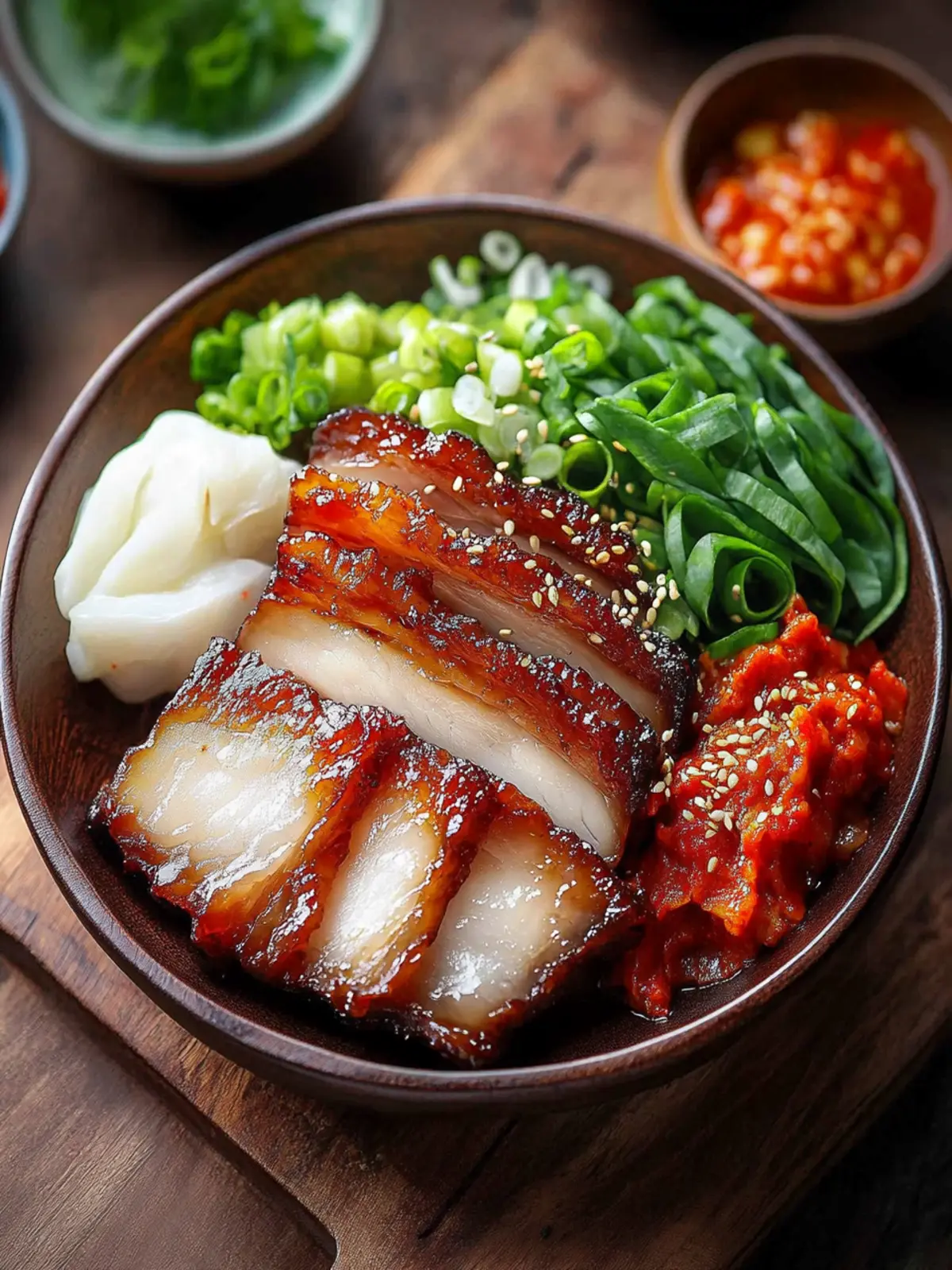
- Score the Pork Belly Skin: Using a sharp knife, carefully score the skin in a crosshatch pattern, about 1/4 inch deep. This helps the fat render out and creates that crispy texture. Take care not to cut into the meat.
- Prepare the Simmering Broth: In your stockpot, add 8 cups (1.9 liters) of water, smashed garlic, sliced ginger, green onions, soy sauce, rice wine, salt, black peppercorns, and bay leaves. Bring to a gentle boil.
- Simmer the Pork Belly: Lower the pork belly into the broth, skin side up. Reduce heat to low and simmer gently for 1.5 to 2 hours. The pork should be tender but not falling apart. Occasionally skim off any foam or impurities.
- Remove and Drain: Carefully take the pork belly out and let it rest on a wire rack or plate. Reserve the broth for dipping or soup later.
- Dry the Skin: Pat the skin thoroughly dry with paper towels. For extra crispiness, refrigerate the pork uncovered for 30 minutes to dry out the skin further.
- Roast to Crisp: Preheat your oven to 425°F (220°C). Place the pork belly skin side up on a wire rack over a baking sheet. Roast for 25-30 minutes, watching closely—the skin should puff up and become golden, crackling beautifully.
- Rest and Slice: Let the pork rest for 10 minutes before slicing into 1/2-inch (1.3 cm) thick pieces. The meat should be juicy with a satisfying crisp on top.
- Serve with Sides: Arrange the pork belly slices alongside fresh napa cabbage leaves, kimchi, and ssamjang sauce. Wrap pork in the greens with a dollop of sauce for the full bossam experience.
Pro tip: If your skin isn’t crisping as expected, you can broil it for 1-2 minutes at the end, but watch carefully to avoid burning. The key is a dry skin surface and high heat.
Cooking Tips & Techniques for Perfect Bossam Every Time
Getting that signature crispy skin while keeping the pork juicy is a balancing act. Here are some tips I’ve learned over time:
- Don’t Skip the Drying Step: Dry skin is non-negotiable for crispiness. Even a little moisture can steam the skin instead of crisping it.
- Slow and Gentle Simmer: Boiling aggressively can toughen the meat. Keep it at a gentle simmer to tenderize without drying out.
- Score Carefully: Too shallow, and the fat won’t render; too deep, and you lose the meat’s juiciness. A delicate hand here pays off.
- Use a Wire Rack for Roasting: This prevents the pork from sitting in fat and allows air to circulate, helping the skin crisp evenly.
- Rest Before Slicing: Letting the pork rest redistributes the juices, so you don’t lose moisture when cutting.
- Multitask with Sides: While the pork simmers, prep kimchi, leafy greens, and your dipping sauce to streamline your feast.
One time I rushed the drying step and ended up with chewy skin rather than crackly. Lesson learned: patience is key. Also, if you want to try a shortcut, the quick chicken lo mein recipe I’ve shared elsewhere pairs surprisingly well as a flavorful side for this bossam feast, balancing textures and flavors beautifully.
Variations & Adaptations for Your Bossam Korean Pork Belly Feast
This recipe is pretty flexible, so you can tweak it to suit your tastes or dietary needs:
- Spicy Kick: Add gochujang (Korean chili paste) to your dipping sauce for a fiery twist.
- Herb-Infused Broth: Toss in star anise or cinnamon sticks during simmering for a subtle aromatic note.
- Low-Carb Option: Swap napa cabbage for large lettuce leaves or collards for wrapping, keeping it light and fresh.
- Gluten-Free: Use tamari or coconut aminos instead of soy sauce, and double-check all sauces.
- Vegetarian Adaptation: While traditionally pork-based, you could try this cooking method with thick slices of king oyster mushrooms as a plant-based alternative, simmering in the same broth and crisping in the oven.
Personally, I once made a batch with a smoky paprika addition in the simmering broth—unexpected but surprisingly delicious. For a side twist, pairing this feast with the prosciutto and fig jam sandwich from my collection made for a lovely balance of savory and sweet flavors.
Serving & Storage Suggestions for Bossam Korean Pork Belly
Serve your bossam feast warm, ideally right after roasting to enjoy that crisp skin at its best. Arrange the pork slices on a large platter with fresh napa cabbage or lettuce leaves, kimchi, and dipping sauces like ssamjang or a simple soy-garlic sauce. Guests love wrapping the pork themselves, making it a fun, interactive meal.
For leftovers, wrap the pork slices tightly in plastic wrap and refrigerate for up to 3 days. To reheat, gently warm in a low oven or skillet to revive some crispiness without drying out the meat. Avoid microwaving if possible, as it tends to soften the skin.
Flavors actually deepen when the pork sits overnight, so if you’re prepping ahead, the next day’s feast can be just as delightful. You can also freeze cooked pork belly slices for up to 2 months, thawing slowly in the fridge before reheating.
Nutritional Information & Benefits of Bossam Korean Pork Belly
This crispy mouthwatering bossam Korean pork belly feast packs a rich combination of protein and fats. A typical serving (about 4 ounces or 115 grams) contains roughly 350 calories, with 30 grams of fat and 20 grams of protein. The fat content is mostly from the pork belly’s delicious layers, which provide a satisfying, energy-dense meal.
Garlic and ginger aren’t just flavor boosters—they offer anti-inflammatory and immune-supportive properties. Using fresh leafy greens adds fiber and vitamins, balancing the richness of the pork. For those watching carbs, this feast is naturally low-carb when you skip rice or noodles, making it a hearty option for various dietary needs.
Be mindful of sodium from soy sauce and seasonings if you’re limiting salt intake. Choosing a naturally brewed soy sauce reduces additives, and pairing with fresh vegetables helps balance the meal.
Conclusion
This crispy mouthwatering bossam Korean pork belly feast is one of those rare recipes that feels like a celebration every time, even if it’s just a quiet night at home. It’s approachable, rewarding, and packed with layers of texture and flavor that make every bite worth savoring. Whether you’re sharing it with family, impressing friends, or indulging solo, it’s a dish that invites you to slow down and enjoy the simple pleasure of good food.
I love how this recipe turns something that might seem intimidating into a cozy, satisfying ritual. Feel free to tweak the spices, sides, or dipping sauces to make it your own. And if you try it, I’d be thrilled to hear how you put your spin on this feast!
Happy cooking and even happier eating!
Frequently Asked Questions About Bossam Korean Pork Belly
- Q: Can I use pork belly without skin for this recipe?
A: The skin is key for the crispy texture in bossam, so I recommend using pork belly with skin on. Without it, you’ll miss that signature crackle. - Q: How do I know when the pork belly is cooked through?
A: After simmering for about 1.5–2 hours, the pork should be tender when pierced with a fork. Internal temperature around 160°F (71°C) is a good target before roasting. - Q: What if I don’t have ssamjang sauce?
A: You can mix gochujang (Korean chili paste) with a bit of soy sauce, sesame oil, and a pinch of sugar as a quick substitute. - Q: Can I prepare this recipe ahead of time?
A: Yes! You can simmer and roast the pork belly a day ahead. Store it in the fridge and gently reheat before serving to maintain crispiness. - Q: Is there a vegetarian alternative to bossam?
A: While traditional bossam is pork-based, thick grilled or roasted king oyster mushrooms can mimic the texture and absorb flavors well for a plant-based twist.
Pin This Recipe!
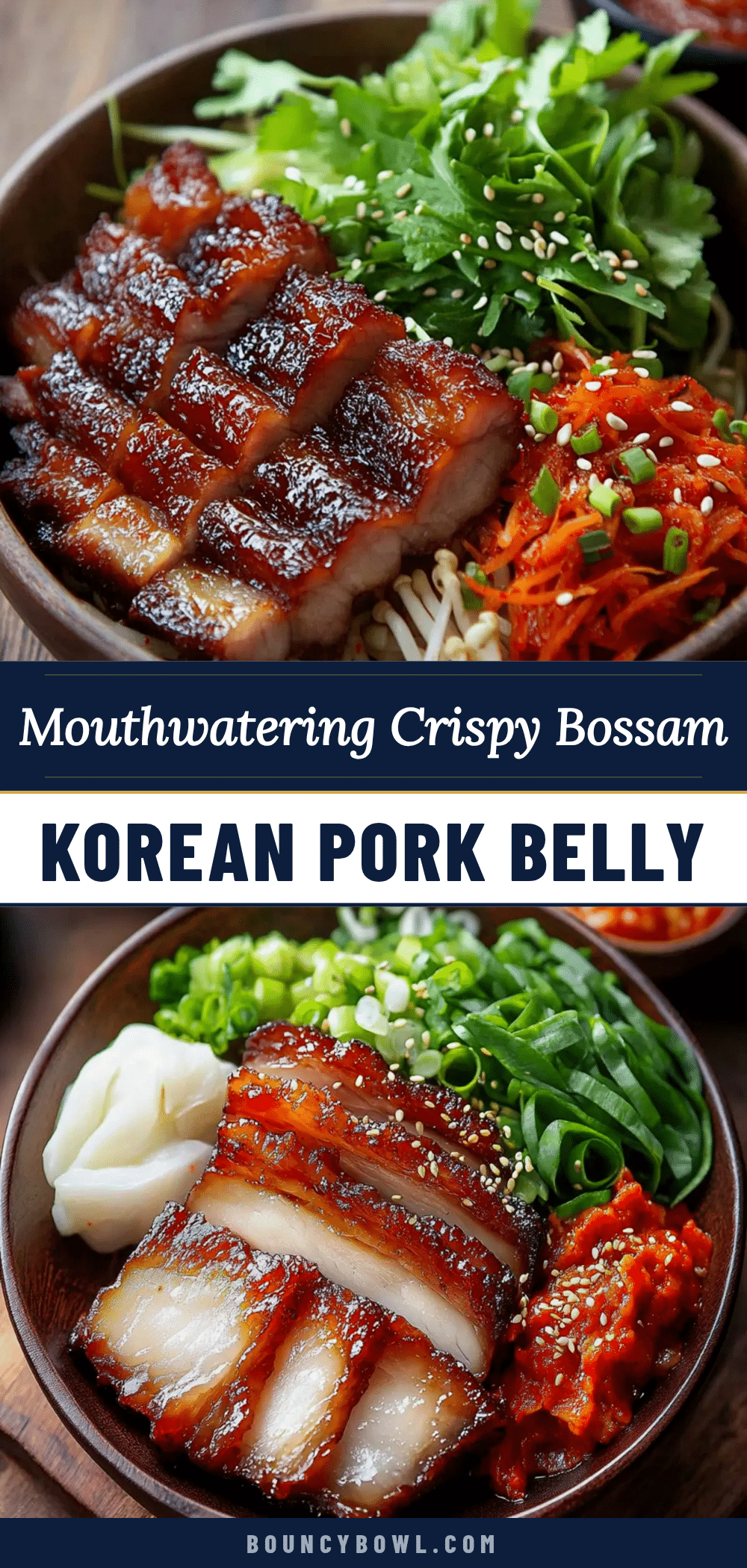
Crispy Mouthwatering Bossam Korean Pork Belly Feast Easy Homemade Recipe

This recipe delivers tender, juicy pork belly with perfectly crispy skin, simmered with aromatic spices and roasted to crackling perfection. Ideal for a comforting feast that impresses with layers of flavor and texture.
- Prep Time: 20 minutes
- Cook Time: 1 hour 50 minutes
- Total Time: 2 hours 10 minutes
- Yield: 6 servings 1x
- Category: Main Course
- Cuisine: Korean
Ingredients
- 3 pounds pork belly, skin on, preferably with evenly layered fat and meat
- 8 cups water
- 6 cloves garlic, smashed
- 2-inch piece ginger, sliced
- 3 stalks green onions, trimmed
- 1/4 cup soy sauce (naturally brewed)
- 2 tablespoons rice wine or mirin
- About 1 tablespoon salt, adjusted to taste
- 1 teaspoon whole black peppercorns
- 2 bay leaves
- Kimchi, as a side (optional but recommended)
- Leafy greens or napa cabbage, for wrapping
- Ssamjang sauce, store-bought or homemade
Instructions
- Score the pork belly skin in a crosshatch pattern about 1/4 inch deep, being careful not to cut into the meat.
- In a large stockpot, combine 8 cups water, smashed garlic, sliced ginger, green onions, soy sauce, rice wine, salt, black peppercorns, and bay leaves. Bring to a gentle boil.
- Lower the pork belly into the broth, skin side up. Reduce heat to low and simmer gently for 1.5 to 2 hours until tender but not falling apart. Skim off any foam or impurities occasionally.
- Remove the pork belly and let it rest on a wire rack or plate. Reserve the broth for dipping or soup.
- Pat the skin thoroughly dry with paper towels. For extra crispiness, refrigerate the pork uncovered for 30 minutes to dry out the skin further.
- Preheat oven to 425°F (220°C). Place the pork belly skin side up on a wire rack over a baking sheet.
- Roast for 25-30 minutes, watching closely until the skin puffs up and becomes golden and crackling.
- Let the pork rest for 10 minutes before slicing into 1/2-inch thick pieces.
- Serve with fresh napa cabbage leaves, kimchi, and ssamjang sauce. Wrap pork in the greens with a dollop of sauce for the full bossam experience.
Notes
Drying the skin thoroughly before roasting is essential for crispiness. If skin isn’t crisping enough, broil for 1-2 minutes watching carefully to avoid burning. Use tamari or coconut aminos for gluten-free soy sauce substitute. Rest pork before slicing to retain juices. Refrigerate uncovered for 30 minutes to dry skin further.
Nutrition
- Serving Size: Approximately 4 ounc
- Calories: 350
- Fat: 30
- Protein: 20
Keywords: bossam, Korean pork belly, crispy pork belly, Korean feast, homemade bossam, pork belly recipe, Korean cuisine, ssamjang, kimchi, slow simmer pork